258 results

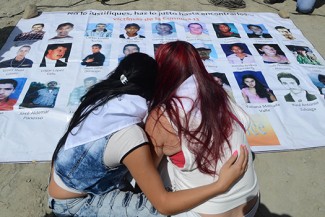
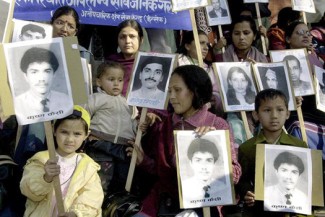
On International Day of the Victims of Enforced Disappearances, the families of the missing maintain their vow: "until we find them." As special bodies to search for their loved ones develop, what do victims expect?

President Obama’s long-awaited plan to increase the number of US troops in Afghanistan is meant to include a number of benchmarks aimed at stabilizing Afghanistan as part of an overall strategy to defeat or contain Taliban/al-Qaeda extremists.

ICTJ is more than two decades old. At the time it was established, many of those who contributed to transitions in Argentina, Chile, Guatemala, South Africa, and the former Yugoslavia saw the value of a specialized organization that could draw from diverse national experiences to prov...

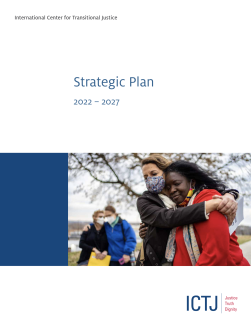
The cover of a report with the text, "2022-2027, Strategic Plan," with an image of people embracing underneath.

Indigenous peoples are among those most affected by contemporary conflict. The resource-rich territories they occupy are coveted by powerful, often violent groups. Their identity is perceived with mistrust, sometimes with hate. Indigenous communities live at a precarious intersection ...

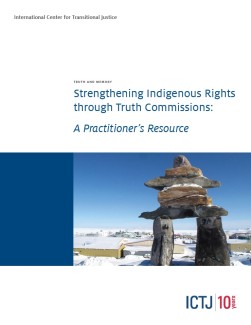
In societies confronting the legacies of war, tyranny, or entrenched injustice, the experiences of indigenous people have often been marginalized. ICTJ has published a handbook offering guidance on planning truth commissions and commissions of inquiry that safeguard the interests of indigenous communities and address violations against them.

Providing the Minister for Social Solidarity with the unfettered discretion to dismiss and appoint members of the institute’s Governing Board renders the institute vulnerable to politicization and undermines the institute’s ‘technical, administrative and financial autonomy.

1,300 are still missing in Nepal, nearly a decade after the country's bloody civil war ended. The peace agreement was meant to provide for the families of the disappeared, but today they are still searching for answers. As a new government body begins investigations, victims wonder: is the commission fully committed to addressing their needs?

Why pursue transitional justice in the aftermath of massive human rights violations? This video provides a window into the debate about the relevance of transitional justice in today’s world.

Why pursue transitional justice in the aftermath of massive human rights violations? “The Case for Justice” provides a window into the debate about the relevance of transitional justice in today’s world.

This paper considers the efforts of Timor-Leste’s Commission for Reception, Truth and Reconciliation to address the forced displacement that occurred during the period of Indonesian occupation and in the post-Popular Consultation violence of 1999. It examines linkages between the work...