210 results

Long before ICTJ existed, societies everywhere wrestled with the justice-related dilemmas caused by violent conflict, and victims, communities, and courageous leaders found answers of their own. What was missing was a place where people who took part in those different experiences could meet, share knowledge and lessons, and build a community to respond together to the evolving challenges to justice and peace. In 2001, ICTJ was created to be that place and to catalyze a collective effort to address massive human rights violations and build a peaceful, inclusive, and just future.

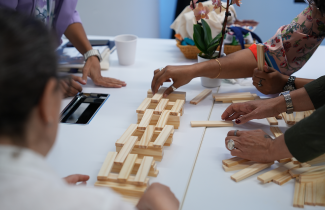
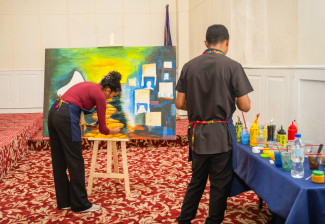
Over 100 representatives of civil society organizations, victims’ associations, government institutions, and diplomatic missions recently gathered in Addis Ababa to discuss what an inclusive transitional justice process in Ethiopia should look like. Participants explored best practices, local approaches, as well as persistent challenges to ensuring that those most affected by injustice play a central role in any process designed to address it.

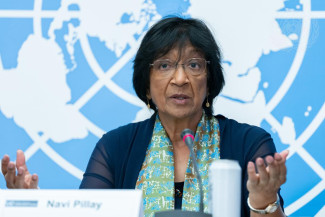
ICTJ welcomes the recognition of Navi Pillay as the 2026 Nobel Peace Prize Laureate and expresses its deep appreciation for her lifelong commitment to human rights, international law, and justice for victims of international crimes.

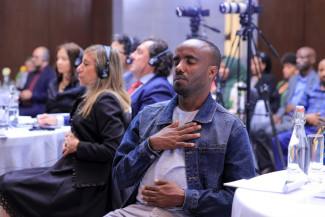
Victims, civil society advocates, policymakers, and development partners recently met for a high-level policy roundtable on integrating mental health and psychosocial support (MHPSS) in Ethiopia’s transitional justice process. Organized by ICTJ and the Advocacy Center for Democracy and Development, the convening offered a space for participants to discuss the need for MHPSS and how to improve access to it across the country.

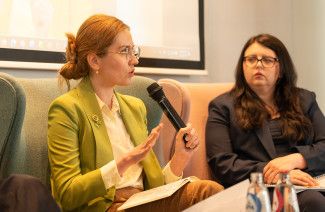
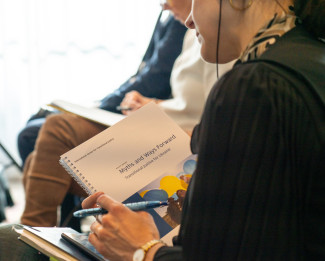
ICTJ strongly advocates for a holistic transitional justice vision for Ukraine as part of its programmatic activities. Leading this work is the head of ICTJ’s Ukraine program, Kateryna Busol. She is the author of the new report, “Myths and Ways Forward: Transitional Justice for Ukraine." In this interview, Busol discusses the path toward holistic justice for the country.

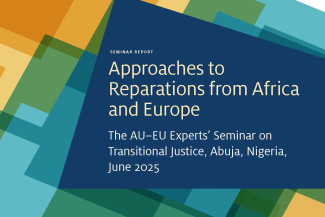
The AU–EU 2025 Experts’ Seminar on Transitional Justice convened African and European practitioners to advance reparations as a central pillar of transitional justice. Discussions highlighted legal obligations, victim-centered and transformative approaches, and persistent challenges i...

Cover featuring an abstract design for the report "Approaches to Reparations from Africa and Europe: The AU–EU Experts’ Seminar on Transitional Justice, Abuja, Nigeria, June 2025"

A new ICTJ report urges the revitalization of Ukraine’s holistic transitional justice policymaking. Debunking the most common myths about transitional justice in Ukraine, the report presents the key legal, policy, and victim-centered arguments in favor of advancing a comprehensive transitional justice framework.

Despite earlier efforts to envision a national transitional justice policy, Ukraine remains overly cautious about establishing one. This report provides a robust substantiation of why Ukraine should revive its holistic transitional justice policymaking. In the first part, it debunks t...

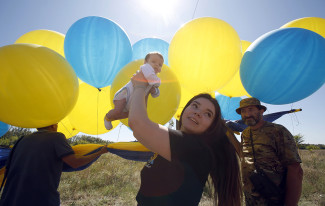
A women holds up an infant in the air on sunny day outdoors, surrounded by yellow and blue balloons

Throughout 2025, ICTJ’s experts offered thoughtful analysis on conflicts and major political developments in more than 10 countries as part of the World Report newsletter. Their insightful commentaries shed light on the obstacles that victims, civil society, and their partners must navigate as they pursue sustainable peace and justice. In this edition, we look back on the past year through the Expert’s Choice column.

On November 20 — on the 80th anniversary of the opening of the main Nuremberg trial, which prosecuted Nazi leadership for aggression and mass atrocities of World War II — details of the allegedly proposed new “peace” plan for Ukraine emerged. The initiative has surfaced one of the Kremlin’s recurrent demands: full amnesty for wartime atrocities — the very acts Nuremberg sought to punish and prevent.