



18 results

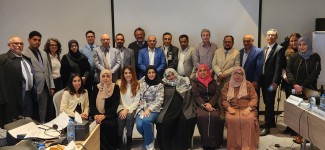
In 2016, the Yemeni National Commission to Investigate Alleged Violations to Human Rights began documenting violations committed since the 2011 uprising and during the subsequent brutal civil war, which continues today. To date, the commission has documented more than 23,000 human rights abuses and referred over 2,000 cases to Yemen’s Public Prosecutor for prosecution. However, no verdict has been issued in any of these cases. To help the commissioners and members of Yemen’s judiciary advance accountability, ICTJ organized a workshop for them on transitional justice mechanisms. However, to deliver a justice that meets all the reparative needs of victims, these efforts must be an integral part of a broader, multifaceted transitional justice process.

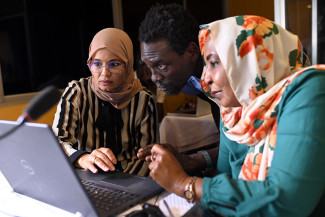
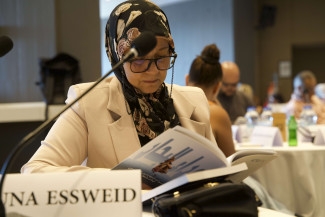
ICTJ recently convened human rights defenders, journalists, and lawyers from Libya, Sudan, Syria, Tunisia, and Yemen for a workshop on digital, open-source investigations. Held on November 3-8 in Kampala, Uganda, the course trained participants on open-source tools with a view to strengthening their work investigating, documenting, and monitoring human rights violations.

ICTJ is pleased to announce the winners of its “Overseas” writing contest. In it, young people originally from or currently residing in Lebanon, Libya, or Tunisia who have left their home countries for political or socioeconomic reasons were asked to share their personal experiences of migration in the form of a short, written testimony.

Even as the parties to the war in Yemen fail to extend the UN-brokered ceasefire, field monitors of the National Commission to Investigate Alleged Violations to Human Rights (NCIAVHR) continue to document and investigate human rights violations despite enormous challenges and serious risks to their...

ICTJ is pleased to announce the “Overseas: Writing Contest,” an open call for young migrants originally from or currently residing in Lebanon, Libya, or Tunisia to share their personal experiences of migration in the form of a short, written testimony.

Even though young people were driving forces behind the revolutions in Tunisia, Libya, and Lebanon, their lives have not significantly improved since then. Many have been pushed to leave their home countries for socioeconomic or political reasons. A new ICTJ book features the testimonies of 18 young migrants who made this difficult choice.

In this era of technological transformation, it is critically important to develop digital strategies for documenting human rights violations, analyzing data for accountability or reparations purposes, and safely advocating for human rights online. This is particularly true in contexts where victims, human rights actors, and members of the media live in fear. To this end, ICTJ has recently led trainings for human rights activists in conflict-affected countries on open-source investigation tools to help them do their work more effectively.

Since 2014, conflict in Yemen has caused hundreds of thousands of deaths, displaced millions, destroyed the economy, and exacerbated systemic marginalization, creating one of the world’s worst humanitarian catastrophes. Yet currently, transitional justice and reconciliation take up little space in the Yemeni political arena. In this context, ICTJ has released a new report that explores pathways to a just and sustainable peace in Yemen.

This report explores pathways for transitional justice in Yemen, emphasizing victims’ experiences, political dynamics, and existing justice mechanisms. It examines national and local efforts, including mediation and reconciliation initiatives, and highlights the role of Yemeni civil s...

The sun shines into an urban courtyard of what it appears to be residential buildings.

This book features testimonies of young migrants originally from or currently residing in Lebanon, Libya, or Tunisia who left their home countries for political or socioeconomic reasons. The authors all took part in ICTJ’s 2023 writing contest titled “Overseas.” The contest aimed to e...

An illustration of people rowing in canoes