




416 results

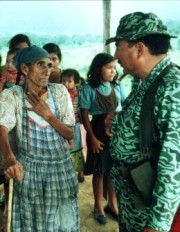
Indigenous peoples are among those most affected by contemporary conflict. The resource-rich territories they occupy are coveted by powerful, often violent groups. Their identity is perceived with mistrust, sometimes with hate. Indigenous communities live at a precarious intersection ...

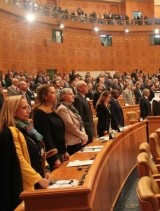
The National Conference to Launch a Dialogue on Transitional Justice in Tunisia was held on Saturday, April 14 in Tunis, initiating a process which should result in the adoption of a comprehensive law on transitional justice by the country’s National Constituent Assembly. ICTJ president David Tolbert delivered a keynote address.

It is an honor and a privilege for me to be with you for this important national conference. One year ago, on this exact same date, just three months after the Tunisian people impressed the world by peacefully ending decades of repression, I had the pleasure to speak at a conference ICTJ organized here in Tunis together with the Arab Institute for Human Rights, the Tunisian League for Human Rights and the UN Office of the High Commissioner for Human Rights. It was an important and lively debate on how to address the legacy of the past and move forward.

Last month ICTJ, with Saint Joseph University’s Modern Arab World Research Center and UMAM Documentation and Research launched the website “ Badna Naaref” (We Want to Know). This oral history project conducted by students tells the stories of suffering and survival during the war in Lebanon, serving both to commemorate and educate.

The search for justice in Guatemala continues, more than 15 years after the end of its long and brutal civil war. Claudia Paz, Guatemala’s prosecutor general and head of the Public Prosecutor’s Office, spoke with ICTJ about the struggle of victims and survivors to obtain justice for the crimes they suffered.

NEW YORK, March 22, 2011—The International Center for Transitional Justice (ICTJ) congratulates Pablo de Greiff, director of ICTJ’s Research Unit, on the nomination as the first UN Special Rapporteur on the promotion of truth, justice, reparation and guarantees of non-recurrence of serious crimes and gross violations of human rights.

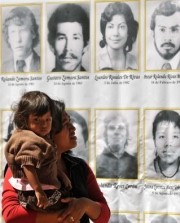
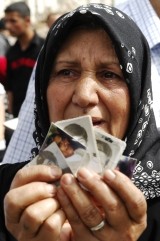
Lebanon has yet to seriously address the issue of thousands of people who went missing or were forcibly disappeared during the country’s civil war. ICTJ spoke with Lebanese activists to discuss a recent initiative taken by the families of the missing and civil society organizations to create a draft law on the missing.

A two-day roundtable discussion on a draft law on the missing and forcibly disappeared persons was held February 24–25 in Beirut, Lebanon. Organized by the Committee of the Families of the Kidnapped and Disappeared in Lebanon, Support of Lebanese in Detention and Exile (SOLIDE), Act for the Disappeared, and ICTJ, the roundtable was part of the project “Lebanon’s unaddressed legacy: the missing and the families’ right to know,” funded by the European Union (EU) and the Embassy of Switzerland in Lebanon.

The last few decades have seen a revolution in the global struggle against impunity, but the decision to put General Efraín Ríos Montt on trial for crimes against humanity and genocide in Guatemala ranks among the most astonishing developments. Belatedly, but valiantly, a new breed of prosecutors, led by Attorney General Claudia Paz, have finally allowed his victims' pleas for justice to be heard.

On Thursday, January 26, retired Guatemalan general Efraín Ríos Montt will stand before a judge in a Guatemalan court to hear the charges brought against him for genocide and crimes against humanity. ICTJ commends Guatemala for taking these important first steps to bring justice to bear after decades of impunity.