379 results

Six years to the day after Ben Ali fled the country, Tunisians are gathering around televisions, radios and computers for more victim testimony hosted by the Truth and Dignity Commission. Watch the livesteam below and follow us on twitter at @theICTJ for live coverage.

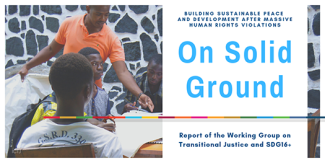
New York, June 3, 2019—Today, with just over a month to go before the 2019 UN High-Level Political Forum (HLPF) on Sustainable Development, ICTJ and its partners have released the Report of the Working Group on Transitional Justice and SDG16+, entitled “On Solid Ground: Building Sustainable Peace and Development After Massive Human Rights Violations.”

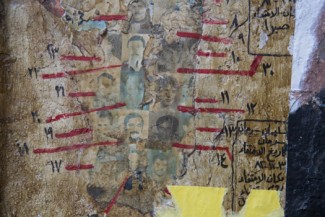
This year, to mark the International Day of the Disappeared, we bring the story of Ziad and Ghassan Halwani, two brothers in Lebanon whose father was kidnapped and disappeared when they were young. Their story is a powerful testament to the long-term impact of disappearances on the life course of those who are still growing up.

Growing up in Ras el Nabeh, a lively neighborhood in the heart of Beirut, was tough and dangerous in the early 1980s, as it was part of the Green Line –a maze of abandoned streets inhabited by weeds turned into a frontline that vertically divided Christian East Beirut from Muslim West B...

The International Criminal Court (ICC) must better communicate what is driving its actions to the public of the Middle East and North Africa (MENA) and elsewhere around the world if it is to develop confidence in its capacity to act as a guardian of international criminal law.

On August 9, 2012, UN Special Rapporteur on the promotion of truth, justice, reparation, and nonrecurrence Pablo de Greiff presented the first annual report to the Human Rights Council. The report provides an overview of key activities undertaken by the Special Rapporteur between May 1 and July 25, reviews the foundations of the mandate and outlines the strategy for its implementation.

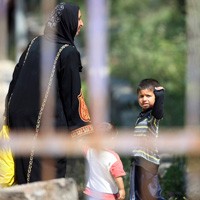
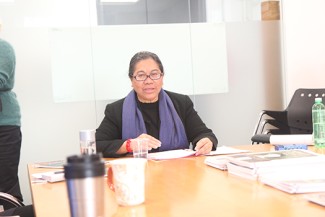
On Friday, October 19, ICTJ welcomed the Special Rapporteur on the Human Rights of Internally Displaced Persons (IDPs), Ms. Cecilia Jimenez-Damary, at its headquarters in New York, where she gave an informal presentation. Jimenez-Damary’s eye-opening report on the human rights of IDPs takes up the crucial importance of including the voices and concerns of IDPs in transitional justice mechanisms.

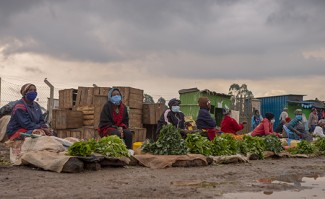
Sparing almost no corner of the world from its wrath, the COVID-19 pandemic has now spread to every country. In an effort to slow the contagion, governments in most countries have been taking drastic measures requiring all residents other than essential workers to confine themselves in their homes, and shutting down vast sectors of their economies. The impact has been crushing. COVID-19 has profoundly affected every country where ICTJ currently works: Armenia, Colombia, Cote d’Ivoire, Ethiopia, Gambia, Kenya, Lebanon, Libya, Sudan, Syria, Tunisia, and Uganda. We recently caught up with ICTJ’s heads of country programs to learn more about the impact the pandemic is having on transitional justice and society more broadly.

On International Day of the Victims of Enforced Disappearances, the families of the missing maintain their vow: "until we find them." As special bodies to search for their loved ones develop, what do victims expect?

After toppling Hosni Mubarak’s dictatorship in February 2011, Egyptians were eager for a reckoning with past injustices. But after years of political turmoil, the possibility of a genuine transitional justice process in Egypt is uncertain. We turned to three leading Egyptian activists to examine if there really is a chance for justice and reform in Egypt in the near future.