

383 results

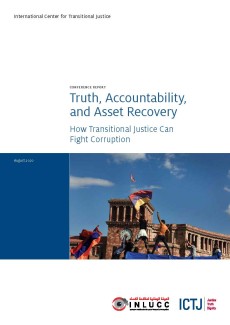
On March 2 and 3, 2020, transitional justice and anti-corruption policymakers, experts, and activists from the Gambia, Kenya, South Africa, Armenia, and Tunisia met in Tunis for a two-day conference to share solutions to a common problem: How can countries eme...

As the first truth commission in the region, Morocco’s Equity and Reconciliation Commission sought to address the legacy of more than 40 years of repression and human rights violations known as the “Years of Lead.” The commission was part of a gradual process of dealing with the past,...

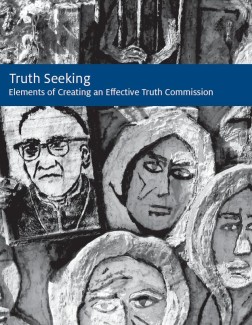
This publication provides an overview of the essential best practices guiding the main aspects of a truth commission, answering basic questions relating to its goals, powers, operations, framework, protections for commissioners and witnesses, and reporting. Its intention is to provide...

As we search for ways to halt the violence and foster lasting peace in societies grappling with a legacy of massive human rights abuse, there is arguably no more important day to reflect upon the importance of the struggle for truth and justice than today, March 24. Thus, we take a moment to mark the International Day for the Right to the Truth concerning Gross Human Rights Violations and for the Dignity of Victims.

This year, ICTJ's campaign for the International Day for the Right to the Truth centers around the theme, “Truth is the Foundation of Justice.” This notion, fundamental to the idea of a comprehensive approach to justice, is explored through several new releases from ICTJ.

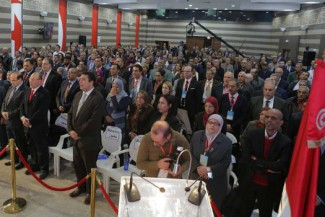
The international conference on transitional justice 'Addressing the Past, Building the Future: Justice in Times of Transition' concluded today in Tunis, following two days of discussions on justice models and measures implemented in transitions. View the conference blog The conference explored...

On January 14, Tunisia's Truth and Dignity Commission will resume public hearings. Salwa El Gantri outlines how ICTJ has worked with the TDC and civil society to amplify victims' voices.

As the Tunisian government takes firm steps to investigate human rights abuses committed since 1955, including under the Ben-Ali regime, ICTJ calls for care and attention in appointing members to the upcoming Truth and Dignity Commission.

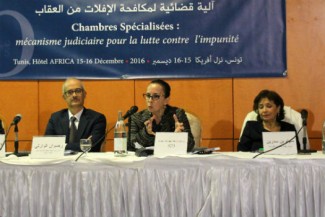
In Tunisia, efforts to seek criminal accountability have been characterized by an absence of strategy and the lack of political will. An ICTJ conference sought to address these issues and ease the confusion and political gridlock surrounding the Specialized Judicial Chambers.

As Tunisia concludes its final deliberations on the new constitution, transitional justice issues such as reparations for victims, truth about the past and the rights of women have been central to the legislative debates. Over the past month, ICTJ’s leading experts have been engaged with stakeholders on the ground on a variety of issues under deliberation, including truth-seeking, reparations, gender justice, and the role of children and youth.