



121 results
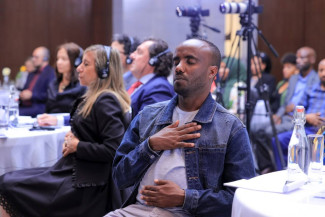
Victims, civil society advocates, policymakers, and development partners recently met for a high-level policy roundtable on integrating mental health and psychosocial support (MHPSS) in Ethiopia’s transitional justice process. Organized by ICTJ and the Advocacy Center for Democracy and Development, the convening offered a space for participants to discuss the need for MHPSS and how to improve access to it across the country.

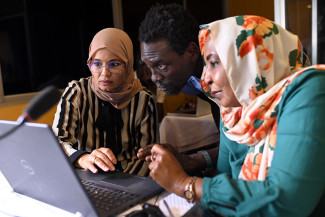
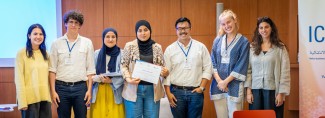
ICTJ recently convened human rights defenders, journalists, and lawyers from Libya, Sudan, Syria, Tunisia, and Yemen for a workshop on digital, open-source investigations. Held on November 3-8 in Kampala, Uganda, the course trained participants on open-source tools with a view to strengthening their work investigating, documenting, and monitoring human rights violations.

Throughout 2025, ICTJ’s experts offered thoughtful analysis on conflicts and major political developments in more than 10 countries as part of the World Report newsletter. Their insightful commentaries shed light on the obstacles that victims, civil society, and their partners must navigate as they pursue sustainable peace and justice. In this edition, we look back on the past year through the Expert’s Choice column.

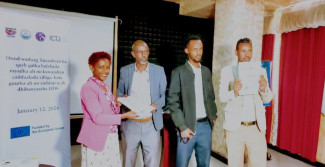
On July 28, 2025, the Somali Regional State Council passed a resolution designating April 6 as Victims’ Memorial Day, formally recognizing those who experienced violence and human rights violations across Ethiopia’s Somali Region. For years, victims and civil society actors, with support from ICTJ and other international partners, have persistently advocated for this acknowledgment, which marks a milestone in Ethiopia’s journey toward accountability and repair.

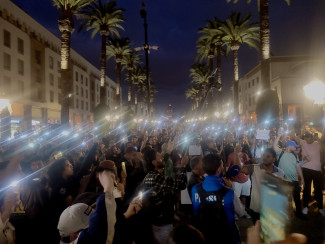
The death of eight women in childbirth at a hospital in Agadir this past August sent shockwaves through Morocco. The news crystallized national anger over deteriorating public services as well as persistent high unemployment and corruption. Years of frustration erupted into the streets as thousands of mostly young Moroccans gathered in cities and towns across the nation to protest and to demand accountability and institutional reform.

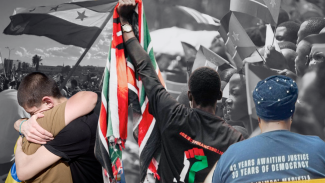
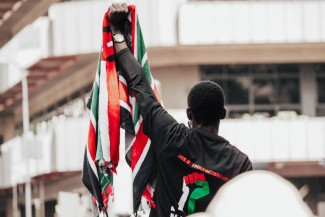
The police response to the peaceful anti-government protests in Kenya over the past year has been deadly and brutal. Their actions have rocked the country and reaffirmed the 2013 findings of the Kenyan Truth, Justice and Reconciliation Commission (KTJRC) that state security agencies, particularly the police, have historically used excessive and disproportionate force and “been the main perpetrators of bodily integrity violations of human rights in Kenya including massacres, enforced disappearances, torture and ill-treatment, and sexual violence.”

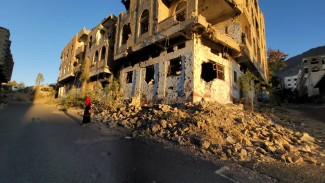
Since 2014, conflict in Yemen has caused hundreds of thousands of deaths, displaced millions, destroyed the economy, and exacerbated systemic marginalization, creating one of the world’s worst humanitarian catastrophes. Yet currently, transitional justice and reconciliation take up little space in the Yemeni political arena. In this context, ICTJ has released a new report that explores pathways to a just and sustainable peace in Yemen.

This report explores pathways for transitional justice in Yemen, emphasizing victims’ experiences, political dynamics, and existing justice mechanisms. It examines national and local efforts, including mediation and reconciliation initiatives, and highlights the role of Yemeni civil s...

The sun shines into an urban courtyard of what it appears to be residential buildings.

In this era of technological transformation, it is critically important to develop digital strategies for documenting human rights violations, analyzing data for accountability or reparations purposes, and safely advocating for human rights online. This is particularly true in contexts where victims, human rights actors, and members of the media live in fear. To this end, ICTJ has recently led trainings for human rights activists in conflict-affected countries on open-source investigation tools to help them do their work more effectively.

Yemen's nine-year conflict has devastated the country and created one of the world’s worst humanitarian crises. The regional upheaval stemming from the ongoing war on Gaza has created more obstacles on the country's already complex path toward peace and shifted attention away from the set of UN-brokered commitments agreed upon by the parties to the conflict in December 2023, which include a nationwide ceasefire. Amid these challenges, it is more imperative than ever to support civil society and victims and bring attention to victims’ grievances and needs.