147 results

Throughout 2025, ICTJ’s experts offered thoughtful analysis on conflicts and major political developments in more than 10 countries as part of the World Report newsletter. Their insightful commentaries shed light on the obstacles that victims, civil society, and their partners must navigate as they pursue sustainable peace and justice. In this edition, we look back on the past year through the Expert’s Choice column.

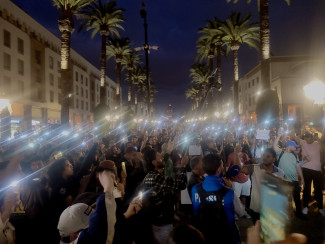
The death of eight women in childbirth at a hospital in Agadir this past August sent shockwaves through Morocco. The news crystallized national anger over deteriorating public services as well as persistent high unemployment and corruption. Years of frustration erupted into the streets as thousands of mostly young Moroccans gathered in cities and towns across the nation to protest and to demand accountability and institutional reform.

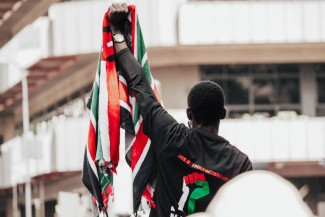
The police response to the peaceful anti-government protests in Kenya over the past year has been deadly and brutal. Their actions have rocked the country and reaffirmed the 2013 findings of the Kenyan Truth, Justice and Reconciliation Commission (KTJRC) that state security agencies, particularly the police, have historically used excessive and disproportionate force and “been the main perpetrators of bodily integrity violations of human rights in Kenya including massacres, enforced disappearances, torture and ill-treatment, and sexual violence.”

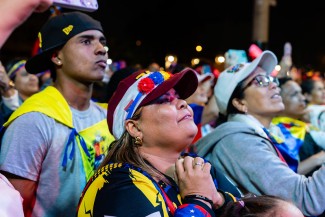
In the wake of the recent contentious presidential elections, Venezuelans from all walks of life took to the streets to express their collective distrust of the official results, outrage over their country's dire economic and political crisis, and demand for transformative change. For a brief moment, their sheer numbers and the of unity of their voices gave hope that a window of opportunity had opened for real change. In countries grappling with massive human rights violations, from time to time, a window of opportunity does in fact open for society to come together and a forge path toward peace and justice. Unfortunately, such windows do not remain open indefinitely.

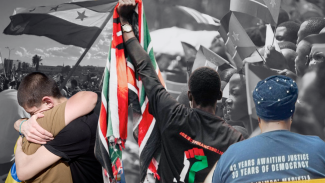
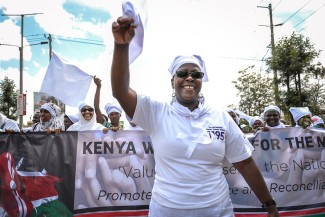
Thousands took to the streets across Kenya on January 27 following the gruesome slaying of more than a dozen women to denounce violence against women and demand action to end it. Protesters later gathered in Nairobi on February 14 for a Valentine’s Day vigil for the more than 30 women murdered in the country so far this year and to pressure the government to declare femicide and violence against women a national emergency and to establish a commission to address these crimes and thereby break the cycle of impunity. These efforts are laudable, if not inspiring. However, physical and sexual violence against women and femicide—at times perpetrated by law enforcement officers who are meant to protect them, as enshrined in Kenya’s 2010 Constitution—has persisted in Kenya for decades.

ICTJ’s partner Afghanistan Human Rights and Democracy Organization (AHRDO) recently opened a new virtual museum and database dedicated to Afghan victims of conflict and human rights abuses. “The Afghanistan Memory House” not only preserves the memory of these victims but helps pave the path for truth and justice. To launch the virtual museum, ICTJ and AHRDO cohosted a panel discussion on memorialization, moderated BBC journalist Lyse Doucet, in ICTJ’s office in New York this past December.

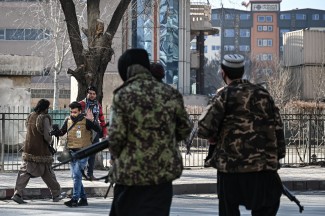
Since the Taliban seized control of Afghanistan in August 2021, the regime has put in place a series of policies severely restricting independent media and giving it all but total control over news outlets and their content. Kobra Moradi is a lawyer and researcher working with Afghanistan Human Rights and Democracy Organization and author of the recent report, Afghan Media Under the Taliban: Restrictions and Violations. ICTJ sat down with the author to learn more about what impact these restrictions have had on journalists and the free press, and the important role media can still play in such a repressive regime.

This study explores specialized units established in 23 countries to investigate and prosecute serious international crimes. Notwithstanding the challenges faced by these units, the study concludes that countries with a specialized institutional approach are considerably more successf...

several judges dressed in black gowns sit on a judicial bench.

The story of Mark and Sharon, two Kenyan youths who believed in the importance of unveiling the truth about past crimes in Kenya and participated in the TJRC process.

ICTJ Vice President Paul Seils interviewed South African judge and human rights activist Albie Sachs.