


573 results

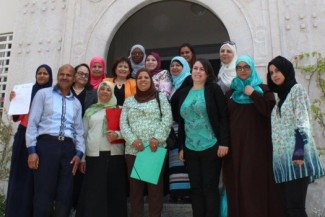
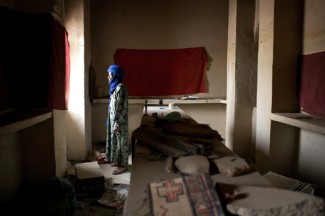
For decades, veiled women in Tunisia were deprived of their rights and discriminated against because of their religious beliefs. Now, they’re joining together to tell their stories and seek justice from the Tunisian government.

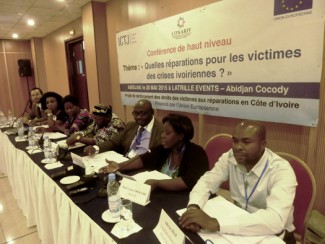
The Ivoirian government has a critical opportunity to define and implement a reparations policy that responds to the needs of the most vulnerable victims of the political, military and social crises experienced by Côte d’Ivoire between 1999 and 2012, according to the International Center for Transitional Justice (ICTJ).

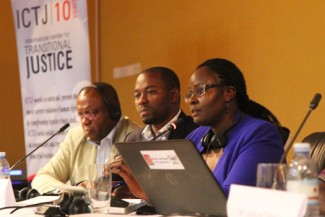
Today, ICTJ opened a two-day conference in Kampala, Uganda, gathering activists and officials from the African Great Lakes Region to discuss efforts at redress and accountability for serious human rights violations committed in their countries.

Civil society leaders, members of victims' groups and state officials throughout the Great Lakes region will convene in Kampala, Uganda next week at a conference hosted by ICTJ. Attendees will share their experiences working for redress in their communities and discuss what strategies have proven effective at the local level.

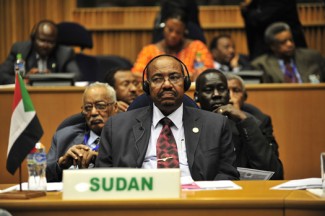
Human Rights Network-Uganda (HURINET-U), The Uganda Coalition on the International Criminal Court (UCICC), The International Center for Transitional Justice, Avocats San Frontiers and Atrocities Watch are dismayed to learn that Government of Uganda has extended an invitation to President Omar al...

After a society is torn apart by conflict or repression, who decides whether to remember or forget the painful past? Can forgiveness happen without acknowledgement of wrongdoing? Is there a difference between forgetting and denial? Join us as ICTJ debates the impact of remembrance on reconciliation with David Rieff and Pablo de Greiff.

ICTJ joins groups calling for an anti-terrorism approach that respects citizens' rights in Tunisia. “Institutional reform can be a strong tool to prevent recurrence of human rights abuses and build a strong and credible democracy in Tunisia," said Salwa El Gantri, ICTJ Head of Office in Tunisia. "The current transitional justice process aims to shed light on similar violations that took place under the dictatorship, and we don’t want them to be committed again under the ‘fight against terrorism’ slogan.”

After consulting nearly 2,000 of their peers, youth activists in Cote d'Ivoire present their reparations policy recommendations in a special event on Friday.

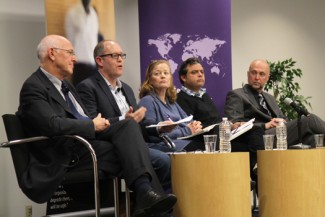
What happens when a state refuses to acknowledge the suffering of victims of mass atrocities? Or when the public celebrates perpetrators as heroes? Earlier this month, a panel discussion hosted by The International Center for Transitional Justice and New York University’s Center for Global Affairs grappled with the impact of denial on justice.

Mali's Truth Justice and Reconciliation Commission has a mandate to examine violence dating back to 1960, but it faces serious challenges. Can it serve as a foundation of a peaceful future in Mali? We discuss with transitional justice expert Kora Andrieu, who is currently working with the TJRC as an independent consultant.