

484 results

“Through a New Lens: A Child-Sensitive Approach to Transitional Justice” analyzes experiences of four countries—Liberia, Democratic Republic of Congo (DRC), Colombia and Nepal—and identifies some key lessons on children’s participation in transitional justice measures. Authored by Céc...

ICTJ is pleased to present the KickStarter campaign to launch the Iriba Center for Multimedia Heritage in Kigali, Rwanda. The Iriba Center, whose name means “the source,” is a project to make accessible an audiovisual history of Rwanda, to “keep the country’s history alive.”

Almost a year after the second post-election transition in Burundi, national and international attention is focused on the willingness and ability of the new government to implement the decisions agreed to during negotiations that culminated in the historic August 2000 peace and recon...

ICTJ filed an amicus brief in the apartheid reparations case before the Southern District Court of New York on November 25, 2009. The brief supports a decision by the South African Government not to oppose legal action against five international companies that are accused of aiding an...

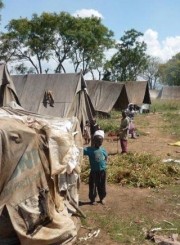
As Kenya continues to address its 2007-08 postelection violence, greater emphasis should be placed on victims’ reparative justice demands, according to a new ICTJ report. The report, “To Live as Other Kenyans Do”: A Study of the Reparative Demands of Kenyan Victims of Human Rights Violations, is a...

This paper documents the opinions of victims of human rights violations in Kenya about the country’s unfolding transitional justice process. The first section gives background into the human rights violations; the second section presents victims ideas about reparative justice. The rep...

The South African Coalition for Transitional Justice (SACTJ) submits the following comments regarding the May 11, 2010 General Notice 282 published in the Government Gazette. The Coalition objects to the Notice 282 regulations on procedural, constitutional, and international law groun...

On May 11, the South African Department of Justice and Constitutional Development (DOJ) invited comments on new regulations governing the distribution of reparations to victims of the apartheid era in the form of medical and educational benefits. Civil society organizations and groups representing survivors’ interests have raised concerns regarding the scope of the regulations, as well as the DOJ’s overall failure to engage with survivors and consider their views when drafting reparations policies.

This paper explores practical issues regarding the relationship between the Truth and Reconciliation Commission (TRC) and Special Court (SC) in Sierra Leone. It looks at: 1) the legal relationship of the Commission and the Court; 2) the question of whether the TRC information should b...

This report presents a study of ex-combatants' knowledge and opinions of the Truth and Reconciliation Commission (TRC) and Special Court (SC) in Sierra Leone. Ex-combatants and these accountability institutions are interdependent. Ex-combatants need the TRC and SC to help them reinteg...

This handbook explains the mandate, origins, purposes, and operating methods of the Truth and Reconciliation Commission (TRC) and Special Court in Sierra Leone. It discusses the differences and similarities between them, in clear, non-technical language. The TRC and Special Court can...

This report describes the Special Court for Sierra Leone’s accomplishments in the first 18 months of its mandate. The Court was established to try "those bearing the greatest responsibility" for serious violations of international law and certain provisions of domestic law since Nove...

This paper provides an initial summary of the work of the Sierra Leone Truth and Reconciliation Commission (TRC) and points to some of the key difficulties it has encountered. The Commission's first year was challenging: it effectively lost its full preparatory period and the first tw...

The development of effective transitional justice policies in the Democratic Republic of Congo has been plagued by lack of security, fear of destabilization, limited political will, and scarce resources. This paper focuses on three specific measures of transitional justice: prosecutio...

This report is based on a population-based survey assessing attitudes about peace and justice in Northern Uganda. For nearly two decades, the Lord's Resistance Army has been in conflict with Ugandan government forces, killing countless civilians and abducting tens of thousands of chil...

This case study provides basic information and policy analysis on the Special Court for Sierra Leone. It aims to help guide policymakers establishing and implementing similar mechanisms. The Court broke new ground in terms of narrowly focusing on those bearing the greatest responsibi...

This paper provides a brief history of Liberia, from Americo-Liberian rule in the 19th century to the 2005 elections. It provides accounts of the 1989-1996 and 1997-2003 civil wars, as well as of significant political changes and elections. It also includes appendixes of noteworthy in...

This study examines the development of restitution and reparations in international law and practice over the last century. It aims to provide recommendations on how restitution can best contribute to transitional justice by reviewing four case-studies: the Czech Republic, South Afric...

This report evaluates Ghana's National Reconciliation Commission (NRC) against its own objectives and the comparative experiences of truth commissions in other countries. Although the NRC was successful in securing some reconciliation, it was plagued by lack of resources and an overt ...

This paper discusses the challenges encountered during efforts to pursue justice in a number of sub-Saharan African countries in transition, including Burundi, the Democratic Republic of Congo, Ghana, Liberia, Rwanda, Sierra Leone, and South Africa. It presents a background and geneal...

This report compares findings from two population-based surveys (in 2005 and 2007) in districts of northern Uganda most affected by 21 years of conflict, including the Acholi districts. The studies capture attitudes about peace, justice, and social reconstruction. Developing a deeper...

This paper focuses on the issue of reparations in Darfur. It particularly emphasizes victims' right to reparation for the harm done to them, and aims to ensure that this right is recognized and upheld in any peace process. Drawing on experiences from other regions, it reviews and addr...

This paper compares and contrasts peace negotiations in Sierra Leone and Liberia. It delineates lessons in peacemaking that emerge from this comparison. These include: considering all policy options, taking a nation's recent history into account, reinterpreting and challenging questio...

This report focuses Liberia's Comprehensive Peace Agreement (CPA) of 2003. It examines many key decisions that were made in creating the CPA, and centers on questions of justice, accountability and the rule of law. It notes developments in the four years after the CPA was signed, an...

This report focuses the Lomé Accord of 1999, that ended the Sierra Leone's 10 year civil war. It examines the negotiation dynamics influencing its creation and the impact of the accord from 1999 to 2007. The peace accord is often remembered for its unconditional amnesty provisions, wh...