
484 results

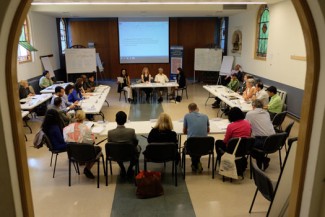
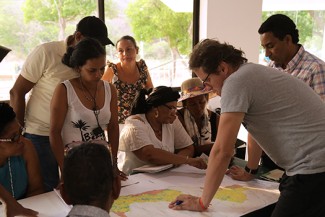
The International Center for Transitional Justice (ICTJ) and the Barcelona International Peace Resource Center (BIPRC) are pleased to announce an Intensive Course on Transitional Justice and Peace Processes, taking place in Barcelona, Spain, June 6 - 10, 2016. It will focus on practical examples of recent or paradigmatic peace processes where the question of justice formed a significant part of the negotiating context.

This report focuses Liberia's Comprehensive Peace Agreement (CPA) of 2003. It examines many key decisions that were made in creating the CPA, and centers on questions of justice, accountability and the rule of law. It notes developments in the four years after the CPA was signed, an...

This report focuses the Lomé Accord of 1999, that ended the Sierra Leone's 10 year civil war. It examines the negotiation dynamics influencing its creation and the impact of the accord from 1999 to 2007. The peace accord is often remembered for its unconditional amnesty provisions, wh...

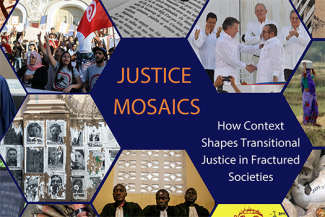
A new book by ICTJ titled Justice Mosaics: How Context Shapes Transitional Justice in Fractured Societies examines the challenges of responding to massive human rights violations in different and difficult circumstances in today's world.

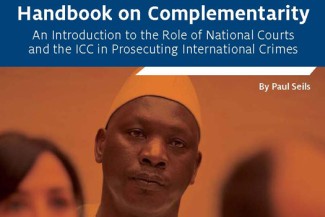
A new handbook written by ICTJ vice president Paul Seils explores the relationship between the ICC and national courts.

In the aftermath of massive human rights violations, the voices of young people carry enormous potential: they can tell the truth about the past while offering new paths forward as their societies pursue peace and justice. However, if institutions want the insights of young people, they must avoid pre-formulated solutions and instead engage with youth on their own terms. A new guide released by ICTJ today aims to provide the tools necessary to do so, offering recommendations about how to responsibly and effectively gather statements from young people.

When armed conflict or atrocities have torn a society apart, it can be difficult for people to regain trust in the government and reconcile with those they see as their enemies or abusers. While the idea of reconciliation has been closely linked to transitional justice, misunderstandings of the term have sometimes led to superficial, even harmful approaches to addressing the past. A new paper from the International Center for Transitional Justice looks at different understandings of reconciliation and its place in transitional justice.

New York, January 25, 2021—"You cannot deliver 500 kilograms of transitional justice,” explains a high-level UN official in a new ICTJ report released today that explores the theoretical and practical challenges of measuring the results of transitional justice processes. These processes are complex and politically contested and are thus notoriously difficult to evaluate. The report offers key insights related to and tools for evaluating and monitoring transitional justice processes and assessing their impact.

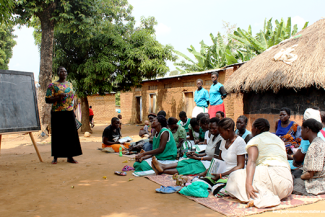
Kampala, October 17, 2022—Sixteen years after the decades-long conflict between the Ugandan government and the rebel group the Lord’s Resistance Army (LRA) ended, victims continue to grapple with its persistent effects. Victims of conflict-related sexual violence (CRSV) and children born of war, in...

New York, March 10, 2021—“We want to turn the page, but not at the cost of justice”—that was a message repeated by victims of human rights abuses interviewed in a new report released today on transitional justice in the Central African Republic (CAR). Produced by the International Center for Transitional Justice and Cordaid, ‘A Drop of Water on a Hot Stone’: Justice for Victims in the Central African Republic presents findings from a study exploring victim-centered approaches to justice in CAR and their feasibility in a context of profound fragility and extreme poverty.