484 results

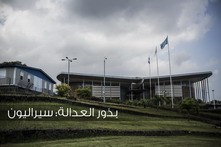
On August 30, 2012, ICTJ joined government officials and civil society in Freetown to celebrate the launch of a new website for the Truth and Reconciliation Commission of Sierra Leone and welcome the prospects for revitalization of Sierra Leone’s reconciliation.

Sierra Leone has made tremendous progress in implementing transitional justice commitments incumbent on the authorities under the Lomé Peace Agreement (LPA) and international law.

This handbook explains the mandate, origins, purposes, and operating methods of the Truth and Reconciliation Commission (TRC) and Special Court in Sierra Leone. It discusses the differences and similarities between them, in clear, non-technical language. The TRC and Special Court can...

On International Justice Day, July 17th, ICTJ looks at the legacy of the Special Court for Sierra Leone through the voices of those to whom its work was most important: the citizens of Sierra Leone. Our new multimedia project, “Seeds of Justice: Sierra Leone,” presents five portraits of Sierra Leoneans whose lives were impacted by this court.

This paper explores political exclusion in Kenya and its consequences on the social fabric of the nation. It draws from past governmental reports and analysis to formulate new recommendations that can inform current discourse. It first provides an overview of ethnicity in Kenya. ...

In Congo over the past decade, demands for justice have been largely unmet in peace negotiations: impunity for the worst crimes is entrenched, and the root causes of the conflict remain unaddressed. As the European Union, often through the European Union Special Representatives (EUSRs...

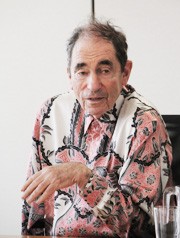
ICTJ Vice President Paul Seils interviewed South African judge and human rights activist Albie Sachs.

South African judge and human rights activist Albie Sachs is among the foremost transitional justice experts to have emerged from the anti-apartheid struggle and subsequent transition. In this interview with ICTJ Vice President Paul Seils, Sachs discusses the difficult balance of retribution and reconciliation, and offers possible lessons from the South African experience for other societies facing similar questions of truth and justice.

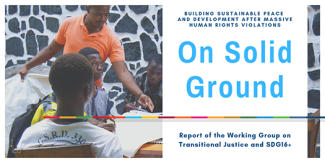
New York, June 3, 2019—Today, with just over a month to go before the 2019 UN High-Level Political Forum (HLPF) on Sustainable Development, ICTJ and its partners have released the Report of the Working Group on Transitional Justice and SDG16+, entitled “On Solid Ground: Building Sustainable Peace and Development After Massive Human Rights Violations.”

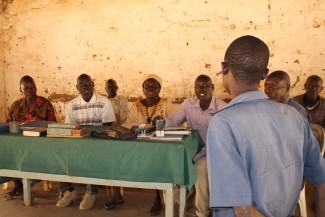
Customary justice is the primary way in which most communities in South Sudan resolve disputes. Its ability, however, to deal with massive human rights violations is limited due to the complexity of intercommunal violence and a lack of clarity on its proper role. This report contends ...

A man stands facing a table around which several men are seated.