


229 results

Children and youth are especially vulnerable to the effects of conflict and gross human rights violations. In this edition of the ICTJ Program Report, ICTJ's Children and Youth Program Director Virginie Ladisch talks with us about the importance of integrating child and youth sensitivity into transitional justice mechanisms.

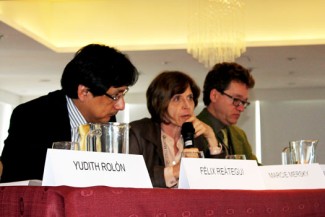
The one-day forum “Latin American Experiences with Truth Commissions,” organized by the International Center for Transitional Justice in Bogotá on July 22, brought together leading experts to discuss experiences and lessons learned from truth-seeking processes that shed light on massive human rights violations in four countries: Argentina, Guatemala, Paraguay, and Peru.

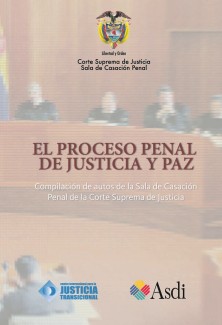
The International Center for Transitional Justice publishes a selection of excerpts from the Supreme Court's rulings and judgments regarding the Justice and Peace process.

Media play an essential role in peace negotiations and post-conflict situations. In the highly polarized and politicized context of Colombia, the Gabriel García Márquez Foundation for New Ibero-American Journalism (FNPI) chose May 3, Worldwide Freedom of Expression Day, to bring together directors and editors of Colombia’s main news media to reflect on their role at a historic moment for the country: the government’s peace talks with the FARC, which represent a possible end to five decades of armed conflict.

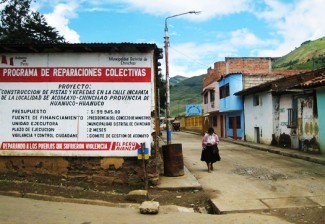
Reparations seek to recognize and address the harms suffered by victims of systematic human rights violations. ICTJ’s Reparative Justice program provides knowledge and comparative experience on reparations to victims' groups, civil society and policymakers worldwide. In this edition of the ICTJ Program Report, we look at ICTJ's work on reparations in dynamic transitional contexts such as Nepal, Colombia, Peru, DRC, and Uganda.

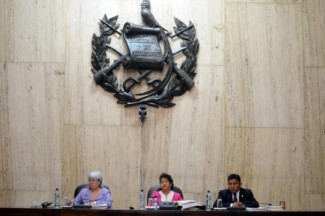
The International Center for Transitional Justice (ICTJ) welcomes today’s verdict in Guatemala by the High Risk Court in the trial of former military dictator José Efrain Ríos Montt. The 86-year-old ex-general was convicted of genocide and crimes against humanity against the indigenous Mayan Ixil population during Guatemala’s Civil War. He was sentenced to a total of 80 years in prison. José Mauricio Rodríguez Sánchez, the co-accused, who headed military intelligence under Ríos Montt, was found innocent.

Nine international human rights and legal groups have welcomed the resumption of the Guatemalan trial of Efraín Ríos Montt, the former military dictator, for genocide and crimes against humanity. The trial has taken another step towards its conclusion with the hearing of final arguments from the prosecution and victims’ representatives today and yesterday.

Four international legal and human rights groups are together urging all concerned to ensure that the current trial in Guatemala of former president Efrain Rios Montt on charges of genocide and crimes against humanity proceeds with due respect for judicial independence. The four are: the Open Society Justice Initiative, the International Center for Transitional Justice (ICTJ), the Center for Justice and International Law (CEJIL), and the Washington Office on Latin America (WOLA).

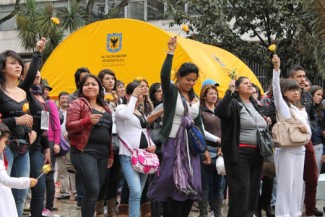
With the aim of reinforcing the legitimacy of the peace process, which could lead to a historic compromise that would deeply influence the future of the country, thousands of Colombians are marching today to express their support for the discussions, for peace, and for democracy. Their motto is: “We are the majority: Now is the time for peace!”

As the peace talks progress between the Colombian government and FARC representatives in Havana, many Colombians are increasingly hopeful that the country will be able to put an end to more than 50 years of armed conflict. Despite broad support by many different sectors of society, the ...