



115 results

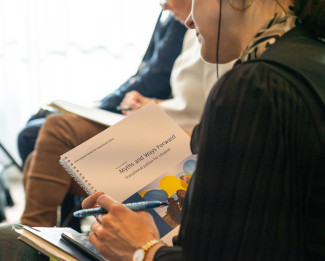
A new ICTJ report urges the revitalization of Ukraine’s holistic transitional justice policymaking. Debunking the most common myths about transitional justice in Ukraine, the report presents the key legal, policy, and victim-centered arguments in favor of advancing a comprehensive transitional justice framework.

Despite earlier efforts to envision a national transitional justice policy, Ukraine remains overly cautious about establishing one. This report provides a robust substantiation of why Ukraine should revive its holistic transitional justice policymaking. In the first part, it debunks t...

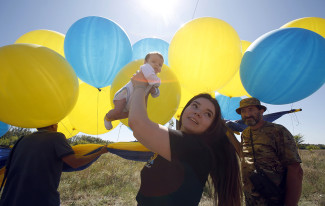
A women holds up an infant in the air on sunny day outdoors, surrounded by yellow and blue balloons

The field of transitional justice is increasingly recognizing the relevance of mental health and psychosocial support (MHPSS) in contexts of massive human rights violations. Despite growing advocacy and awareness at the global policy level, however, the field lacks a systematic approa...

an image of colorful painting featuring a young girl

This report presents the findings from research on the needs and expectations of women survivors of sexual and gender-based violence in Nepal. Based on in-depth interviews, it explores what happened to these survivors during the country’s decade-long war (1996-2006), what they need no...

A cartoon illustration of a group of people

George Floyd’s death reignited existing anger over American society’s deep and festering racial wounds. His death triggered significant social uprisings that have challenged the methods of policing that have emerged over the course of several decades. With a growing awareness of polic...

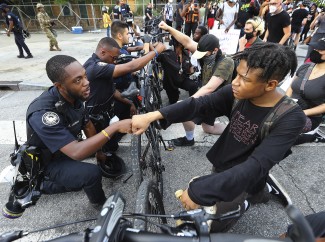
Three police officers kneel with several protesters at a demonstration.

Reparations for victims of sexual and gender-based violations (SGBV) raise a series of complicated questions and implementation challenges around how to acknowledge this category of victims and deliver reparations without exposing victims to stigma and rejection. Victims must weigh the risk of...

ICTJ Vice President Paul Seils interviewed South African judge and human rights activist Albie Sachs.

In what UN Women describes as the “shadow pandemic,” rates of violence against women have soared since the public health and economic crises brought about by COVID-19. With stay-at-home orders in place in countries around the world, women are more susceptible than ever to domestic violence. In countries affected by conflict or repressive rule, all forms of sexual and gender-based violence are on the rise. The ICTJ Gender Modules offer a timely tool to raise awareness about these issues and help develop gender-sensitive responses to them.

It may seem trivial for me to write about why those who continue to mark July 17 as "International Justice Day" should finally stop calling it that. Many human rights groups (including ICTJ), United Nations agencies, and governments have been publicly using that phrase since 2010. It is for victims of massive and systematic human rights violations, including abuses that amount to international crimes under the Rome Statute, that it is important to end the misconception that the phrase encourages.

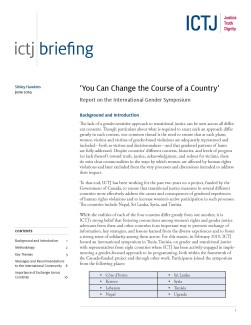
In February 2019, ICTJ hosted an international symposium on gender and transitional justice in Tunisia that brought together representatives from eight countries where ICTJ has been actively engaged in implementing a gender-focused approach to its programming. This briefing paper...