


519 results

This study examines the development of restitution and reparations in international law and practice over the last century. It aims to provide recommendations on how restitution can best contribute to transitional justice by reviewing four case-studies: the Czech Republic, South Afric...

This case study offers an overview of some of the major issues and recent developments in transitional justice in Croatia. While the main focus is on war crimes prosecutions before the International Criminal Tribunal for the former Yugoslavia and Croatian courts, it also examines trut...

This case study reviews and analyzes the deployment of international judges and prosecutors in Kosovo. It is part of a series providing information on hybrid courts' policy and practical issues. Although the Kosovo system of international judges and prosecutors has made significant st...

This article focuses on the results of an ICTJ nation-wide survey: Colombian Perceptions and Opinions on Justice, Truth, Reparations, and Reconciliation. Colombians expressed a strong demand for accountability and reparations and low support for lenient sentences. ICTJ demands the Co...

This report examines the effectiveness of war crimes prosecutions in Serbia. While the War Crimes Chamber (WCC) and the Office of the War Crimes Prosecutor (OWCP) have had some success, significant concerns exist - such as opposition from ethnic nationalists. Despite shortcomings, the...

ICTJ is pleased to announce two films premiering at the Human Rights Watch International Film Festival (HRWIFF) in June. IMPUNITY (New York premiere) + Q&A with filmmakers What is the cost of truth for families immobilized by Colombia’s violent past? In 2005, Colombia started gathering evidence...

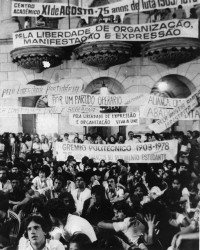
Brazil’s new government is showing strong support for the passage of a bill creating a National Truth Commission investigating past human rights violations, writes Eduardo González, director of ICTJ's Truth and Memory Program. ICTJ also spoke with Marlon Weichert, human rights activist and regional prosecutor for Brazil's Federal Public Ministry, on the current debate surrounding truth-seeking and accountability in Brazil.

ICTJ spoke with Marlon Weichert, prominent human rights advocate and regional prosecutor with the Federal Public Ministry of Brazil (Ministério Público Federal), on Brazil's pending truth commission bill and calls for accountability measures addressing past violations in Brazil.

As the United States and Colombia near the signing of a free-trade agreement and resolve differences over labor rights and other issues, the problematic extraditions of paramilitaries accused of savage crimes committed during the years of counter-insurgency remain far from the spotlight.

BOGOTÁ, May 12, 2011—The decision by President Juan Manuel Santos to recognize the existence of an internal armed conflict in Colombia is a positive step toward transparency and truth-telling in that country, ICTJ said today. The Colombian government has denied for years the existence of an internal armed conflict there, although it was never in doubt from an international law perspective.