512 results

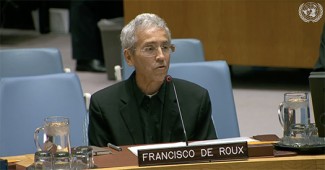
The United Nations Security Council has considered transitional justice on several occasions in the past and included many of its components in country-specific resolutions, and also stressed the links between transitional justice and the other items on its thematic agenda including women, peace and security, and children and armed conflict, and it has made explicit reference to transitional justice as a key part of efforts to sustain peace. Yet, on February 13, the Security Council held its first open debate focusing solely on transitional justice.

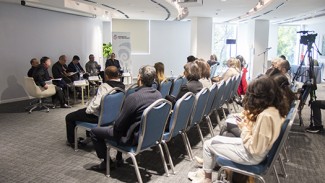
Tunis—On March 2-3, 2020, ICTJ is holding a conference in Tunis, Tunisia, on the fight against corruption and the recovery of ill-gotten assets as a critical element of transitional justice processes. The conference will bring together activists, policymakers, and experts from Tunisia and other countries in the global South emerging from conflict or authoritarian rule, including Armenia, The Gambia, Kenya, the Philippines, and South Africa.

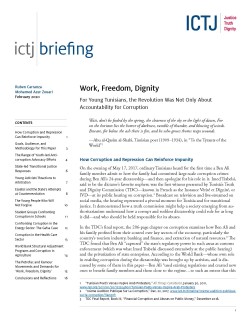
Building on its work in Tunisia since 2012, ICTJ met with representatives of youth-led civil society organizations and social movements and state institutions involved in pursuing accountability for Ben Ali-era corruption. This paper focuses on the strategies and i...

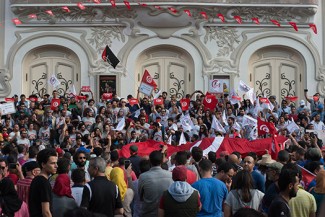
Youth activists in Tunisia have played a vital role in keeping corruption at the center of public debate since the country's revolution in 2011. Through decentralized, nationwide protest movements, young Tunisians have been calling for measures that root out systems of endemic corruption. ICTJ sat down with one youth leader to discuss her activism and views on Tunisia's transitional justice process.

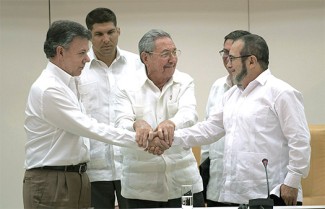
New York—On February 26, ICTJ and NYU Law’s Center for Human Rights and Global Justice will welcome former President of Colombia and Nobel Peace Prize Laureate Juan Manuel Santos for a conversation on the role of transitional justice in peace negotiations.

Eminent human rights defender José Zalaquett passed away on February 15. “Pepe,” as he was known by many, helped pioneer the field of transitional justice and inspired countless human rights defenders around the globe.

As subscribers, you enjoy timely commentary on what’s happening in transitional justice around the world written by one of our experts exclusively for our monthly World Report newsletter. In this month’s edition, we bid farewell to 2019 by looking back on the experts’ choices of the past year.

On December 12, ICTJ’s head of office for Colombia María Camila Moreno received the Alfonso López Michelsen Award for her dedicated work to advance peace and uphold international human rights and humanitarian law.

In 1998, Colombian filmmaker Sergio Cabrera released “Time Out,” a fictional comedy in which guerrilla members and soldiers — usually mortal enemies — call a momentary truce to watch the national soccer team play in the qualifiers for the 1994 World Cup. Twenty years later, former combatants of both sides, members of the security forces, and victims of the conflict came together at Llano Grande in the region of Dabeiba to watch Cabrera’s film and play a game of soccer.

The political crisis in Venezuela seems to have reached a stalemate. In September, the Norway-mediated negotiations between the Maduro government and the opposition came to a halt, leaving both sides struggling for the upper hand. But since it remains difficult for either party to prevail, it is likely that this impasse is a momentary setback rather than an indication that the negotiations are defunct.