



516 results

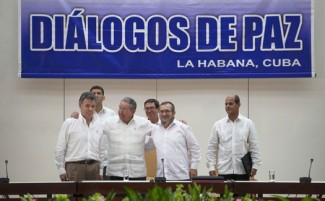
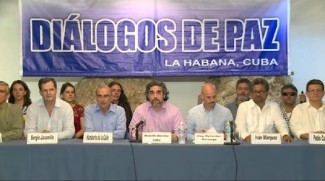
The International Center for Transitional Justice welcomes the recent agreement between the Government of Colombia and the Revolutionary Armed Forces of Colombia to create a special criminal jurisdiction as part of an integrated system of truth, justice, reparations and guarantees of non-recurrence.

The resignation and indictment of President Otto Pérez Molina for corruption was a significant victory over impunity in Guatemala. In an interview with journalist Carlos Dada, we discussed how recent developments in Guatemala could impact other countries in Central America, such as Honduras and El Salvador.

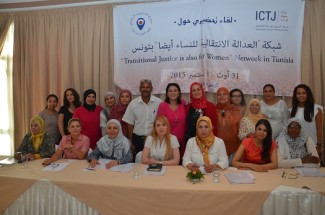
In collaboration with 11 Tunisian human rights organizations from nine regions, ICTJ recently established the network “Transitional Justice is also for Women” to engage women as active participants in transitional justice initiatives.

In this op-ed, ICTJ's President David Tolbert expresses concern about the new "Reconciliation Bill" proposed by the Tunisian government, which would grant amnesty to corrupt business people and Ben Ali-era officials in the guise of "reconciliation." "Massive corruption and violent human rights violations are mutually reinforcing, and unless this linkage is exposed and broken, it can lead to mutually reinforcing impunity," writes Tolbert.

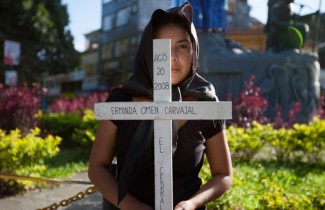
Some of the relatives’ stories start with the banging of a door at night, followed by a sudden abduction; others begin with a seemingly innocent citation to appear at a police station for a “routine procedure”. In any case, the stories always unfold in a desolate manner: as a loved one ...

On International Youth Day, ICTJ reaffirms the importance of engaging youth in efforts to reckon with the past in societies grappling with repressive and violent histories.

ICTJ welcomes the agreement reached between the Colombian government and the Revolutionary Armed Forces of Colombia (FARC) guerrilla group to create a truth commission, after a peace agreement is signed.

In the wake of the agreement between Colombia and FARC to form a truth commission, ICTJ's Fernando Travesí and Félix Reátegui discuss the role such a body should be expected to fulfill.

In this op-ed, ICTJ Vice President Paul Seils questions the policy objectives of punishing members of FARC accused of the most serious crimes in the ongoing Colombian peace negotiations.

A new paper by the ICTJ on the peace negotiations in Colombia considers the competing goals of punishing members of the FARC who are deemed most responsible for committing serious crimes.