43 results

A new ICTJ report urges the revitalization of Ukraine’s holistic transitional justice policymaking. Debunking the most common myths about transitional justice in Ukraine, the report presents the key legal, policy, and victim-centered arguments in favor of advancing a comprehensive transitional justice framework.

Despite earlier efforts to envision a national transitional justice policy, Ukraine remains overly cautious about establishing one. This report provides a robust substantiation of why Ukraine should revive its holistic transitional justice policymaking. In the first part, it debunks t...

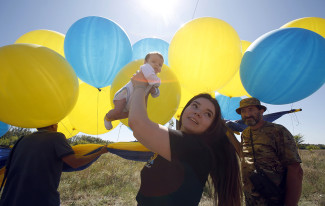
A women holds up an infant in the air on sunny day outdoors, surrounded by yellow and blue balloons

Why pursue transitional justice in the aftermath of massive human rights violations? This video provides a window into the debate about the relevance of transitional justice in today’s world.

This report aims to help practitioners in the transitional justice field to understand the experience of establishing and operating hybrid courts and to address some common assumptions about these entities. To do so, it looks at hybrid or mixed courts in practice, drawing on experienc...

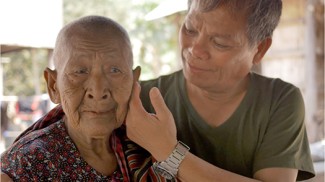
Angkar, screened on June 16 at the New York Human Rights Watch Film Festival, follows Khonsaly, a victim of the Khmer Rouge, on his journey to the village he fled almost 30 years ago. The film, produced by Neary Adeline Hay about her father's experience with torture and repression, is an intergenerational offering to truth and memorialization work that dances between the inheritance of abuse and its painful recollection by a survivor.

As we look back on 15 years of ICTJ's work, we recognize that our greatest asset is the people whose knowledge, experience, and dedication made our contribution possible. To celebrate all who have been part of ICTJ’s story over the years, we asked some of our former colleagues to share their reflections and memories of moments that stand out: moments that throw the stakes of our work into sharp relief. In the weeks and months to come we will bring you their stories in Reflections on the Struggle for Justice. Caitlin Reiger, ICTJ's former Deputy Director of Prosecutions (2005–2010), reflects on the humanizing power of testimony, on display in East Timor.

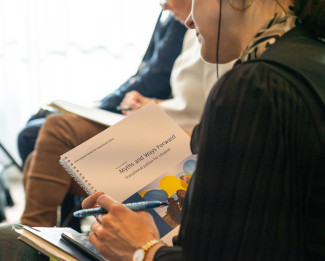
ICTJ spoke with Patrick Walsh, an Australian human rights advocate who helped establish and advise East Timor's Commission for Reception, Truth, and Reconciliation (CAVR).

Some of the relatives’ stories start with the banging of a door at night, followed by a sudden abduction; others begin with a seemingly innocent citation to appear at a police station for a “routine procedure”. In any case, the stories always unfold in a desolate manner: as a loved one ...

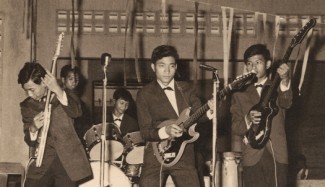
The new film "Don't Think I've Forgotten: Cambodia’s Lost Rock and Roll" explains the events of 1960s and 70s through the eyes of the musicians and artists who ushered in a new era of sound, only to be silenced too soon. As the world commemorates the 40th anniversary of the genocide in Cambodia, the new documentary presents the untold story of how their music managed to survive.

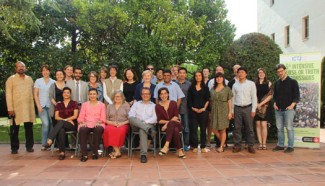
Transitional justice practitioners and activists from 18 different countries gathered in Barcelona to attend the 6th Intensive Course on Truth Commissions, organized by the ICTJ and the Barcelona International Peace Resource Center on September 29 - October 3.