



48 results

A new ICTJ report urges the revitalization of Ukraine’s holistic transitional justice policymaking. Debunking the most common myths about transitional justice in Ukraine, the report presents the key legal, policy, and victim-centered arguments in favor of advancing a comprehensive transitional justice framework.

Despite earlier efforts to envision a national transitional justice policy, Ukraine remains overly cautious about establishing one. This report provides a robust substantiation of why Ukraine should revive its holistic transitional justice policymaking. In the first part, it debunks t...

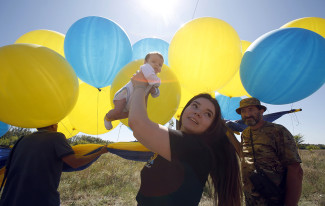
A women holds up an infant in the air on sunny day outdoors, surrounded by yellow and blue balloons

Why pursue transitional justice in the aftermath of massive human rights violations? This video provides a window into the debate about the relevance of transitional justice in today’s world.

This study explores a transitional justice approach to the dilemma of foreign fighters in violent conflict. Such an approach can help center human rights in comprehensive responses to foreign fighters, and shift the current focus from security and punishment to justice and long-term p...

Image of Children looking through holes in a tent at al-Hol displacement camp in Hasaka governorate, Syria, on April 2, 2019.

New York, December 10, 2021—In contexts such as Afghanistan, Bosnia, Chechnya, Iraq, Somalia, and Syria, hundreds, sometimes thousands, of individuals have crossed national borders to engage in violent conflicts in which serious human rights violations and mass atrocities have been committed...

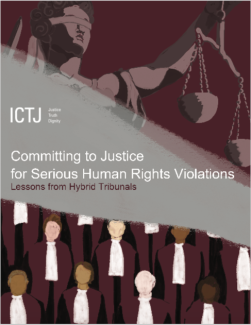
This report aims to help practitioners in the transitional justice field to understand the experience of establishing and operating hybrid courts and to address some common assumptions about these entities. To do so, it looks at hybrid or mixed courts in practice, drawing on experienc...

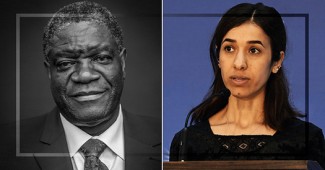
Recent recognition of the work of Nobel Laureate Nadia Murad has drawn global attention to the issue of sexual violence and gender-based violence in conflict. But, as ICTJ Expert Kelli Muddell argues, the nuances of gender norms and how they impact women, men, and vulnerable populations are still often missing from conversations about victims.

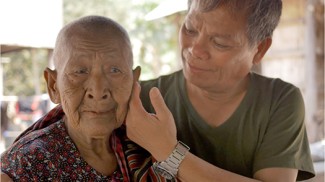
Angkar, screened on June 16 at the New York Human Rights Watch Film Festival, follows Khonsaly, a victim of the Khmer Rouge, on his journey to the village he fled almost 30 years ago. The film, produced by Neary Adeline Hay about her father's experience with torture and repression, is an intergenerational offering to truth and memorialization work that dances between the inheritance of abuse and its painful recollection by a survivor.

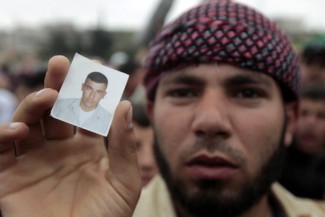
With enforced disappearances on the rise, ICTJ President David Tolbert says the path to prevention is clear: the international community must reorder its priorities and change its approach. The disproportionate attention on counterterrorism takes us further away from accountability and prevention, Tolbert writes. He urges the international community to lead the way in unequivocally censoring governments that use enforced disappearance as a political tactic — and ensuring there can be no impunity for this crime.

The new film "Don't Think I've Forgotten: Cambodia’s Lost Rock and Roll" explains the events of 1960s and 70s through the eyes of the musicians and artists who ushered in a new era of sound, only to be silenced too soon. As the world commemorates the 40th anniversary of the genocide in Cambodia, the new documentary presents the untold story of how their music managed to survive.