


535 results

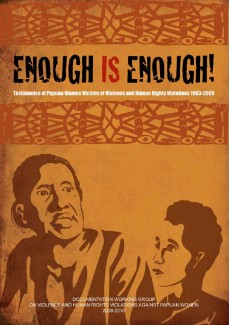
“We women of Papua have been bruised, cornered, besieged from all directions. We are not safe at home, and even less so outside the home. The burden we bear to feed our children is too heavy. The history of the Papuan people is covered in blood, and women are no exception as victims o...

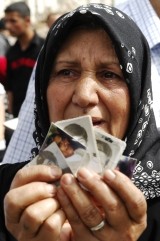
Lebanon has yet to seriously address the issue of thousands of people who went missing or were forcibly disappeared during the country’s civil war. ICTJ spoke with Lebanese activists to discuss a recent initiative taken by the families of the missing and civil society organizations to create a draft law on the missing.

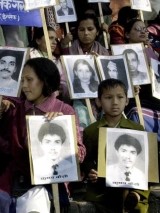
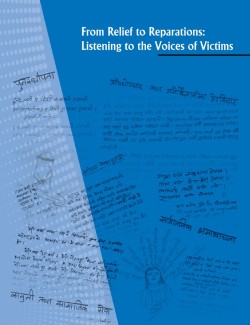
Five years since the end of Nepal's brutal civil war, victims are losing patience waiting for truth, justice, and reparation. Last year ICTJ completed a six month research project to analyze the effects of the the government's Interim Relief Program and determine the steps still required for Nepal to fulfill its obligation to provide reparations to victims. The findings have been published in a report titled “ From Relief to Reparations: Listening to the Voices of Victims.”

A two-day roundtable discussion on a draft law on the missing and forcibly disappeared persons was held February 24–25 in Beirut, Lebanon. Organized by the Committee of the Families of the Kidnapped and Disappeared in Lebanon, Support of Lebanese in Detention and Exile (SOLIDE), Act for the Disappeared, and ICTJ, the roundtable was part of the project “Lebanon’s unaddressed legacy: the missing and the families’ right to know,” funded by the European Union (EU) and the Embassy of Switzerland in Lebanon.

Following a restive year, Indonesia's human rights record is one of the situations under review during the 13th session of the UN Human Rights Council Universal Periodic Review (UPR) process in May–June 2012.

Based on interviews with 1,200 people, this study assesses conflict victims' experience with the government's Interim Relief Program since its inception in 2008. The findings are intended to inform a future reparations policy that would seek to help those whose human rights were viola...

The People’s Representative Assembly of Indonesia passed on September 7, 2004, a bill creating a “Truth and Reconciliation Commission”, which is charged with clarifying abuses committed before 2000 and determining whether to award individualized amnesties for perpetrators and reparati...

As Nepal’s parliament enters the final discussions on a draft Truth and Reconciliation Commission (TRC) bill, questions remain regarding the relationship between amnesty and reconciliation provisions within the bill.

As ICTJ co-hosts a discussion on complementarity on the margins of the Assembly of State Parties (ASP) of the International Criminal Court (ICC), the principle of ensuring accountability for serious crimes has seen a major breakthrough at a recent high-level meeting at Greentree. The meeting brought together international justice actors, development practitioners, UN representatives, and national rule of law actors to discuss the practical implementation of complementarity and how to strengthen domestic systems seeking to investigate serious crimes.

NEW YORK, Dec. 14, 2011—ICTJ welcomes the election of Fatou Bensouda of Gambia as the next prosecutor of the International Criminal Court (ICC). Ms. Bensouda was unanimously elected December 12 by the Assembly of States Parties (ASP) during its 10th session in New York City, and will be the court's second prosecutor, commencing in June 2012.