272 results

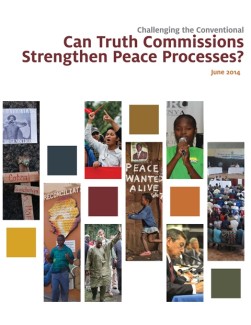
Truth commissions can make important contributions to peace processes if all parties can agree on common objectives and there is genuine local political will to shed light on past events. This is the key finding of a new study – titled “Challenging the Conventional: Can Truth Commissions Strengthen Peace Processes?” – to be released on 19 June 2014 by ICTJ and the Kofi Annan Foundation.

This joint report by ICTJ and the Kofi Annan Foundation explores common assumptions about why truth commissions are created in the wake of armed conflict and what factors make them more likely to succeed – or fail. It arises from a high-level symposium hosted by the two organizations ...

ICTJ participated in the launch of a new report on the relationship between transitional justice and development, launched by the Swedish International Development Agency (Sida).

A new amnesty law passed by the government in the Democratic Republic of the Congo (DRC) will grant amnesty to hundreds of members of armed groups engaged in hostilities, including members of the infamous M23 rebels, but stops short of pardoning serious crimes.

ICTJ is pleased to announce it will host a series of online debates on new challenges and cutting-edge issues in transitional justice.

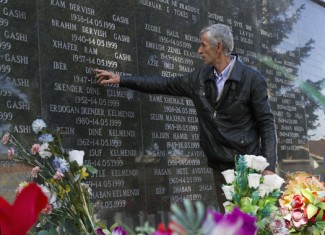
In this op-ed, ICTJ President David Tolbert argues that in order to meet the EU’s high standards on the rule of law and human rights, Serbia must address the legacy of its recent past in which Slobodan Milosevic’s regime and the institutions under its control were involved in some of the most notorious crimes committed in Europe since World War II.

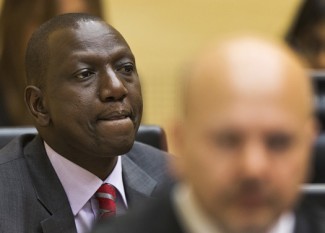
Join ICTJ and the Center for Global Affairs for a conversation on how the ICC and the African Union can move forward, and what the AU position means for effective prosecutions within Africa and elsewhere.

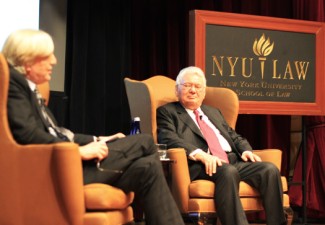
In December, ICTJ partnered with NYU School of Law and the Center for Human Rights and Global Justice to host Auschwitz survivor and Judge Thomas Buergenthal for the 7th Annual Emilio Mignone Lecture on Transitional Justice.

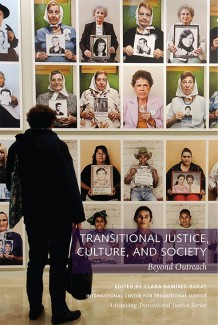
Transitional justice processes have a fundamental public dimension: their impact depends in part on the social support they receive. Beyond outreach programs, other initiatives, such as media and cultural interventions, can strengthen—or in some cases undermine—the public resonance of...

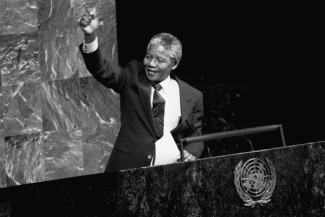
ICTJ mourns the passing today of Nelson Mandela, a luminary in the struggle for equal rights in South Africa and around the world. “Nelson Mandela’s courage in the face of oppression, his steadfast commitment to his principles and his magnanimous leadership during a difficult period of transition have long been an inspiration to me personally as well as to millions around the world. As we mourn our loss today, we celebrate a life of true greatness, dedicated to justice, without rancor or bitterness,” said David Tolbert, president of ICTJ.