


153 results

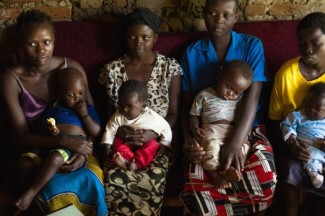
A new report from ICTJ provides insights on how women in northern Uganda have been affected by conflict, and gives recommendations on how transitional justice measures can recognize and redress the specific harms suffered by women as a result of the LRA conflict.

The need for a comprehensive reparations process was the central theme of the National War Victims’ Conference held in in May, in Kampala, Uganda.

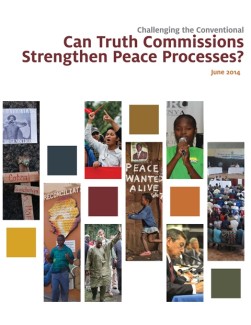
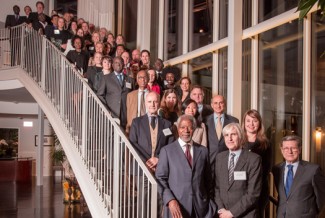
Truth commissions can make important contributions to peace processes if all parties can agree on common objectives and there is genuine local political will to shed light on past events. This is the key finding of a new study – titled “Challenging the Conventional: Can Truth Commissions Strengthen Peace Processes?” – to be released on 19 June 2014 by ICTJ and the Kofi Annan Foundation.

This joint report by ICTJ and the Kofi Annan Foundation explores common assumptions about why truth commissions are created in the wake of armed conflict and what factors make them more likely to succeed – or fail. It arises from a high-level symposium hosted by the two organizations ...

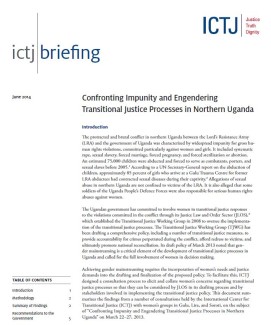
This briefing paper summarizes the findings of consultations undertaken by ICTJ with women’s groups in Gulu, Lira, and Soroti on confronting impunity and engendering transitional justice processes in northern Uganda. Its purpose is to help incorporate women’s needs and justice demands...

A new amnesty law passed by the government in the Democratic Republic of the Congo (DRC) will grant amnesty to hundreds of members of armed groups engaged in hostilities, including members of the infamous M23 rebels, but stops short of pardoning serious crimes.

More than six years after the war in Uganda came to a formal end, the country has taken a landmark first step by unanimously adopting a resolution to establish a reparations fund informed by the experiences of both men and women.

Join ICTJ and the Center for Global Affairs for a conversation on how the ICC and the African Union can move forward, and what the AU position means for effective prosecutions within Africa and elsewhere.

Can truth commissions help secure a just peace following a violent conflict in which massive human rights abuses are committed? In this special series of the ICTJ Forum, we present a series of conversations with some of the world’s top peace mediators and truth commission experts, whose collective experience include years on the front lines of critical peace agreements in Latin America, Africa, the Middle East, and Asia.

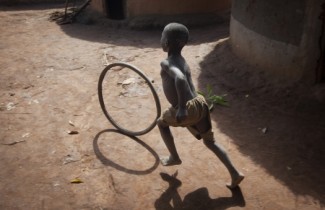
Children and youth are especially vulnerable to the effects of conflict and gross human rights violations. In this edition of the ICTJ Program Report, ICTJ's Children and Youth Program Director Virginie Ladisch talks with us about the importance of integrating child and youth sensitivity into transitional justice mechanisms.