229 results

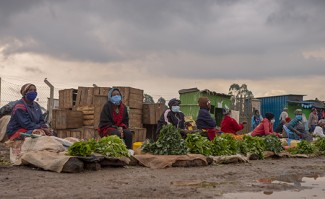
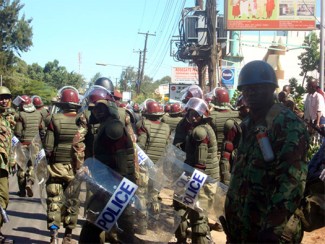
The role of police in society is to protect residents and enforce the rule of law. As a public institution, and particularly one whose function includes the state-sanctioned use of force, the effectiveness of the police depends on its integrity and legitimacy. When the police abuses its power, by brutalizing civilians and or engaging in corruption, it loses its credibility and the public’s trust. In Kenya, enforcement of measures to halt the spread of COVID-19 have been accompanied by acts of police brutality, of the kind that Kenyans have been through multiple times before.

Sparing almost no corner of the world from its wrath, the COVID-19 pandemic has now spread to every country. In an effort to slow the contagion, governments in most countries have been taking drastic measures requiring all residents other than essential workers to confine themselves in their homes, and shutting down vast sectors of their economies. The impact has been crushing. COVID-19 has profoundly affected every country where ICTJ currently works: Armenia, Colombia, Cote d’Ivoire, Ethiopia, Gambia, Kenya, Lebanon, Libya, Sudan, Syria, Tunisia, and Uganda. We recently caught up with ICTJ’s heads of country programs to learn more about the impact the pandemic is having on transitional justice and society more broadly.

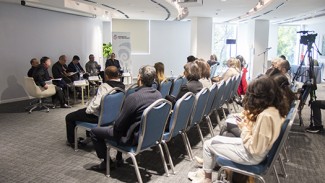
Tunis—On March 2-3, 2020, ICTJ is holding a conference in Tunis, Tunisia, on the fight against corruption and the recovery of ill-gotten assets as a critical element of transitional justice processes. The conference will bring together activists, policymakers, and experts from Tunisia and other countries in the global South emerging from conflict or authoritarian rule, including Armenia, The Gambia, Kenya, the Philippines, and South Africa.

Building on its work in Tunisia since 2012, ICTJ met with representatives of youth-led civil society organizations and social movements and state institutions involved in pursuing accountability for Ben Ali-era corruption. This paper focuses on the strategies and i...

Youth activists in Tunisia have played a vital role in keeping corruption at the center of public debate since the country's revolution in 2011. Through decentralized, nationwide protest movements, young Tunisians have been calling for measures that root out systems of endemic corruption. ICTJ sat down with one youth leader to discuss her activism and views on Tunisia's transitional justice process.

In its primary findings, Kenya's Truth, Justice and Reconciliation Commission noted that women and girls have been subject to systematic, state-sanctioned discrimination in all spheres of their lives, and that the state has failed to take measures to end the practices that r...

Between April 15 and May 3, 2019, ICTJ held a number of consultations with Kenyan youth from several informal settlements in Nairobi and Mombasa to reflect on their understanding of security sector reforms and their connection to the ongoing national dialogue process, particularly as ...

In its report, the Kenya Truth, Justice and Reconciliation Commission concluded that “corruption is endemic in Kenya” and that “there is a direct link between corruption and gross violation of human rights.” This paper considers the extent of impunity for corruption in Kenya, how corr...

Recently, Tunisia held its third parliamentary elections since the revolution and the second presidential elections since late President Béji Caid Essebssi passed away on July 25, 2019. It remains to be seen if the election’s results will usher in a new era of dignity, for which Tunisians took the streets in 2010 and 2011.

Given the political challenges emerging from authoritarian states and conflicts in Africa, what is the best way to pursue accountability for violations of international human rights and humanitarian law on the continent? ICTJ experts Chris Gitari and Howard Varney sit down to discuss regional initiatives, complementarity, and other strategies for pursuing accountability.