1530 results

This study provides expert financial and operational analysis and information to help facilitate the establishment of an Independent National Commission for the Missing and Forcibly Disappeared in Lebanon, as envisaged in a draft consolidated bill now before the Lebanese Parliament. ...

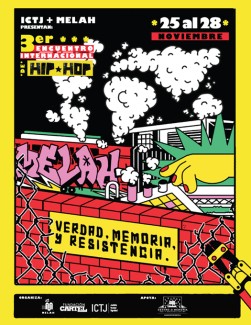
Bogotá, November 20, 2020—ICTJ and the Movement of Latin American Hip Hop Expressions have joined forces to cohost the third International Hip Hop Encounter, which will take place virtually this week from November 25 to November 28. The four-day online event will bring together artists and musicians from across Latin America and Africa along with activists, social leaders, and civil society representatives. The festival’s theme is the role of hip hop music and culture in uncovering truth, preserving memory, and resisting violence and oppression.

The trend of missing and disappeared persons due to conflict remains more prevalent than ever today. Many governments around the world have remained undeterred in their abuse of power to invade a home or community and remove persons deemed to be a threat. This intractable problem has received global attention largely due to the efforts of family members who often risk their lives in pursuit of the right to know and ‍‍to bury their loved ones.

Five years since the government of Indonesia and the Free Aceh Movement signed the Helsinki Memorandum of Understanding, key provisions for accountability for mass crimes have not yet been implemented. Attempts to avoid the difficult truths of Aceh’s recent history and to allow perp...

Although transitional justice processes are intended to help heal and restore society after conflict or authoritarian rule, marginalized groups often struggle to make their voices heard. These groups include those who have been displaced by conflict and, within that category, those wh...

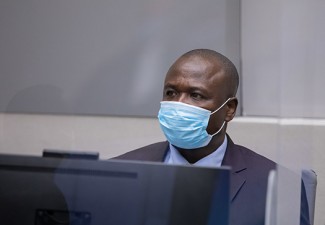
On February 4, 2021, the International Criminal Court issued its judgment in the case of the Prosecutor v Dominic Ongwen. The ICC found Ongwen guilty of 61 counts of crimes against humanity and war crimes committed in Northern Uganda between July 1, 2002, and December 31, 2005. The verdict recognizes the enduring impact of the crimes on the victims, their families, and Ugandan society more generally.

This joint report by ICTJ and the Institute for Human Rights Study and Advocacy (ELSHAM-Papua) provides important insight into the ongoing debate on steps required to achieve a sustainable peace in Papua. The report reviews Papua's recent history within a transitional justice framewor...

This joint report released today by the International Center for Transitional Justice (ICTJ) and the Institute for Human Rights Study and Advocacy (ELSHAM-Papua) provides important insight into the ongoing debate on steps required to achieve a sustainable peace in Papua. The report reviews Papua's recent history within a transitional justice framework, and provides expert recommendations on truth seeking, justice, reparations, institutional reform, and enforcing the rights of women victims.

The government of Uganda has been slow to address and remedy serious human rights abuses committed against civilians throughout the country, despite its commitment under the Juba peace talks. This paper analyzes some of the underlying factors that seem to impede the implementation of ...

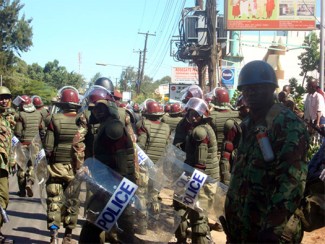
The role of police in society is to protect residents and enforce the rule of law. As a public institution, and particularly one whose function includes the state-sanctioned use of force, the effectiveness of the police depends on its integrity and legitimacy. When the police abuses its power, by brutalizing civilians and or engaging in corruption, it loses its credibility and the public’s trust. In Kenya, enforcement of measures to halt the spread of COVID-19 have been accompanied by acts of police brutality, of the kind that Kenyans have been through multiple times before.