


1535 results

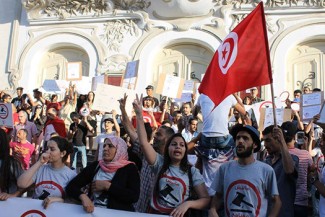
To mark International Women’s Day, we invite you to read about four countries at the top of our gender justice priorities in the coming year, each with its own history, context, and complex sets of challenges.

This study explores a transitional justice approach to the dilemma of foreign fighters in violent conflict. Such an approach can help center human rights in comprehensive responses to foreign fighters, and shift the current focus from security and punishment to justice and long-term p...

Image of Children looking through holes in a tent at al-Hol displacement camp in Hasaka governorate, Syria, on April 2, 2019.

This paper explores the challenges to uncovering the truth about the atrocities committed under the Khmer Rouge and achieving justice for victims in Cambodia. It discusses which transitional justice mechanisms are applicable and what opportunities to achieve truth and accountability e...

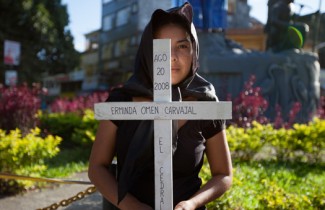
In Colombia, the shifting boundaries between drug trafficking and political crime and the tension between security and human rights pose particular challenges for those seeking accountability for past abuses and respect for human rights.

The 2030 Agenda for Sustainable Development establishes an ambitious set of goals and targets, the achievement of which will be a formidable challenge for any country struggling with poverty and inequality. This challenge increases dramatically for countries currently experiencing or emerging from violent conflict.

Transitional justice processes have a fundamental public dimension: their impact depends in part on the social support they receive. Beyond outreach programs, other initiatives, such as media and cultural interventions, can strengthen—or in some cases undermine—the public resonance of...

The focus of this paper is on initiatives of DDR, SSR, and transitional justice as they relate in peacebuilding contexts. This paper considers the connection between the three types of initiatives: first, by exploring the relationship between DDR and transitional justice; second,...

In societies scarred by ethnic animosity or religious intolerance, one goal of transitional justice is to help reshape identities, and to strengthen a sense of shared identity related to common membership in the national political community. This nation-building function of trans...

The framework of transitional justice, originally devised to facilitate reconciliation in countries undergoing transitions from authoritarianism to democracy, is increasingly used to respond to certain types of human rights violations against indigenous peoples -- even in cases where ...

Since the beginning of the 1980s, Latin American countries have undergone various processes of political transformation. In general terms, this change has consisted of a transition from authoritarian to democratic regimes. In some specific cases, such as Guatemala and El Salvador, the...