1535 results

By this summer, dozens of paramilitaries and guerrillas in Colombia's Justice and Peace process will have already spent eight years in prison. In accordance with the law, those who fulfill their obligations to contribute to the truth and provide reparation to victims should be released after serving eight years. In this op-ed, ICTJ's Maria Camila Moreno analyzes the valuable lessons learned through this process.

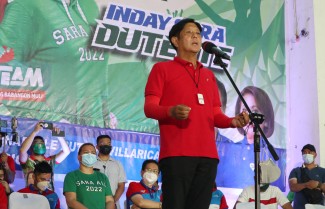
Thirty-six years after Ferdinand and Imelda Marcos were overthrown in a “People Power” revolution, the Marcos family is back in power, with Ferdinand Marcos Jr. elected as president (and Rodrigo Duterte’s daughter as his vice-president). While immediate as well as decades-late transitional justice...

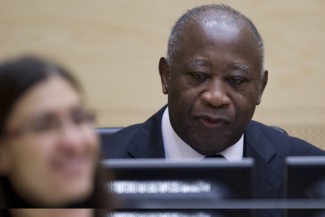
Complementarity is an essential tool in the fight against impunity - by working together, national courts and the ICC can seek justice for the worst crimes. But how is the fight against impunity playing out in Côte d’Ivoire? And how exactly can the Ivorian judiciary and the ICC ensure justice in CDI? A new review of our Handbook on Complementarity examines those questions and assesses how the Handbook can be used in his country.

Tunis—Youth activists from across Tunisia, representatives of state institutions, and experts from international nongovernmental organizations gathered on July 10, 2019, to discuss challenges to pursuing accountability for corruption crimes committed during the Ben Ali dictatorship and practical steps that civil society and government can take to overcome these challenges.

In July 2008 the Timorese-Indonesian Commission of Truth and Friendship (CTF) submitted its final report on atrocities committed in East Timor in 1999. Previously the CTF had been criticized by human rights groups, especially in relation to its power to recommend amnesties and its con...

Timor-Leste has implemented a number of transitional justice mechanisms to address the legacy of human rights violations that occurred in relation to the 1975 Timorese civil war and 24-year Indonesian occupation.These mechanisms have failed to provide victims with meaningful reparatio...

The UN Human Rights Council and its mechanisms, notably the system of special procedures, have approached justice for mass atrocities in a piecemeal and sometimes politicized manner, according to a new ICTJ policy briefing.

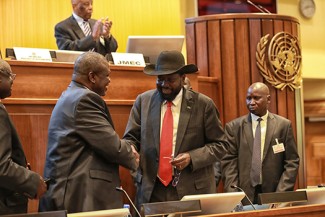
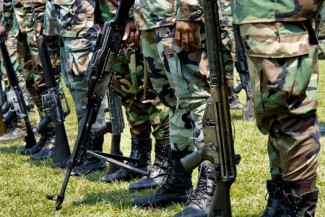
The signing of the Revitalized Agreement on the Resolution of the Conflict in the Republic of South Sudan on September 12, 2018, has been lauded as the best opportunity for peace in the country. However, the continued delays in implementing it, including the establishment of stipulated transitional justice mechanisms, have raised growing concerns within the international community. One essential part of the agreement that has not been executed is the consolidation of the military and the opposition and rebel forces into one army.

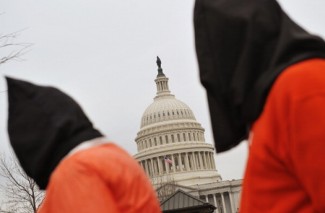
In this new opinion piece, ICTJ President David Tolbert says the United States has publicly lauded the rule of law as it applies to other countries and offered significant financial and political support to torture victims of foreign regimes; yet it has failed to acknowledge or address its obligation to victims of its own detention policies. To regain its credibility in the eyes of the world, the US government must take steps to acknowledge and address past violations and provide redress to victims of US-sanctioned abuses.

In dealing with counterterrorism detainees after 2001, the United States breached its obligations under the UN Convention Against Torture (CAT) and other sources of international human rights and humanitarian law. Although the current administration has turned away from some former p...