1541 results

Providing justice to victims of human rights abuses in fragile contexts such as the Central African Republic (CAR) is challenging for reasons related not only to the state’s stability, capacity, and political will, but also socioeconomic inequality in the country. This research report...

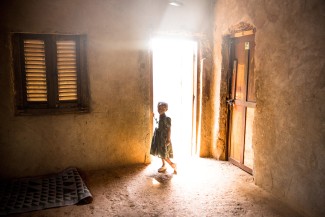
A young girl stands in the doorway to her house

This paper summarizes the basic facts about the Dujail trial, the first trial before the Iraqi High Tribunal (IHT) against Saddam Hussein and seven others. It also summarizes facts about the IHT in general. It considers both what the Iraqis wanted out of the trial, what such prosecuti...

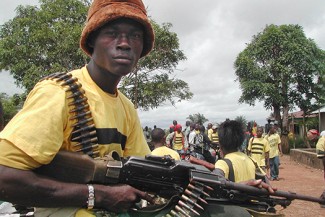
In the Netherlands, a court sentenced an arms dealer to 19 years in prison for his role in war crimes in Liberia. What does his case tell us about pursuing justice for economic crimes in Liberia and beyond?

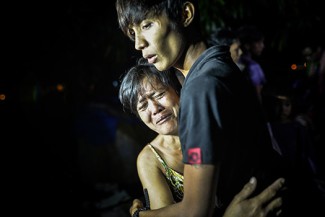
In less than two months since the inauguration of Rodrigo Duterte as president of the Philippines some 1,900 people have been killed at the hands of the police and death squads for suspected drug dealing or drug addiction. These unlawful murders echo the pattern of widespread and systematic extrajudicial killings that the country suffered under dictator Ferdinand Marcos.

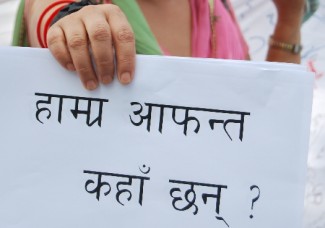
As attested by the arrest on January 3, 2013 in the United Kingdom of Kumar Lama, a Nepali Army Colonel suspected of torture, the government of Nepal’s failure to pursue truth and accountability for conflict-era violations can have serious consequences. Rather than resisting UK efforts to implement its obligations under international law, the Nepali government should develop a full transitional justice programme and redouble its efforts to provide truth, justice and reparations inside the country.

This journal article examines challenges to the legitimacy of the Special Tribunal for Lebanon (STL). These challenges include selective impunity, the highly selective nature of the jurisdiction of the STL, and the fears that the STL itself will act as an instrument for foreign powers...

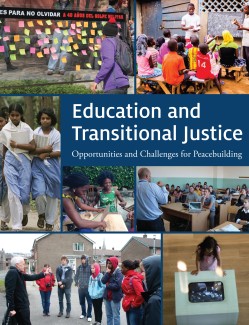
This report, part of a joint research project by ICTJ and UNICEF on the intersections of education, transitional justice, and peacebuilding, explores how a transitional justice framework can help to identify educational deficits relating to the logic of past conflict and/or repression...

The first piece in of our "Transitional Justice and Education" series examines the role of school systems in Bosnia and Northern Ireland.

Much of ICTJ’s work—and in fact much of the field of transitional justice—can be understood as the pursuit of effective remedies for victims of severe human rights violations. A remedy involves two elements: a victim’s access to the appropriate authorities to have his claim fairly hea...

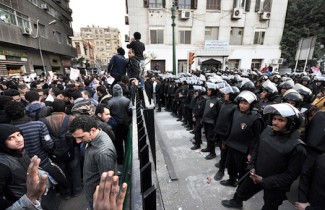
ICTJ joins other international and national human rights groups from across the global calling for Egypt to protect the independence of non-governmental organizations.