1530 results

This report presents a study of ex-combatants' knowledge and opinions of the Truth and Reconciliation Commission (TRC) and Special Court (SC) in Sierra Leone. Ex-combatants and these accountability institutions are interdependent. Ex-combatants need the TRC and SC to help them reinteg...

Generally, disarmament, demobilization, and reintegration (DDR) programs and truth commissions have operated independently of one another. This has resulted in missed opportunities for strengthening DDR and truth commissions. DDR’s reintegration aims may be furthered by increased trut...

ICTJ partnered with the Center for Global Affairs at New York University to explore how political will of international and national actors impacts national war crimes proceedings. The panel examined four diverse country scenarios - the Democratic Republic of the Congo, Serbia, Iraq, and Guatemala.

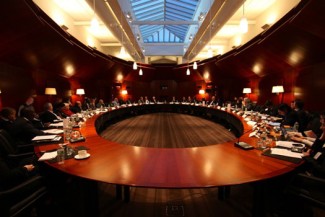
More truth commissions are being created now through peace agreements than at any other time in history. But are they living up to high expectations for truth, accountability, and reconciliation in societies emerging from violent conflicts? This week, the Kofi Annan Foundation and the International Center for Transitional Justice (ICTJ) held a three-day, high-level symposium to explore the challenges and benefits of truth commissions emerging from peace processes.

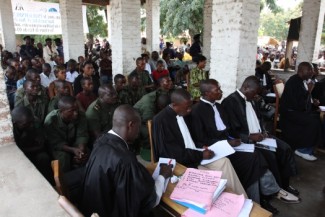
ICTJ, in cooperation with the United Nations Joint Human Rights Office (UNJHRO) and the United Nations Development Programme (UNDP), organized a high-level conference in Kinshasa today to discuss ways to strengthen the Congolese judicial system and its ability to investigate and prosecute serious crimes, such as genocide, war crimes, and crimes against humanity.

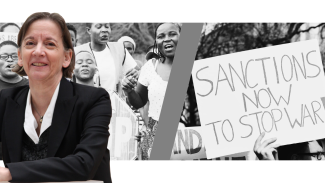
In recent years, states have increasingly imposed sanctions in relation to the commission of human rights violations, which has expanded their potential to advance transitional justice goals. In this context, ICTJ recently published a new report offering an analysis of international sanctions from a transitional justice perspective. In this interview, the report's author, ICTJ Senior Expert Elena Naughton, discusses how sanctions may advance or hinder efforts to deliver accountability, acknowledge and redress victims, and prevent recurrence in response to massive human rights abuses.

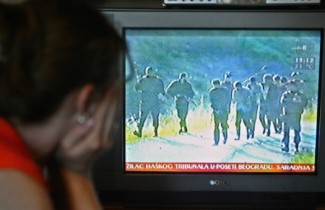
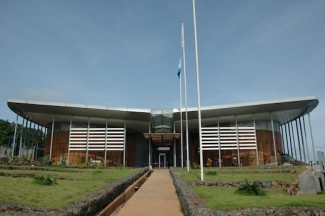
As the work of the Special Court for Sierra Leone draws to a close, we take stock of the historic milestones it has passed since its creation in advancing transitional justice through a special multimedia project, “ Exploring the Legacy of the Special Court for Sierra Leone.” This website will support two conferences: one in New York on November 7-8, 2012, and one in Freetown on January 9-10, 2013. The website will be regularly updated to provide information on the history of the court and its legacy through interactive multimedia and other features.

The International Center for Transitional Justice and the Special Court for Sierra Leone, with support from the Government of Canada, are pleased to announce "Exploring the Legacy of the Special Court for Sierra Leone," an expert conference in Freetown, 6-7 February, 2013.

This paper explores practical issues regarding the relationship between the Truth and Reconciliation Commission (TRC) and Special Court (SC) in Sierra Leone. It looks at: 1) the legal relationship of the Commission and the Court; 2) the question of whether the TRC information should b...