1530 results

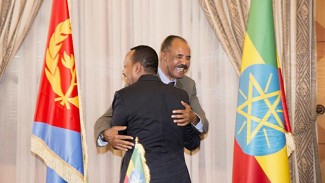
The announcement by the Executive Committee of Ethiopia’s ruling party that the country will implement the 2002 Algiers peace agreement and decisions of the Ethiopia-Eritrea Boundary Commission brings hope that a 20-year war that divided families and communities is finally over.

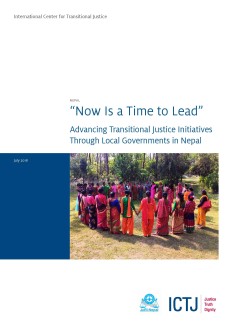
This report aims to help local governments, victims’ groups, and other stakeholders in Nepal to understand the scope of and potential inherent in local governmental powers and to identify what local governments can do to design and implement initiatives that support victims ...

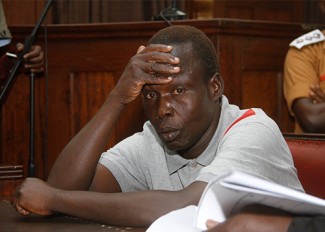
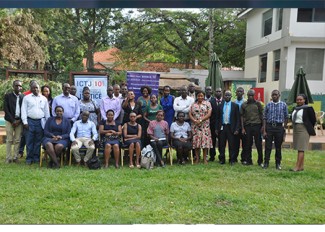
For years, ICTJ has championed the media and the role it plays in supporting truth-seeking and advancing accountability and redress for victims of conflict-related atrocities. In the places where we work, from South Africa, to the Gambia, Guatemala, Colombia and the Philippines, media projects and coverage—both mainstream and alternative—have been crucial in ensuring participation, mediating public discourse, contributing to acknowledgment for victims, and revealing long-hidden truths about crimes. This month, we share a dispatch from our work in Uganda.

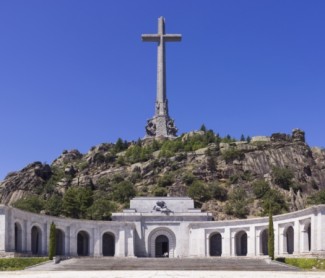
In these convoluted times, when terrible news dominates the headlines and overwhelms our hearts and minds, it is sometimes comforting to remember the words of Martin Luther King, Jr.: “The arc of the moral universe is long, but it bends towards justice.” News from Spain on recent progress toward justice for victims of fascism may offer some inspiration, and it is why I picked this story from the many unfolding around the world to comment on in this month's World Report.

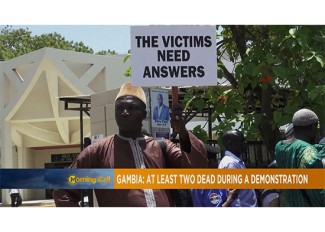
Last week, police opened fire on unarmed protesters, killing three and injuring several others in Faraba Banta, a small town in southwestern Gambia. ICTJ condemns these acts and supports civil society and victims in their call for swift actions ensuring justice, reparations, and an independent investigation into the causes of the attacks.

ICTJ was pleased to host the newly elected United Nations Special Rapporteur on the promotion of truth, justice, reparations, and guarantees of non-recurrence, Fabian Salvioli (Argentina), at its New York office, where he discussed his vision and priorities.

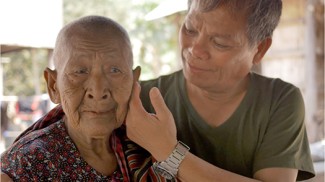
Angkar, screened on June 16 at the New York Human Rights Watch Film Festival, follows Khonsaly, a victim of the Khmer Rouge, on his journey to the village he fled almost 30 years ago. The film, produced by Neary Adeline Hay about her father's experience with torture and repression, is an intergenerational offering to truth and memorialization work that dances between the inheritance of abuse and its painful recollection by a survivor.

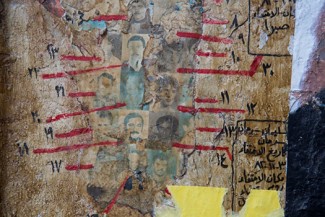
Life continues to stand still for the many families of the missing and disappeared in Lebanon. The Lebanese War ended 28 years ago, but for these families the war rages on. A recent legislative breakthrough, however, might finally pave the way for Lebanon to confront this legacy.

The 2030 Agenda for Sustainable Development establishes an ambitious set of goals and targets, the achievement of which will be a formidable challenge for any country struggling with poverty and inequality. This challenge increases dramatically for countries currently experiencing or emerging from violent conflict.

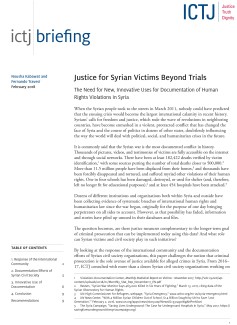
By looking at the documentation efforts of Syrian civil society organizations, this paper challenges the notion that criminal prosecution is the sole avenue of justice available for alleged crimes in Syria. Documentation could be used for important other avenues of justice, such as ac...

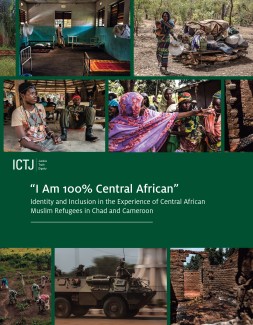
This report is based on qualitative interviews with Central African refugees living in Chad and Cameroon, in which they were asked about their experience of displacement and their intentions and concerns regarding return, reconciliation, and justice. Refugees said that if peace a...

ICTJ sits down with Syria Expert Nousha Kabawat to pause and reflect on the progress made so far in building capacity, raising awareness, and initiating high-level dialogue to address what remains a perilous situation.

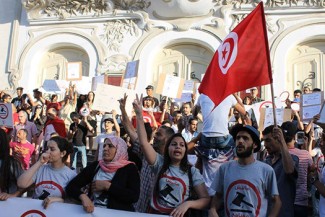
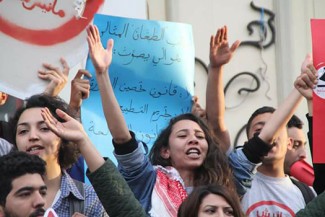
ICTJ's Virginie Ladisch spoke with Heythem Guesmi, a young Tunisian activist who is fighting systemic oppression, economic exclusion, and impunity that persist despite the Revolution’s initial success, and Thenjiwe McHarris, a young organizer working with Black Lives Matter in the United States—a movement whose urgency also stems from historic marginalization leading to widespread impunity and systematic failures in law enforcement.

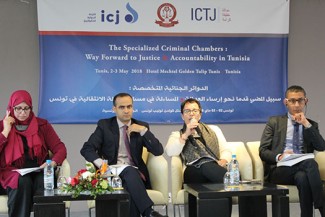
TUNIS—ICTJ hosted a conference on May 2 and 3 to address the current challenges facing Tunisia’s Specialized Criminal Chambers (SCC) as it proceeds to adjudicate cases of serious human rights violations committed under the former regime. The 90 guests who attended included members of Tunisia’s Truth...

This briefing paper focuses on the role of victims of human rights violations in criminal proceedings. This paper will provide examples of recent developments in the advancement of victim participation in criminal proceedings in international criminal law and domestic jurisdictions.&n...

Pursuing justice in a transitional context may take the form of multiple measures and goes beyond the pursuit of criminal prosecutions. Tunisia’s Basic Law on Transitional Law, adopted in December 2013, is a case in point. Despite its flaws, the the law introduced a fairly c...

In some contexts, the global community has resorted to international tribunals to prosecute the most serious past crimes, such as war crimes, crimes against of humanity, and genocide. While these international efforts contributed significantly to international justice, they were ...

Nepal’s new local government structure – comprised of districts, municipalities, sub-municipalities, and wards formed within the new federal system under the 2015 Constitution – offers the possibility of some individualized redress for victims at the community-level. This article by Elena Naughton was published in the Kathmandu Post on May 6, 2018.

Although youth are key political and social stakeholders who have much to contribute to—and gain from—transitional justice processes, they often remain marginalized from such processes or are given only a limited and predetermined space in which to engage. In recent years, the peacebu...

These are especially challenging times for those of us who work to assist societies in dealing with a legacy of atrocities and massive human rights violations. Violent armed conflicts have increased in number, duration, and ferocity around the globe. Immense displacement and waves of ...

Members of parliament from political parties opposed to extending the work of Tunisia’s truth commission today voted to end the commission’s mandate. This came after parliamentarians from parties that support the extension walked out of the proceedings because their position is that the Organic Law that created the Truth and Dignity Commission (TDC or Instance Vérité et Dignité in French) authorized the TDC to extend its mandate. Earlier, the TDC had voted to extend its mandate by a year in order to complete its work. In a position paper distributed to members of parliament and civil society activists, ICTJ and the Victims’ Coalition for Dignity and Rehabilitation jointly said that they supported the extension of the TDC’s mandate, despite internal issues among its commissioners. ICTJ pointed out that other truth commissions elsewhere have sought and been given extensions in order to carry out key parts of their work, such as public hearings, or to complete writing their reports. Both ICTJ and the Victims’ Coalition said that an extension would allow the TDC to hold public hearings on marginalization and unemployment – which was one of the grievances that drove the Arab Spring in Tunisia. It would also give the Commission time to finalize its report and recommendations, including those on reparations.

On Friday, the United Nations hailed the progress made since 2014 in Tunisia in terms of transitional justice, underlining the importance of “enabling the transitional justice process to achieve its objectives." "The United Nations Resident Coordinator in Tunis, Diego Zorilla, congratulates all...

On March 22 in Geneva, we listened to the experiences of Syrians affected by attacks on schools. The Save Syrian Schools project presented the results of its one-year-long research—an unprecedented collaboration of 10 Syrian human rights organizations and the ICTJ.

Ten Syrian human rights organizations have been working in partnership with the International Center for Transitional Justice (ICTJ) to document and expose the long-term impacts of the attacks to and the destruction of schools in Syria. The project, Save Syrian Schools, will present its findings in a public hearing-style event in Geneva on March 22nd, at Forum Genève. The project works creatively to document human rights abuses and includes a public hearing-style event, multimedia, and high-level dialogue.