



1530 results

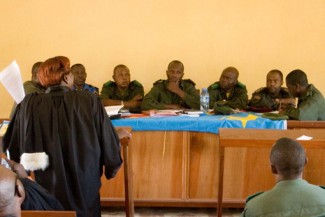
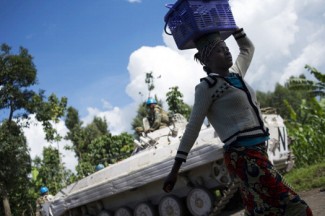
“Judgment Denied,” a report from the ICTJ, details four military court cases in the Democratic Republic of the Congo involving dozens of victims, egregious human rights violations, and nearly $1 million in outstanding awards owed by the government. In every case, serious crimes were committed against civilians by members of the Congolese Army, but the government has yet to pay compensation ordered by the courts.

In this edition of ICTJ's Program report, Kelli Muddell, director of ICTJ's Gender Justice program, reflects on ICTJ’s vision of gender justice, the challenges facing survivors of sexual and gender-based violence in times of transition, and how ICTJ is working to address inequality in countries like Colombia, Nepal, and Tunisia.

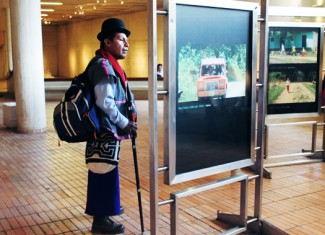
From February 27-March 1, leading indigenous rights activists from around the world will join their counterparts and other experts at Columbia University to discuss access to truth, justice, and reconciliation for indigenous peoples.

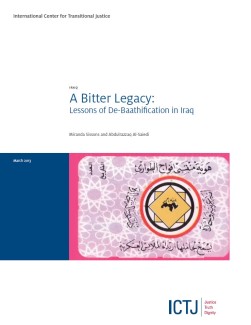
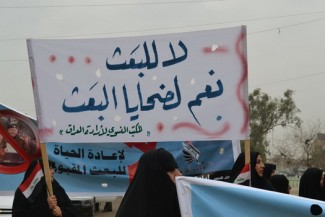
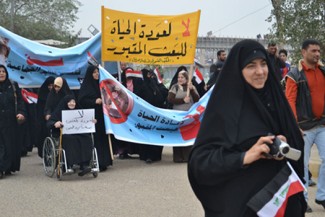
Based on significant field research and interviews with the Higher National de-Baathification Commission, this report focuses on Iraq’s purge of members of Saddam Hussein’s Baath Party, which is the most well-known example of large-scale and politically based dismissals in the Middle ...

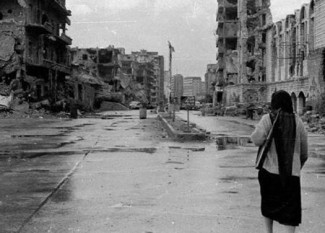
The International Center for Transitional Justice (ICTJ) released a new report today providing detailed information and analysis on how Iraq dismantled Saddam Hussein’s Baath Party and purged state institutions of party members. The report, titled “A Bitter Legacy: Lessons of De-Baathification in Iraq,” carries valuable lessons for countries in the Middle East and North Africa (MENA) as they consider how to deal with legacies of abuse by the security and political apparatuses of former regimes.

From its inception in 2003, the process of de-Baathification – the purge of Iraq’s state institutions of Saddam Hussein’s Baath Party members in the aftermath of the US-led invasion - polarized Iraqi politics and led to the collapse of many state functions. Today, Iraq continues to be haunted by its legacy. An examination of Iraq’s flawed vetting experience is presented in a major new ICTJ report, titled "A Bitter Legacy: Lessons of De-Baathification in Iraq."

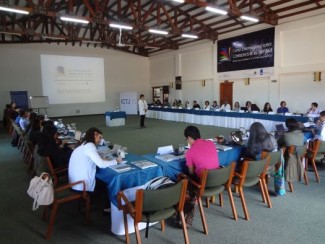
Nearly a decade after Colombia’s first transitional justice mechanisms were created, the country is now weighing options for the establishment of an official truth commission. To examine and inform these options, the International Center for Transitional Justice is hosting the International Course on Truth Commissions from March 11-15, 2013, in Villa de Leyva, Colombia. The course will be modeled after ICTJ’s international Intensive Course on Truth Commissions, which has been held for five consecutive years.

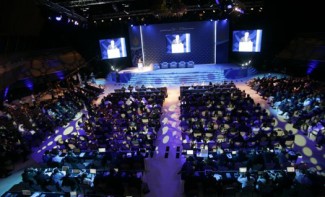
ICTJ’s president David Tolbert will be one of the featured speakers at this year’s Al Jazeera Forum in Doha, Qatar, which aims to explore the complex transformation of the socio-political and media landscapes of the Middle East and North Africa.

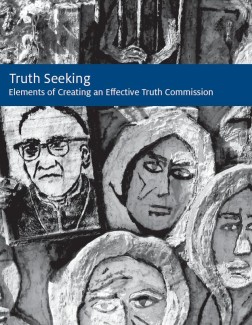
This publication provides an overview of the essential best practices guiding the main aspects of a truth commission, answering basic questions relating to its goals, powers, operations, framework, protections for commissioners and witnesses, and reporting. Its intention is to provide...

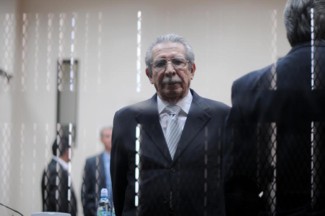
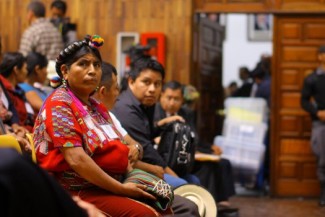
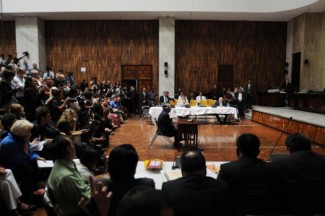
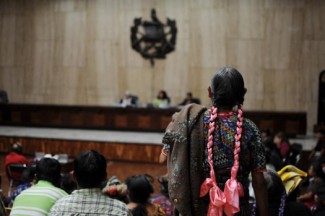
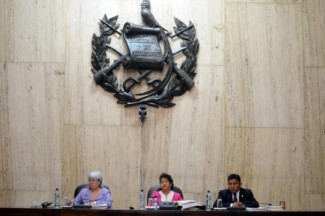
On a historic day for justice in Guatemala and the world, the trial for Guatemala’s former military dictator José Efraín Ríos Montt began this morning in Guatemala City. Ríos Montt and his co-accused, José Mauricio Rodríguez Sánchez – are standing trial on charges of genocide and crimes against humanity during the civil war in Guatemala, in which some 200,000 people were killed or disappeared, a majority of them indigenous Maya.

On Tuesday, March 19, the genocide trial of General Efraín Ríos Montt began at the High Risk Tribunal in Guatemala. To talk about this historic development in Guatemala’s pursuit of accountability we talk with us one of the key players: Guatemalan Attorney General Claudia Paz y Paz Bailey

March 21, 2013, New York, NY- The International Center for Transitional Justice (ICTJ) is launching a global awareness campaign for the International Day for the Right to the Truth, March 24, to affirm the right of victims to know the truth about human rights violations. Under the slogan, “Truth is the foundation of justice,” ICTJ’s campaign will highlight the important role that truth commissions can play in societies dealing with a legacy of violence and repression.

This year, ICTJ's campaign for the International Day for the Right to the Truth centers around the theme, “Truth is the Foundation of Justice.” This notion, fundamental to the idea of a comprehensive approach to justice, is explored through several new releases from ICTJ.

In our work providing assistance to societies around the world, we draw continual inspiration from individuals and communities who refuse to ignore the abuses of the past, and who often face great obstacles to expose it. To honor their courage, we invite you to read a selection of perspectives on truth and dignity from those who have used their words to convey a powerful idea: truth is the foundation of justice.

This opinion piece by Eduardo González, director of the Truth and Memory program at ICTJ, asks: can you build a solid, legitimate democracy on the sands of silence, or does truth provide a more trustful foundation?

In this op-ed, ICTJ's Marcie Mersky argues that the significance of the genocide trial for José Efraín Ríos Montt stretches far beyond Guatemala: it is the first time that a former head of state is being tried for genocide in a credible national court, by the national authorities, in the country where the alleged crimes took place.

In this opinion piece, ICTJ's Sharanjeet Parmar asks: why do international efforts to tackle impunity for sexual violence in the DRC continue to miss the mark? High-level diplomatic visits are important in underscoring the responses needed for sexual violence survivors. However, without a strong political commitment from top Congolese authorities to address rampant impunity for sexual violence, no amount of attention or media coverage will reduce the violence or put an end to the cycles of suffering.

Despite the overwhelming percentage of Lebanese who were affected by recent wars and political unrest, discussion of Lebanon’s past is largely absent from public spheres. A new documentary follows youth in Lebanon as they set out to find the truth.

As the peace talks progress between the Colombian government and FARC representatives in Havana, many Colombians are increasingly hopeful that the country will be able to put an end to more than 50 years of armed conflict. Despite broad support by many different sectors of society, the ...

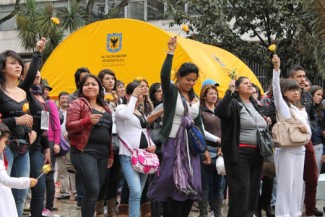
With the aim of reinforcing the legitimacy of the peace process, which could lead to a historic compromise that would deeply influence the future of the country, thousands of Colombians are marching today to express their support for the discussions, for peace, and for democracy. Their motto is: “We are the majority: Now is the time for peace!”

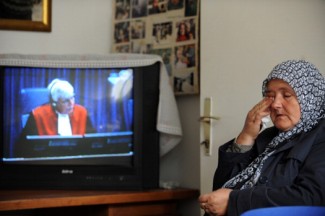
On April 10, the UN General Assembly is holding a thematic debate on the role of international justice in reconciliation processes. The debate was called by UN GA President Vuk Jeremic, of Serbia, in the wake of the recent acquittal of Croatian General Ante Gotovina by the International Criminal Tribunal for the Former Yugoslavia. Unfortunately, it has become clear that the real purpose of this debate is directed at undermining the ICTY, rather than to discuss an important issue, not only in the Balkans, but in a growing number of countries.

The world has turned its eyes to Guatemala, where the trial of retired generals Efraín Ríos Montt and José Mauricio Rodríguez Sánchez is drawing to a dramatic close. With a verdict expected soon, ICTJ spoke with Francisco Soto, executive director of the Center for Legal Action on Human Rights in Guatemala (CALDH). In this Q&A, Mr. Soto describes how civil society in Guatemala has been a crucial force in the long struggle for justice, and reflects on the historic significance of this trial, for both Guatemala and the world.

Four international legal and human rights groups are together urging all concerned to ensure that the current trial in Guatemala of former president Efrain Rios Montt on charges of genocide and crimes against humanity proceeds with due respect for judicial independence. The four are: the Open Society Justice Initiative, the International Center for Transitional Justice (ICTJ), the Center for Justice and International Law (CEJIL), and the Washington Office on Latin America (WOLA).

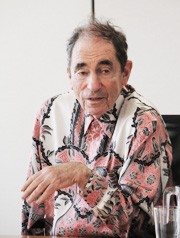
South African judge and human rights activist Albie Sachs is among the foremost transitional justice experts to have emerged from the anti-apartheid struggle and subsequent transition. In this interview with ICTJ Vice President Paul Seils, Sachs discusses the difficult balance of retribution and reconciliation, and offers possible lessons from the South African experience for other societies facing similar questions of truth and justice.

Elementary and high school teachers and students in the Montréal area gathered today for “Education Day,” an event convened by the Truth and Reconciliation Commission of Canada (TRC) to kick off the TRC’s historic Québec National Event, scheduled from April 24 to 27, 2013.