


1530 results

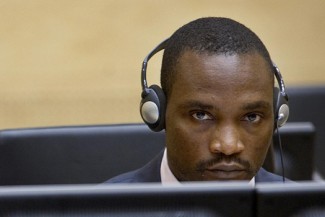
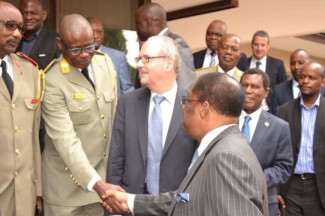
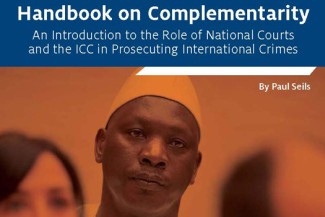
Colonel Muntazini serves as the focal point for cooperation between the ICC and the military justice system of the DRC, making him ideally placed to explain the practical implications of complementarity. Read his review of our Handbook on Complementarity and discover how it applies to his country and his work.

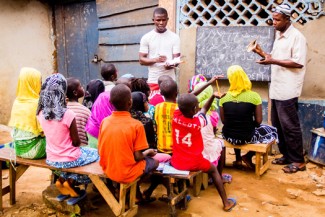
Understanding education as a form of both reconstruction and reparations is essential for societies in their efforts to address victims’ rights and help victims and their families overcome the consequences of a painful past.

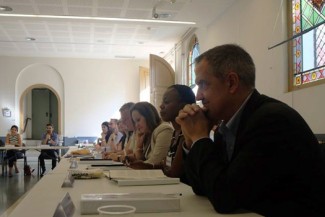
This summer, our Intensive Course on Transitional Justice and Peace Processes brought experts from around the world together in Barcelona to examine how transitional mechanisms can be integrated into peace negotiations. Read about the course and watch interviews with our experts.

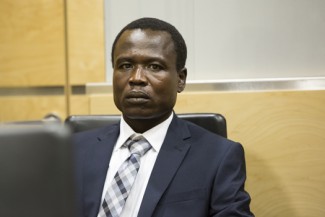
The long-awaited trials of two LRA leaders, Dominic Ongwen and Thomas Kwoyelo, will proceed in two different settings - but why? ICTJ's Sarah Kasande explains the significance of Ongwen's trial before the International Criminal Court and Kwoyelo's prosecution by the International Crimes Division of the High Court in Gulu, Uganda.

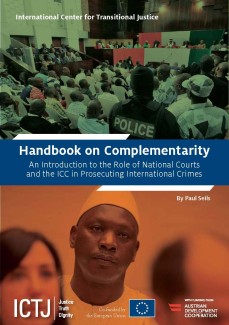
Where should justice for some of the world’s worst crimes be done? In national courts or at the International Criminal Court in The Hague? Our Handbook on Complementarity explores those questions, laying out the interconnected relationship between the ICC and national court systems in...

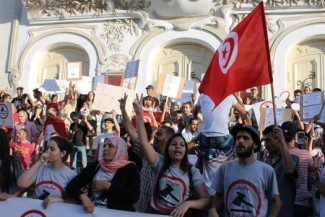
Tunisian activists have taken to the streets this month to protest the proposed Economic Reconciliation Law recently revived in parliament. If approved, the bill would offer a path for corrupt Ben Ali-era officials and business people to legalize their stolen assets and secure a form of amnesty.

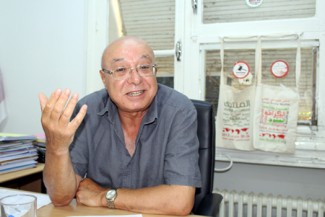
The Tunisian government reintroduced a bill that, if passed, would grant a path for reconciliation to corrupt business people and Ben Ali-era officials. They claim it will stimulate the economy, but economics professor Dr. Abdeljelil Bédoui explains why this law is not the solution.

Last week, El Salvador’s Supreme Court overturned the country’s General Amnesty Law enacted in 1993, which served as a blanket amnesty for all crimes committed by the parties during the country’s 12-year civil war. Now, prosecutors must work with victims to seek justice for these crimes.

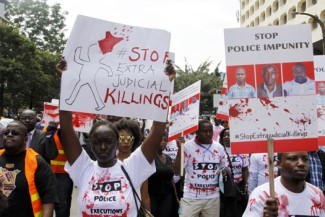
The brazen abduction and brutal murder of human rights lawyer Willie Kimani, his client, Josephat Mwenda, and their taxi driver, Joseph Muiruri, underlines once more the urgent need for police reform in Kenya says ICTJ's Christopher Gitari.

A new handbook written by ICTJ vice president Paul Seils explores the relationship between the ICC and national courts.

The struggle against impunity remains as important –and precarious –as ever as we celebrate International Justice Day on July 17. ICTJ marks the occasion with a look at complementarity, a concept critical to understanding the role that the ICC and national courts play in this struggle.

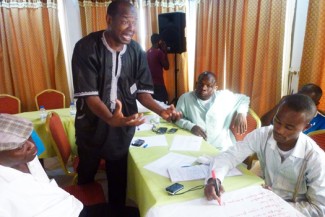
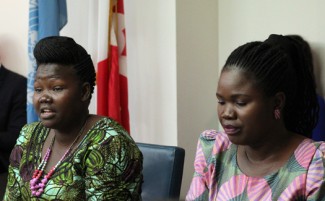
Workshop gathers survivors of gender-based wartime violence to share experiences with policymakers and practitioners.

The first piece in of our "Transitional Justice and Education" series examines the role of school systems in Bosnia and Northern Ireland.

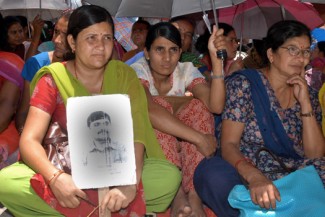
More than 1,000 people remain unaccounted for in Nepal following a decade of violence that concluded in 2006, and a new official body aims to shed light on these abductions. To support this critical mandate, ICTJ hosted an intensive three-week course for the commission, providing the technical and operational support necessary to finally tell the truth about Nepal’s disappeared.

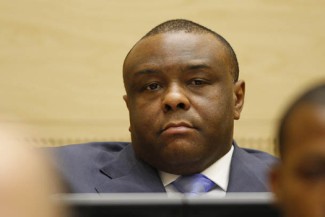
Jean-Pierre Bemba's sentencing is a landmark for the International Criminal Court. Paul Seils looks at how it may reverberate into the future.

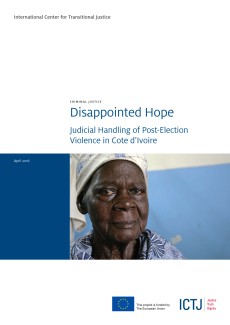
This report offers analysis of the current situation regarding the judicial handling of cases related to the post-election violence in Cote d’Ivoire. It looks at existing legal and political challenges within the domestic proceedings and suggests possible solutions.

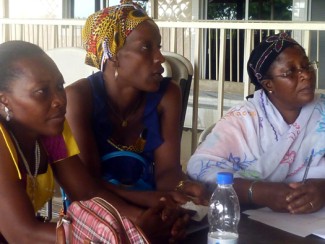
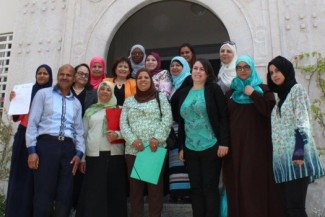
The voices of Tunisian women were in danger of being lost in the country's transitional process. Salwa El Gantri explains how one network of women's organizations made sure that did not happen by helping women find their voice and fight for justice.

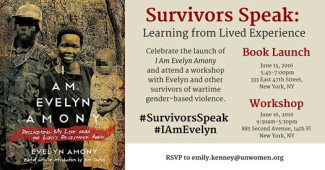
Evelyn Amony tells the harrowing story of her years in captivity with the LRA, and experience of grinding poverty and stigma after returning home with two children, in her new memoir, I Am Evelyn Amony: Reclaiming my Life from the Lord's Resistance Army. The autobiography, which tells the difficult truths of women and girls in wartime as only a firsthand witness can, will be launched today in New York, at the Japan Society.

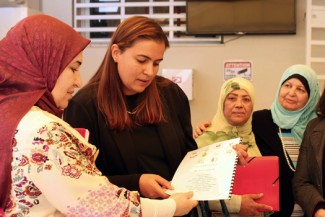
For decades, veiled women in Tunisia were deprived of their rights and discriminated against because of their religious beliefs. Now, they’re joining together to tell their stories and seek justice from the Tunisian government.

Myanmar may have a new government under Aung San Suu Kyi, but former political prisoners continue to face challenges throughout the country. A new report sheds light on prisoners' challenges and recommends steps the government can take to offer redress.

In this briefing paper ICTJ addresses one of the crucial points of the peace negotiations between the Government of Colombia and the Revolutionary Armed Forces of Colombia-People’s Army (FARC-EP): the possibility of providing recourse to the broadest amnesty possible and pardons as pa...

In a new analysis, the ICTJ addresses one of the crucial points of the peace negotiations between the Government of Colombia and the Revolutionary Armed Forces of Colombia-People’s Army (FARC-EP): the possibility of providing recourse to the broadest amnesty possible and pardons as part of the treatment of the different crimes committed in the framework of more than fifty years of armed conflict.

The Ivoirian government has a critical opportunity to define and implement a reparations policy that responds to the needs of the most vulnerable victims of the political, military and social crises experienced by Côte d’Ivoire between 1999 and 2012, according to the International Center for Transitional Justice (ICTJ).

Carlos Martín Beristain is part of the panel investigating the disappearance of 43 students in Mexico. We sat down with him to discuss his work, the resistance the investigation has faced from the Mexican government and whether transitional mechanisms have a role in this context.