



1530 results

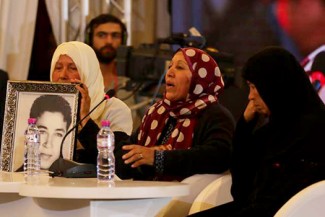
As ICTJ looks back on its 15 years of work, join us in celebrating our allies across the globe who join us in the struggle for human rights, against impunity. To honor their efforts in the trenches of this shared struggle, we will bring you their stories in the weeks and months to come. We begin with Kenya's Jaqy Mutere, who provides both an empathetic ear and a political voice to survivors of sexual violence.

Overview of the proceedings of the ECCC, the hybrid tribunal created in 2006 to try senior leaders of the Khmer Rouge and those "most responsible" for the crimes that took place. The court has five suspects in custody and has almost completed its first trial which began in March of 20...

This report considers the work of the Special Prosecutor's Office (SPO) in Mexico, established to deal with crimes that public servants commit against social and political groups. It describes the basic requirements of investigation into "system crimes," emphasizing the need for an ap...

Property Rights in Kosovo explores cultural, political and social factors dating as far back as the Ottoman period that have contributed to the present state of property rights. It examines the legacy of the armed conflict and NATO intervention of 1999 in the massive population displa...

Seven years after its approval, the ambitious project to demobilize illegal armed groups in Colombia called Justice and Peace is in crisis. The fact that it has only seven convictions, most of which have been appealed and only one upheld on appeal, is seen as proof of its failure...

Since 1990, 65 former heads of state or government have been legitimately prosecuted for serious human rights or financial crimes. Many of these leaders were brought to trial in reasonably free and fair judicial processes, and some served time in prison as a result. This book explores...

In September 1985, ninemembers of Argentina’smilitary junta, whose successive regimes covered the period in Argentine history known as the “dirty war,” walked into a courtroom in downtown Buenos Aires.

This briefing paper focuses on the topic of prosecuting international and other serious crimes in Kenya, including crimes committed in the context of the postelection crisis of late 2007 and early 2008. In particular, it identifies and analyzes obstacles and opportunities for such pro...

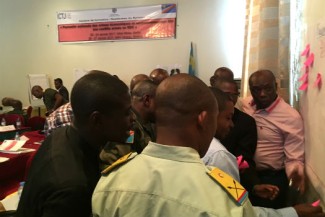
Potential political interference, poor evidence gathering and difficulty accessing remote areas are some of the main challenges to prosecuting economic and environmental crimes related to armed conflict in the Democratic Republic of Congo. Overcoming these challenges was the focus of a two-day workshop for judges and prosecutors in Goma and Bukavu, organized by the International Center for Transitional Justice (ICTJ), in collaboration with the United States Institute for Peace.

This paper analyzes the Maubuti case in Timor-Leste, the third serious crimes case to be brought to trial after the closure of the UN-supported Serious Crimes Unit in 2005. Maubuti was indicted for crimes against humanity including murder, attempted murder, and rape. The decision and ...

A new report from the United Nations Special Rapporteur on the promotion of truth, justice, reparation and guarantees of non-recurrence says States should hold perpetrators of serious crimes accountable for their actions.

NEW YORK, March 15, 2012—Brazilian federal prosecutors announced yesterday that they have opened a criminal investigation against a military officer accused of the enforced disappearance of civilians during the 1964–1985 military dictatorship. This is a welcome blow against the use of a 1979 amnesty law to shelter government agents who committed horrific crimes against civilians from accountability.

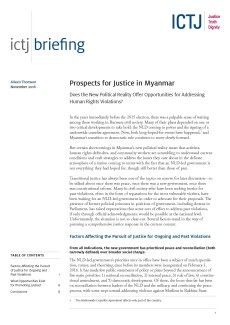
In the years immediately before the 2015 election, there was a palpable sense of waiting among those working in Burmese civil society. Many of their plans depended on one or two critical developments to take hold: the NLD coming to power and the signing of a nationwide ceasefire agree...

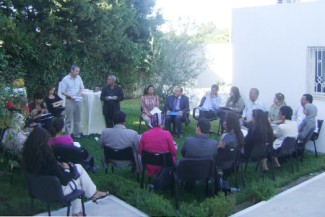
To offer assistance and international expertise to Tunisian civil society groups, ICTJ partnered with the Office of the High Commissioner for Human Rights (OHCHR) for a training on public engagement in truth seeking processes. Titled “The Role of Civil Society in Truth Commissions: Participation and Advocacy for Victims in Tunisia,” the training offered around 65 participants the opportunity to examine the role of truth commissions in contexts of transitional justice, and to assess future engagement of their organizations in Tunisia’s proposed truth commission.

ICTJ calls on African states parties to the International Criminal Court to ensure fair and effective justice for serious crimes committed against Africans and others. Written in the lead up to the Rome Statute Review Conference in Kampala, May 2010.

Myanmar’s democratic transition was brought to an abrupt halt on February 1, 2021, with the seizure of power by the country’s armed forces. Public protests against the military coup d'état quickly swelled to some of the largest since 2007, to which the military has responded with deadly force. Given the deteriorating situation, restoring civilian rule appears to be an increasingly immense challenge.

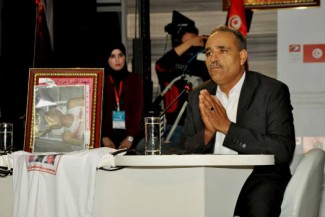
On December 17th, six years to the day after Mohamed Bouazizi set fire to himself and sparked the “Jasmine Revolution,” Tunisia’s Truth and Dignity Commission heard public testimony about events that unfolded during the revolution and the abuses of the regime it overthrew. Read victims' moving testimony about state violence, torture, corruption and marginalization as the country continues to grapple with its painful past.

On the International Day for the Right to Truth we spotlight one of the most powerful ways truth commissions can reassert victims' dignity: public hearings. These open events can have a potentially cathartic power for victims and their families, but also the public at large by generating solidarity and empathy for the suffering of others in societies deeply polarized and traumatized by atrocities and denial.

This paper describes proceedings in Uganda’s national courts against Thomas Kwoyelo, a former mid-level commander of the Lord’s Resistance Army, for war crimes and crimes against humanity. It analyzes the opportunities and challenges for the prosecution of serious crimes in Uganda and...

This study focuses on the pursuit of criminal justice within a time of conflict. It examines various aspects of pursuing justice in the context of ongoing conflict, including the interests of victims, governments, the UN Security Council, traditional leaders, and mediators. It highlig...

Of the many challenges that arise when negotiating a transition to peace and an end of war, one of the most difficult can be the tension between prioritizing peace and insisting equally on justice for crimes of the war.

The ICTJ continues to support human rights victims in Nepal in their pursuit of justice, truth, reparations, and institutional reform. This briefing paper presents a summary of findings and recommendations from workshops that ICTJ conducted with women victims, as well as meetings it h...

As the number of victims of violence against demonstrators in Syria, Yemen, Bahrain and elsewhere in the region rises, a question emerges for the government of Bashar al-Assad of Syria, but also those of Ali Abdullah Saleh of Yemen, Hamad bin Isa al-Khalifah of Bahrain and the vacillating international community: Can impunity for such crimes be permitted in this day and age?

David Tolbert, President of International Center of Transitional Justice: "I join many others in giving a final salute to Nino Cassese. He was man of extraordinary energy, singular determination and extraordinary intellectual talents but at the same time was an unassuming man, with a ready smile, an engaging anecdote and plenty of self-deprecation. Nino was a driving force behind the field of international criminal justice, not only through his leadership of both the International Criminal Tribunal for the former Yugoslavia (ICTY) and the Special Tribunal for Lebanon (STL) but through his unstinting writing and advocating on this most crucial of subjects."