
1541 results

Throughout 2024, ICTJ’s experts offered their unique insight on breaking news and critical developments in more than 11 countries as part of the ICTJ’s World Report newsletter. Their incisive analyses shed light on the political and socioeconomic forces at work and what it all means for victims and the pursuit of peace and justice.

Throughout 2025, ICTJ’s experts offered thoughtful analysis on conflicts and major political developments in more than 10 countries as part of the World Report newsletter. Their insightful commentaries shed light on the obstacles that victims, civil society, and their partners must navigate as they pursue sustainable peace and justice. In this edition, we look back on the past year through the Expert’s Choice column.

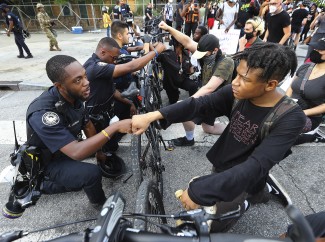
George Floyd’s death reignited existing anger over American society’s deep and festering racial wounds. His death triggered significant social uprisings that have challenged the methods of policing that have emerged over the course of several decades. With a growing awareness of polic...

Three police officers kneel with several protesters at a demonstration.
On International Criminal Justice Day, 2014, ICTJ joins the global celebrations marking the groundbreaking establishment of the Rome Statute in 1998, which created the International Criminal Court (ICC). To mark the day, we review five contexts where national systems proved it was possible to bring perpetrators to justice where it matters the most.

Given the political challenges emerging from authoritarian states and conflicts in Africa, what is the best way to pursue accountability for violations of international human rights and humanitarian law on the continent? ICTJ experts Chris Gitari and Howard Varney sit down to discuss regional initiatives, complementarity, and other strategies for pursuing accountability.

It is highly unlikely that we will see ad hoc international tribunals or elaborate hybrid courts such as the SCSL and the ECCC in the future, asserted ICTJ President David Tolbert at an expert meeting about the future of international justice in light of past experiences and progress made at the...

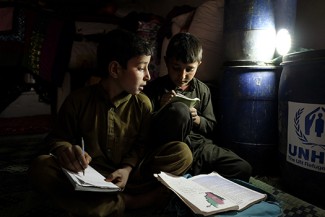
After several years hiatus, ICTJ has recently resumed work in Afghanistan. Last month, ICTJ’s communication intern, Edward Mercado-Gumbs, sat down with expert and cohead of ICTJ’s program in Afghanistan Reem El Gantri to discuss ICTJ’s latest engagement in the country, as well as the prospects for justice and peace.

On February 20, ICTJ and New York University School of Law’s Center for Human Rights and Global Justice (CHRGJ) proudly presented the 10th annual Emilio Mignone lecture. For this milestone in the lecture series, ICTJ and CHRGJ welcomed as speaker former UN Special Rapporteur on the prom...

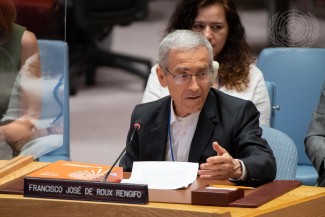
The International Center for Transitional Justice and NYU Law’s Center for Human Rights and Global Justice hosted this event, which featured Pablo de Greiff, the former UN special rapporteur on the promotion of truth, justice, reparation and guarantees of non-recurrence.

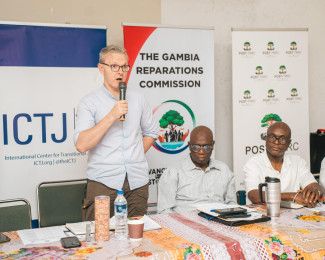
The establishment of the Reparations Commission in April 2025 and the recent appointment of British barrister Martin Hackett in April 2026 as The Gambia’s first special prosecutor represent crucial and long-awaited steps in the country’s transitional justice process. But to succeed, both require sustained public, political, and financial support.

On February 29, 2024, The Gambia-Economic Community of West African States Joint Technical Committee held its inaugural meeting on the establishment of a hybrid court to hold to account those responsible for gross human rights violations committed in the country between July 1994 and January 2017 during the dictatorship of former President Yahya Jammeh. Such an internationalized court presents an opportunity to deliver criminal accountability to the victims and Gambian society as whole. It is also just the latest step in The Gambia’s transitional justice journey.

Given that women represent a very large proportion of the victims of conflicts and authoritarianism, it makes sense to examine whether reparation programs can be designed to redress women more fairly and efficiently and seek to subvert gender hierarchies that often antecede the confli...

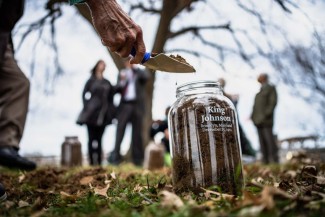
By Sean Yoes Terror on the Eastern Shore December 4, 1931, is a night that lives on in the minds of Black residents in Salisbury, Maryland, a small town along the state’s Eastern Shore. That cold winter night, a mob of more than 2,000 racist residents hung 18-year-old Matthew “Buddie” Williams from...

Most comprehensive book-length study of reparation programmes currently available, including case-studies, thematic chapters, and national legislation documents. Contains contributions from an international and cross-disciplinary group of leading scholars and practitioners. Provides a...

With the inauguration of Colombia’s new president last month, optimism for the country’s ongoing transitional justice process is at a high. Newly elected President Gustavo Petro has strongly affirmed his commitment to the implementation of the peace agreement and ensuring the institutions it created...

Document from the High Court of South Africa regarding a case on enforced disappearances.

Ongoing economic and social inequality, a legacy of the dictatorship, affects Tunisians across generations, but has particularly pronounced impacts on young people. ICTJ worked with four young photographers to confront the consequences of marginalization and explore its impacts on Tunis...

This paper assesses the impact of the International Criminal Court (ICC) on conflicts in Sudan and the Democratic Republic of Congo (DRC). The Sudanese government challenged and undermined the jurisdiction of the ICC from the start. Conversely, the leading actors in the DRC supported ...

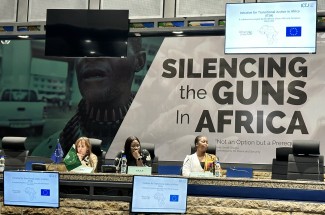
On October 25, the African Union (AU) and European Union officially launched their joint Initiative for Transitional Justice in Africa (ITJA) in Addis Ababa. The project will take place over a three-year period and will promote national transitional justice processes in Africa, in line with the AU Transitional Justice Policy and its roadmap. The ITJA has several unique features that, if embraced and advanced by all actors, have the potential to trailblaze a new and inspiring path to peace, justice, and sustainable development on the African continent.

This paper addresses the possible impact of the International Criminal Court (ICC) on conflict mediation and on political stability in fragile environments. It looks at issues such as: the role of criminal accountability for massive abuses, the ICC statute, practical issues that conf...

This year, Colombia commemorates the 20th anniversary of the Justice and Peace Law, which established the country’s first formal transitional justice mechanism. On this milestone anniversary, ICTJ reflects on the evolution that led to the groundbreaking law, the lessons that have been learned so far, and the challenges that lie ahead.

The Commission of Inquiry into Post-Election Violence (CIPEV) was the outcome of the Kenya National Dialogue and Reconciliation Accord of February 28, 2008, negotiated by Kofi Annan and the Panel of Eminent African Personalities, and its sister agreement of March 4, 2008, known as Age...

This document is a review of vetting programs that took place in two post-conflict (Bosnia and Herzegovina, and Liberia) and two post-authoritarian (Hungary and the Czech Republic) countries during the 1990s and early 2000s. It assesses the legacies of vetting and lustration processes...

This book presents a series of essays on truth and criminal justice in Peru. It aims to contribute to analysis on how to strengthen and consolidate democracy there. The essays pay particular attention to the interests of individual victims' of human rights abuses, analyzing individual...

This report analyzes the macro-criminality approach that was taken in Colombia’s Justice and Peace process and draws key lessons for the Special Jurisdiction for Peace. It examines how Law 1592 of 2012 and other regulatory instruments sought to move beyond a case-by-case method, prior...

Cover of Macrocriminality report