1541 results

This briefing paper focuses on the role of victims of human rights violations in criminal proceedings. This paper will provide examples of recent developments in the advancement of victim participation in criminal proceedings in international criminal law and domestic jurisdictions.&n...

July 17, 2023, marked 25 years since the Rome Statute was adopted at a conference in Rome, Italy. The statute created the world’s first permanent international court, the International Criminal Court, which was probably the most significant milestone in international criminal justice since the Nuremburg and Tokyo trials of the mid-20th century. It signaled the firm intention of many nations to address ongoing impunity of the most serious crimes known to humankind. After 25 years, however, the ICC has not yet reached its full potential.

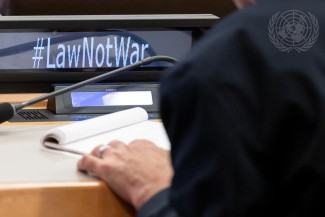
This report from the United Nations (UN) Security Council discusses the UN's increased focus on transitional justice and the rule of law in conflict and post-conflict societies. This focus will yield important lessons for future UN activities. Advancing justice, peace, and democracy i...

The field of transitional justice is increasingly recognizing the relevance of mental health and psychosocial support (MHPSS) in contexts of massive human rights violations. Despite growing advocacy and awareness at the global policy level, however, the field lacks a systematic approa...

an image of colorful painting featuring a young girl

This paper analyzes the serious crimes process the UN established in Timor-Leste to try serious violations of human rights perpetrated in 1999. The main difficulty facing this process is that the vast majority of suspects are in Indonesia, and the Timorese government has not been able...

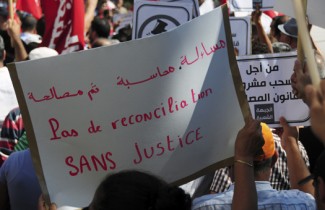
In this op-ed, Rim El Gantri, head of ICTJ's Tunisian office, discusses the challenges facing Tunisia's transitional justice process and argues that the government's failure to provide accountability for crimes committed under past regimes threatens the country's transition to democracy.

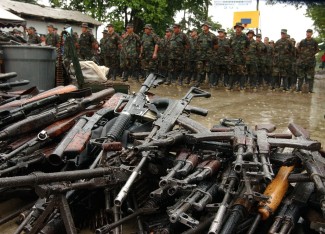
This study presents reflections on the peace negotiations between the Colombian government and the United Self-Defense Forces of Colombia between 2003 and 2006. It seeks to contribute to strategies for negotiating with or subduing illegal armed groups, as well as for the general pursu...

In the foreground is a large pile of military rifles. In the back stand a regiment of paramilitary fighters in army fatigues.

This paper provides an initial summary of the work of the Sierra Leone Truth and Reconciliation Commission (TRC) and points to some of the key difficulties it has encountered. The Commission's first year was challenging: it effectively lost its full preparatory period and the first tw...

Ongoing economic and social inequality, a legacy of the dictatorship, affects Tunisians across generations, but has particularly pronounced impacts on young people. ICTJ worked with four young photographers to confront the consequences of marginalization and explore its impacts on Tunis...

This case study provides basic information and policy analysis on the Special Court for Sierra Leone. It aims to help guide policymakers establishing and implementing similar mechanisms. The Court broke new ground in terms of narrowly focusing on those bearing the greatest responsibi...

This report describes the Special Court for Sierra Leone’s accomplishments in the first 18 months of its mandate. The Court was established to try "those bearing the greatest responsibility" for serious violations of international law and certain provisions of domestic law since Nove...

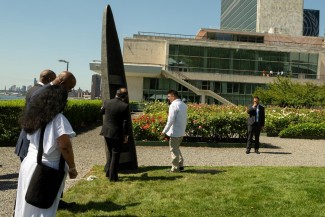
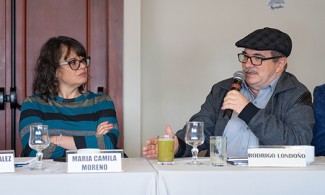
In July, Colombian President Gustavo Petro traveled to New York to address the UN Security Council on the status of the implementation of the 2016 peace agreement between the Colombian government and the guerrilla group Revolutionary Armed Forces of Colombia. During his visit, Petro also inaugurated a monument commemorating the country's enduring pursuit of peace.

This paper summarizes the results of a mapping survey on transitional justice initiatives in Indonesia undertaken by ICTJ from August 2002 to May 2003. While the Indonesian government has created several state agencies and laws to address past cases of violence, it is still plagued by...

Almost a year after the second post-election transition in Burundi, national and international attention is focused on the willingness and ability of the new government to implement the decisions agreed to during negotiations that culminated in the historic August 2000 peace and recon...

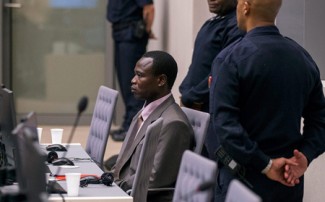
On September 18, the trial of Dominic Ongwen resumed at the ICC. Ongwen is on trial for 70 counts of war crimes and crimes against humanity – including various forms of sexual violence and the recruitment of child soldiers – committed in the former IDP camps of Lukodi, Odek, Abok, and Pajule during the 20-year insurgency in Northern Uganda. Ongwen is the first former child soldier who is facing trial at the ICC for crimes in which he was also a victim.

This week, the International Criminal Court heard closing arguments in the trial of Dominic Ongwen, a top commander of the Lord’s Resistance Army in Northern Uganda. Among the 70 counts of war crimes and crimes against humanity he faces are 19 counts of sexual and gender-based crimes, including rape, sexual slavery, and forced marriage—the widest range of such crimes ever to be brought to trial before the court. The case thus marks a milestone in the jurisprudence of these international crimes.

This briefing paper examines the Tunisian Truth and Dignity Commission’s approach to investigating Ben Ali dictatorship-era corruption crimes and identifying responsible institutions and individuals, and whether it laid the foundation for accountability and reparation. While it fell s...

First page of the briefing paper The Truth About Corruption

Canadian youth not only want to know the truth about what happened at the Indian Residential Schools –they want to learn about it in their classrooms.

A significant portion of Colombian society has been indifferent to the pain of those who lived through the war in the flesh. Some have even denied the existence of an internal armed conflict. This is why it is necessary for us to recount our early and recent history. A new, more comprehensive and nuanced narrative must emerge from the testimonies of victims, responsible parties, and even spectators of this unending war.

Fania Davis thinks the time has come for a truth-telling process about racial injustice in the United States, and she is working to make it a reality. We sat down with her and her colleague, Jodie Geddes, to discuss their vision for a national process, what they hope it would achieve, and what they have learned from their conversations with local leaders so far.

The War Crimes Chamber of the Court of Bosnia and Herzegovina, which began its work 9 March 2005, has been the most significant national effort in Bosnia and Herzegovina to investigate and prosecute persons allegedly involved in serious violations of international law during the 1992–...

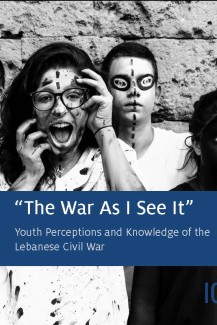
In October 2015, ICTJ asked Lebanese young people to use their cameras to explore their understanding of the Lebanese civil war as it shapes their country’s past and present. "The War as I See It" youth photo contest was organized to raise awareness about the importance of tru...

In commemoration of the 25th anniversary of the end of the Lebanese civil war, ICTJ is holding a youth photo contest to raise awareness about the importance of truth seeking and truth telling about people’s experiences of the war and post-war violence.

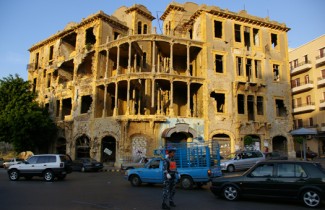
Lebanon’s civil war continues to impact the Lebanese people, both those who lived through the war and those born after it. While the widespread harms it caused are still visible today, the official denial of both the war and its lasting consequences has left a hole in Lebanon’s histor...

On February 14, Kenyans once again confronted their painful relationship with law enforcement and revisited the deep mistrust born of historical abuses. In an unprecedented ruling, a court found five senior police officers potentially culpable in gruesome murder during the police response to the 2017 post-election protests. On the same day, a senior police officer was convicted of murder and jailed for life.