


1530 results

For over a month now, Lebanese people have been in the streets peacefully calling for an end to corruption, economic disenfranchisement, and government mismanagement, calling instead for accountability and reform of the systems that have allowed these things to occur. The protests are historic for several reasons: their scope and magnitude, as well as the way they have unified a country that has for so long had division baked into nearly every aspect of life, down to its system of governance.

On March 22 in Geneva, we listened to the experiences of Syrians affected by attacks on schools. The Save Syrian Schools project presented the results of its one-year-long research—an unprecedented collaboration of 10 Syrian human rights organizations and the ICTJ.

On January 14, 2021, Uganda held presidential and parliamentary elections. Incumbent President Museveni, who has been in power for 34 years, faced off against 10 opposition candidates, including pop star-turned-politician and main contender Robert Kyagulanyi, also known by his stage name Bobi Wine, of the National Unity Platform (NUP). The 2021 elections saw unprecedented state-sponsored violence, harassment of opposition candidates, and repression of civil society.

Côte d’Ivoire is obligated to provide reparations to victims of both the political violence that shook the country following the 2010 presidential elections and the different episodes of political violence and armed conflict since 1990. Fulfilling this obligation will show that the st...

The Working Group on Transitional Justice and SDG16+ calls on the international community, including policymakers, donors, and practitioners, to: provide consistent support and investment to context-specific transitional justice, as a tool of sustainable peace and development. formulate development...

Myanmar may have a new government under Aung San Suu Kyi, but former political prisoners continue to face challenges throughout the country. A new report sheds light on prisoners' challenges and recommends steps the government can take to offer redress.

Children born as a result of wartime sexual violence in northern Uganda and their mothers face continued and compounded violations of their rights and dignity, says ICTJ. Without urgent redress, they will continue on a path of marginalization, poverty, and further abuse.

This summer, Hissène Habré, the former dictator of Chad, will finally stand trial before the Extraordinary African Chambers in Senegal for crimes against humanity, torture, and war crimes. In a conversation with Reed Brody, counsel and spokesperson of Human Rights Watch, who has worked with Hissène Habré’s victims since 1999, we discussed the potential impact of the trial on Chad and its broader significance for the struggle against impunity in Africa.

On International Justice Day, the head of ICTJ's Criminal Justice program in the Democratic Republic of the Congo (DRC), Myriam Raymond-Jetté, reflects on how to build on small successes in prosecuting international crimes in the national courts.

ICTJ's documentary Voices of Dignity inspired Wilson Herrera, professor of philosophy and researcher at the Universidad del Rosario in Colombia, to reflect on the role of victims in a democratic society, and on the importance of empowering them as agents of change and rights-holders, rather than relegating them to the status of permanent victims.

This policy brief presents recommendations for transitional vetting based on insights from research on vetting practice. It is meant to complement existing guidelines on vetting put forth by the United Nations and other international organizations. It&nbs...

This briefing paper analyzes and reflects on the development of the ICC prosecutor’s strategy and application of procedural rules, since operations began at the International Criminal Court more than a decade ago. The mixed results of the court’s first cases, which arise from the situ...

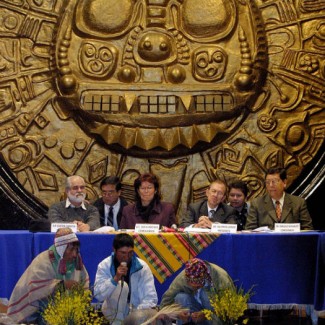
As we look back on 15 years of ICTJ's work, we recognize that our greatest asset is the people whose knowledge, experience, and dedication made our contribution possible. To celebrate all who have been part of ICTJ’s story over the years, we asked some of our former colleagues to share their reflections and memories of moments that stand out: moments that throw the stakes of our work into sharp relief. First up: Louis Bickford, former Director of ICTJ’s Memory and Memorials Unit (2001–2009), reflects on testimony given during Peru's Truth and Reconciliation Commission.

As we look back on 15 years of ICTJ's work, we recognize that our greatest asset is the people whose knowledge, experience, and dedication made our contribution possible. To celebrate all who have been part of ICTJ’s story over the years, we asked some of our former colleagues to share their reflections and memories of moments that stand out: moments that throw the stakes of our work into sharp relief. In the weeks and months to come we will bring you their stories in Reflections on the Struggle for Justice. Caitlin Reiger, ICTJ's former Deputy Director of Prosecutions (2005–2010), reflects on the humanizing power of testimony, on display in East Timor.

As we look back on 15 years of ICTJ's work, we recognize that our greatest asset is the people whose knowledge, experience, and dedication made our contribution possible. To celebrate all who have been part of ICTJ’s story over the years, we asked some of our former colleagues to share their...

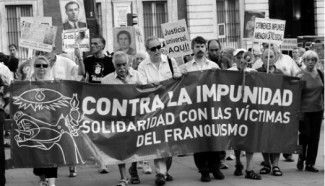
To mark 15 years of ICTJ, we asked staff past and present for memories that stand out to them - moments that throw the stakes of our work into sharp relief and resonate with them years later. Cristián Correa, Senior Associate in ICTJ’s Reparative Justice Program, shares a story about a Chilean mother's thirst to tell her daughter the truth about their past.

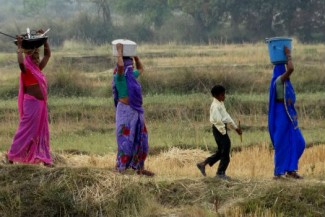
To mark 15 years of ICTJ, we asked staff past and present for memories that stand out to them - moments that throw the stakes of our work into sharp relief and resonate with them years later. Reshma Thapa, former ICTJ senior program associate in Nepal (2009- 2013), looks back on one particularly poignant dance shared among women in a small village.

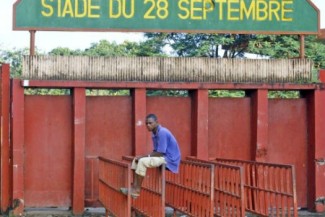
To mark 15 years of ICTJ, we asked staff past and present for memories that stand out to them - moments that throw the stakes of our work into sharp relief and resonate with them years later. Olivier Kambala wa Kambala, an ICTJ Program Associate from 2005 to 2010, talks about the thirst for justice he saw on a visit to Guinea, and how the political situation rendered quenching it impossible.

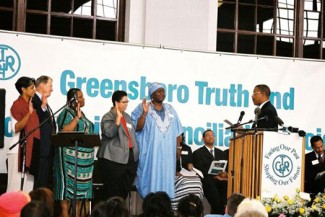
To mark 15 years of ICTJ, we asked staff past and present for the memories that stand out from their work. Former ICTJ consultant and Executive Director of the Truth and Reconciliation Commission in Greensboro, North Carolina Jill Williams reflects on her efforts to bridge a cultural gap in the pursuit of shared values.

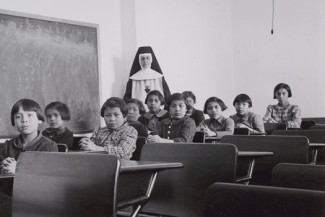
To mark 15 years of ICTJ, we asked staff past and present for memories that stand out to them - moments that throw the stakes of our work into sharp relief and resonate with them years later. Virginie Ladisch and Clara Ramirez-Barat recall how one Canadian student, in exploring the legacy of the country's Residential Schools, arrived at the concept of "never again."

Mexico is overwhelmed by criminal violence and human rights violations in ways that ordinary rule of law mechanisms cannot address. While not undergoing a political transition, Mexico could benefit from transitional justice experiences when designing policies for pursuing accountabili...

This briefing paper examines the various actions that Ukrainian officials and members of the international community have launched to investigate and prosecute war crimes and other human rights violations committed in Ukraine since Russia invaded the country in February 2022. It explo...

First of the briefing paper Reflections on Victim-Centered Accountability in Ukraine

Between April 15 and May 3, 2019, ICTJ held a number of consultations with Kenyan youth from several informal settlements in Nairobi and Mombasa to reflect on their understanding of security sector reforms and their connection to the ongoing national dialogue process, particularly as ...

With the goal of creating an opportunity for debate between civil society and the Colombian government on JPL reform, ICTJ and the Mission to Support the Peace Process from the Organization of American States have organized an event titled “Challenges and Opportunities of the Justice and Peace Law Reform,” to take place May 14 in Bogotá.

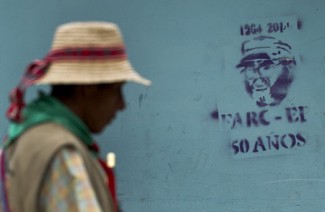
In this op-ed, ICTJ Vice President Paul Seils questions the policy objectives of punishing members of FARC accused of the most serious crimes in the ongoing Colombian peace negotiations.

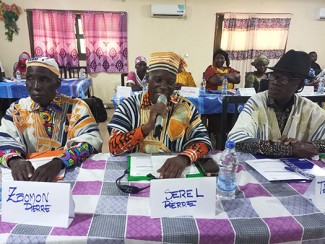
Youth activists and traditional leaders from the city of Duékoué, in western Côte d’Ivoire, gathered on October 15 to discuss how best to strengthen social cohesion and prevent future conflict. The city and surrounding region were among the areas most affected by the violence that broke out across the country following the 2010 presidential elections and that left thousands dead and many more injured, beaten, or raped.

In this op-ed marking Universal Children’s Day, ICTJ's Virginie Ladisch explains why within transitional justice, the capacity to make positive choices and demonstrate moral agency are attributes that need to be encouraged and fostered in children, especially former child soldiers.

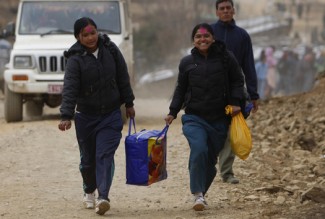
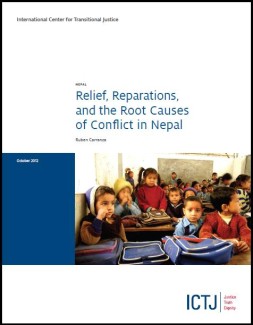
The report examines the measures taken in Nepal to redress victims following the 2006 peace agreement, which formally ended the ten-year civil war between the government and Maoist rebels. It looks closely at the Interim Relief Program (IRP) — a compensation scheme instituted in 2008 ...

In December 2018, we mourned the loss of ICTJ's founder, Alex Boraine. On December 12, Fernando Travesí sat down for an intimate conversation with Vincent Mai—ICTJ’s first chairman—to learn more about a life that we will continue to commemorate in the months and years to come.

After several months of intense political debate, Colombia’s Senate passed constitutional reform measures containing extensive transitional justice provisions. The Legal Framework for Peace was adopted to confront decades of massive human rights violations and help to bring a sustainable peace to Colombia’s ongoing internal armed conflict.

What does the obligation to provide reparations mean when serious human rights violations are at issue? This report explores the evolving interpretation of the right to reparation in international law and jurisprudence and how domestic courts have provided judicial reparations at the ...

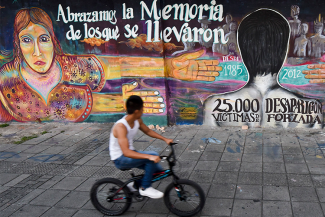
A man on a bicycle rides past a building whose exterior wall is covered in a colorful mural with writing in Spanish.

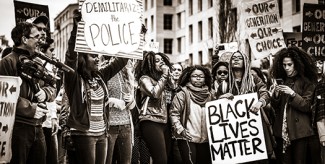
“No peace without justice” is a chant that filled the streets of the United States last year following the murder George Floyd by police in May 2020. This same chant has animated protest movements and social and political upheaval in many countries around the world. We at ICTJ know from our experience that these calls for justice are for something far more encompassing than criminal accountability alone.

This paper focuses on the issue of reparations in Darfur. It particularly emphasizes victims' right to reparation for the harm done to them, and aims to ensure that this right is recognized and upheld in any peace process. Drawing on experiences from other regions, it reviews and addr...

The reparations policy for victims of Peru’s internal armed conflict, which lasted from 1980 to 2000, includes the internally displaced population among its beneficiaries under the Official Register of Victims. However, displaced persons are given lower priority than the other categor...

Although the conflict in Turkey remains ongoing and a political solution to the “Kurdish question” has not been reached, in recent years, the Turkish government has developed a series of laws and policies regarding the situation of displaced Kurds. The most significant of these polici...

The establishment of the International Criminal Court's Trust Fund for Victims (TFV) , in combination with its reparations function, is unprecedented in international law. It affirms the importance of victims in international justice efforts. However, the creation of a Trust Fund cl...

The conviction of Thomas Lubanga is a milestone for the international criminal justice system established by the Rome Statute, and may make an important contribution to the development and definition of the right to reparations in international human rights law. ICTJ has produced a br...

The conviction of Thomas Lubanga is a milestone for the international criminal justice system and may make an important contribution to the development and definition of the right to reparations in international human rights law. Accompanying a submission filed with the ICC in advance of its reparations proceedings, ICTJ has produced a briefing note examining what lessons the court can learn from the broader transitional justice field.

The design and implementation of reparations for victims in the aftermath of large-scale and serious human rights violations is an area rife with challenges.

Since independence Ugandans have endured episodes of violence and human rights abuses across successive political regimes and transitions with devastating consequences. During two decades of conflict in the northern Uganda involving the Lord’s Resistance Army (LRA) and the government ...

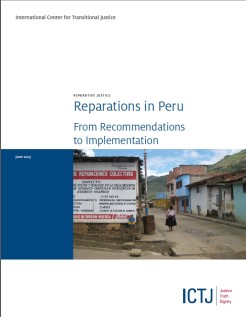
This report evaluates the government of Peru’s partial results in providing compensation to victims of the internal armed conflict that devastated the country from 1980 to 2000. It provides a detailed analysis of the process of implementing the Comprehensive Reparations Plan, establis...

In the aftermath of massive or systematic violations or more generalized conflict,providing reparation in a meaningful way poses a daunting challenge. This 15 page paper covers the nature and objectives of reparations, forms of reparations, policy design of reparations, and financing...

This report is intended to contribute to the work of National Commission for Social Action (NaCSA) and of other organizations involved in providing reparations to victims in Sierra Leone. It aims to identify some of the lessons from the Year One Program program, and to help define the...

With socio-economic development a crucial priority in Africa, transitional justice practitioners are asking whether methods of addressing past human rights abuses can also help tackle development issues. ICTJ, in conjunction with the Japan International Cooperation Agency (JICA), expl...

This report serves as practical guide for those working in truth commissions and fact-finding bodies to convert large amounts of data and information into a final report. The manual draws on real life experiences from multiple truth commissions and includes extracts and examples from ...

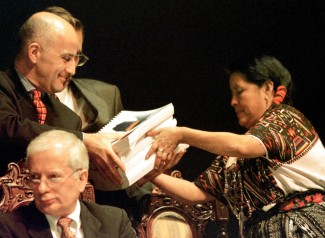
A man takes in his arms a large stack of reports from a woman.

This research brief provides case studies on the use of pardons in Argentina, Chile, El Salvador, Peru and South Africa following periods of mass abuse, and highlights subsequent political and civil society action to overcome impunity exacerbated by pardons and amnesties.

Case studies on the use of pardons in Argentina, Chile, El Salvador, Peru, and South Africa.

States have the obligation to prevent human rights violations, investigate them, identify and punish their intellectual authors and accessories after the fact, and may not invoke existing provisions of domestic law to avoid complying with their obligations under international law. ...

ICTJ provides an overview of investigative reports into detention and interrogation practices by the U.S. government. The purpose of this brief is to provide a sampling of reports to survey the ways in which these have been commissioned, what they have covered, and how they relate to ...

ICTJ provides an overview of various United States Commissions of Inquiry. This publication includes briefs on the Senate and House Committee Investigations of the Palmer Raids in 1920, the Senator Frank Church Committee in 1975, a commission into wartime relocation and internment of ...