



1530 results

This study explores a transitional justice approach to the dilemma of foreign fighters in violent conflict. Such an approach can help center human rights in comprehensive responses to foreign fighters, and shift the current focus from security and punishment to justice and long-term p...

Image of Children looking through holes in a tent at al-Hol displacement camp in Hasaka governorate, Syria, on April 2, 2019.

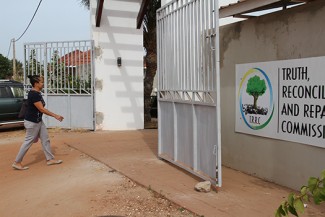
On November 25, 2021, The Gambia’s Truth, Reconciliation and Reparations Commission (TRRC) presented its 17-volume final report and recommendations to President Adama Barrow, after multiple delays. The final report includes a record of serious human rights violations committed under Jammeh’s repressive regime and recommendations for pursuing justice. Despite the challenges, steps have already been taken that offer hope that the TRRC’s recommendations will take effect.

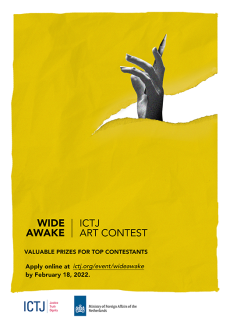
New York, January 18, 2022— The International Center for Transitional Justice (ICTJ) is pleased to announce the “Wide Awake Art Contest,” an open call to Lebanese and Tunisian artists as well as artists living in Lebanon or Tunisia to explore the theme “the Sound of Dissent.” The contest will showcase works by those who are documenting and memorializing their communities’ stories in times of instability, resistance, and change.

New York, January 21, 2022—ICTJ will host an online course, entitled “Prevention and Guarantees of Non-Recurrence: The Role of Transitional Justice,” from March 14 through 18, 2022. Prevention has emerged as a top priority on international policy agendas for sustainable peace and development and global governance, and understanding the preventive capacity of transitional justice is more imperative than ever.

In 2021, there were significant developments, some hopeful and some devastating, in the struggle for truth, accountability, and redress in countries around the world. ICTJ experts covered these events in commentaries and feature stories published on our website and in our newsletters. While 2022 is already underway and we at ICTJ are hard at work, we would like to pause a moment to take stock and reflect on the year that was.

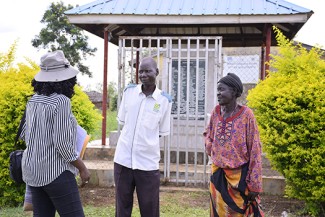
On January 27, 2022, the UN Human Rights Council's Universal Periodic Review (UPR) Working Group will examine Uganda’s human rights record. The UPR process presents an important opportunity to spotlight the human rights situation in the country, and recommend actions that the government of Uganda should take to fulfill its human rights obligations.

The start of 2022 was marked by two important victories in the fight for justice and redress for victims of human rights violations in Syria. The first was the sentencing of Anwar Raslan, a former colonel in the Syrian intelligence service, to life in prison by the Higher Regional Court in Koblenz...

ICTJ's President, as well as several ICTJ directors, speak about the critical need to address former injustices in order to prevent future conflicts.

On Thursday, January 13, 2022, the Higher Regional Court in Koblenz, Germany, convicted Anwar Raslan, a senior official in the Syrian government, for crimes against humanity. The landmark trial, the first ever to prosecute a member of Bashar al-Assad’s regime for such crimes, highlights a crucial component without which Raslan would never have been convicted: the role of victims in achieving justice.

The two goals of peace and justice, rather than being exclusive, are mutually reinforcing. When justice is ignored, the danger of violence recurring remains high.

This multimedia project brings together voices of five Sierra Leoneans of different backgrounds reflecting on the legacy of the court as it nears the completion of its mandate.

Two women abducted by the Lord´s Resistance Army (LRA) return home with their children born of war and fight to be included in a society that deems them criminals.

Bulla Karatasi: The Forgotten Massacre, produced by ICTJ and Kenyan media house Africa Uncensored, is the first ever in-depth documentary film to explore the events surrounding the massacre that took place in Kenya's northern region of Garissa&nbs...

There is no way to calm the pain left by war, much less erase the traces or water down the responsibilities into oblivion.  What does exist are the experiences of people who are making or made that transition in search of reconciliation.  These are some of their voices.

“There is also the question of memory. It is necessary that all that happened becomes part of the national memory. And this will be a guarantee against the return of the dictatorship.” — Ridha Barakati, Tunisian Activist

ICTJ sat down with three prominent experts on restorative justice, to learn more about their experiences, restorative justice, and its role in transitional justice and Colombia.

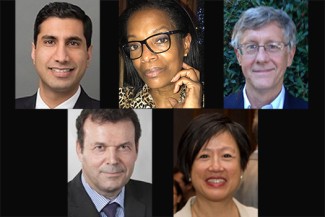
New York, February 22, 2022—The International Center for Transitional Justice (ICTJ) is pleased to announce the addition of five distinguished members to its Board of Directors. F. William (Bill) Barnett, Dr. Alexis Keller, Leisle Lin, Rahim Moloo, and Patricia Sellers bring to ICTJ decades of experience in leadership roles at major global institutions.

ICTJ Vice President Paul Seils interviewed South African judge and human rights activist Albie Sachs.

Why pursue transitional justice in the aftermath of massive human rights violations? This video provides a window into the debate about the relevance of transitional justice in today’s world.

On February 26, 2020, the International Center for Transitional Justice and NYU Law’s Center for Human Rights and Global Justice welcomed former President of Colombia and Nobel Peace Prize Laureate Juan Manuel Santos for a conversation on the role of transitional justice in peace negoti...

Canadian youth not only want to know the truth about what happened at the Indian Residential Schools –they want to learn about it in their classrooms.

The ICTJ office in Colombia joined forces with the Movement of Latin American Expressions of Hip Hop (MELAH) and the online cultural outlet Revista Cartel Urbano to host the hybrid virtual and live International Hip Hop Encounter in Bogotá, Colombia.

Perspectives of Colombians particularly affected by the country's conflict – women, young people, and indigenous peoples – who are demanding truth.

The story of two courageous women from Colombia, and their struggle for acknowledgement and redress in a country where more than four million people have been affected by decades of civil war.

The story of Mark and Sharon, two Kenyan youths who believed in the importance of unveiling the truth about past crimes in Kenya and participated in the TJRC process.

As the conflict in Syria nears an end, the human toll continues to rise, with millions of Syrians forcibly displaced, including millions who have been forced to flee the country. Children have experienced particular harms, including lasting trauma and disabilities, a lack of education, ...

"Victims: Anonymous in War, Protagonists in Peace" is the story of an unprecedented event in world peace accords: that the victims were - during the negotiations - at the center of the construction of the justice agreement between the Colombian government and the FARC guerilla.

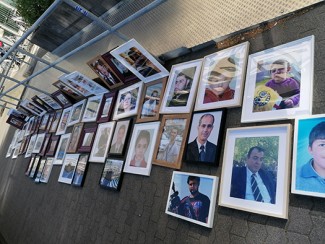
Enforced disappearance and arbitrary detention devastate victims and all those who love them. This guide takes an unsparing look at the harsh realities that Syrian victims of these crimes face and offers guidance on what they and others can do to help. It is the product of the Bridges...

A drawing of a woman holding a young child. In the background are numerous eyes of different colors watching them.

New York, March 1, 2022—“There can be no peace in Syria until the rights of the wrongfully detained, disappeared, and their families are fully restored,” warns a new publication released today by the Bridges of Truth, a collaborative of eight Syrian civil society organizations and ICTJ. A Guide to...

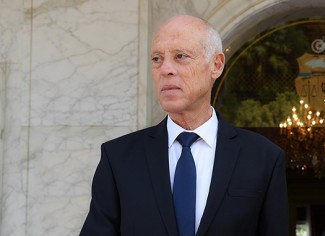
On February 6, 2022, President Kaies Saied announced that he would dissolve Tunisia’s Supreme Judicial Council. While his supporters welcomed the declaration with satisfaction, many more across broad segments of society greeted it with outrage and resentment. That the president made this unilateral announcement on the premises of the Ministry of Interior—responsible for public security—stung all the more, as if to send a message that he would not hesitate to use executive power to counter perceived disobedience, judicial or otherwise.

Transitional justice can contribute to prevention of violence and abuse, particularly if it addresses common drivers such as exclusion and associated grievances. It can facilitate the inclusion of social groups that have suffered human rights violations and marginalization, and promote long-term...

This study explores specialized units established in 23 countries to investigate and prosecute serious international crimes. Notwithstanding the challenges faced by these units, the study concludes that countries with a specialized institutional approach are considerably more successf...

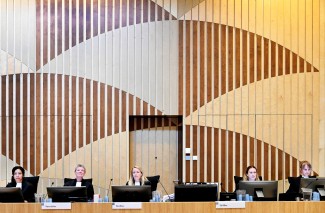
several judges dressed in black gowns sit on a judicial bench.

Tunis, March 22, 2022­—The International Center for Transitional Justice (ICTJ) will hold a series of cultural activities from March 21 through March 26, 2022, as part of its Wide Awake Art Contest. The contest, launched in January, invited Lebanese and Tunisian artists, as well as expat artists...

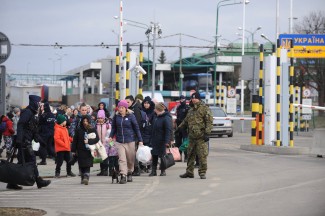
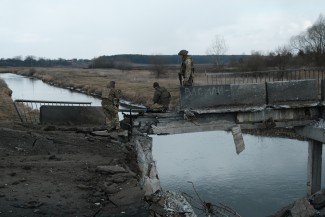
In the latest round of negotiations between Ukraine and Russia, the Turkish president called on both delegations to act responsibly and agree to a ceasefire. He reminded them of their historical mission to achieve a "just peace." While we may not know how and when this conflict will end, we already know some of what Ukrainian society will be grappling with in the near future. Significant portions of country’s civilian infrastructure have been destroyed. More than 4 million Ukrainians are now refugees; another 10 million are internally displaced; and a rising but still undetermined number have been killed, are missing, or are wounded. The real question is what does a just peace mean for Ukrainians.

In January 2022, ICTJ launched the Wide Awake Art Contest, an open call event inviting Lebanese and Tunisian artists as well as artists living in Lebanon or Tunisia to explore the theme “the Sound of Dissent.” The contest spotlights the creative works by those who are document...

As plans to build a massive Wegmans distribution center forge ahead, residents of the historic Black community of Brown Grove, Virginia, demand acknowledgment and redress.

At a time when truth-seeking and reparations initiatives are taking hold across the United States, this report offers reflections from various civil society-led truth-seeking processes. Drawing on case studies from the United States, Colombia, Scotland, and West Papua, the report iden...

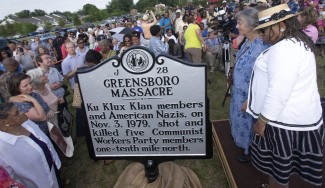
People gather around a plaque marking the Greenboro Massacre outside during an inaugural ceremony

After seven years of waiting for the UN-backed Special Criminal Court (SCC) in the Central African Republic to begin operations, victims of the country’s civil war had hoped to finally see the first tangible step toward justice on April 25 when the first trial opened in the capital Bangui. The trial was initially set to begin on April 19, 2022, but was abruptly postponed when the defense attorneys failed to show up in an apparent boycott over their wages. When the defense lawyers returned to court on April 25, they immediately requested an adjournment, which was granted, and the trial was postponed again until May 16. It is very likely that this incessant postponement will further deflate already diminished confidence among victims in the SCC’s ability to deliver justice.

International Center for Transitional Justice The Final Peace Agreement signed in 2016 between the Revolutionary Armed Forces of Colombia (FARC-EP) guerrillas and the Colombian government created an ambitious and innovative transitional justice system called the Comprehensive System of Truth...

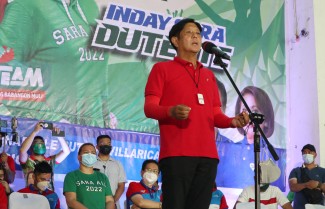
Thirty-six years after Ferdinand and Imelda Marcos were overthrown in a “People Power” revolution, the Marcos family is back in power, with Ferdinand Marcos Jr. elected as president (and Rodrigo Duterte’s daughter as his vice-president). While immediate as well as decades-late transitional justice...

By Sean Yoes Terror on the Eastern Shore December 4, 1931, is a night that lives on in the minds of Black residents in Salisbury, Maryland, a small town along the state’s Eastern Shore. That cold winter night, a mob of more than 2,000 racist residents hung 18-year-old Matthew “Buddie” Williams from...

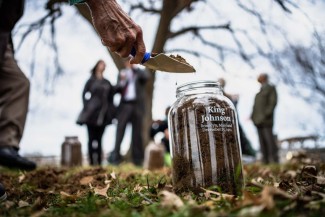
Across the state of Maryland, communities are coming together to uncover the truth about racial terror lynchings and seek redress for the enduring consequences of these crimes. “More than the poll tax, the grandfather clause, and Jim Crow segregation, lynching and the threat of lynching...

Since Russian armed forces invaded Ukraine in late February 2022, the horrific nature of violence endured by Ukrainian civilians at the hands of Russian soldiers has shocked the world. At the time of this writing, there have been 16,000 reports of alleged war crimes, including forcible transfer...

For many years now, the International Center for Transitional Justice and other organizations have supported young activists and artists as they harness the power of art, culture, and new media to advance truth, justice, reform, and redress, not only where they live, but across borders and in collaboration with others. This innovative and inspiring work offers lessons about how to increase civic engagement and help societies know the truth about their country’s past and actively shape the national narrative.

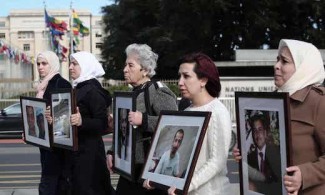
As part of its ongoing efforts to support Syrian civil society organizations seeking to end enforced disappearances in Syria, ICTJ organized a visit to the United States for members of two prominent family associations: Families for Freedom and the Caesar Families Association. The trip, which was planned in coordination with longtime partner Dawlaty, comes at a time when Syrian civil society and victims’ groups have been intensifying their calls for an international mechanism to uncover the fate of those who have gone missing in Syria since the start of the uprising in March 2011.

Reparations for victims of sexual and gender-based violations (SGBV) raise a series of complicated questions and implementation challenges around how to acknowledge this category of victims and deliver reparations without exposing victims to stigma and rejection. Victims must weigh the risk of...

The role of victim participation in international criminal proceedings, whether in international, hybrid, or national courts, has long been a matter of public deliberation among criminal justice practitioners and human rights activists. In the aftermath of mass atrocities and repression, the...

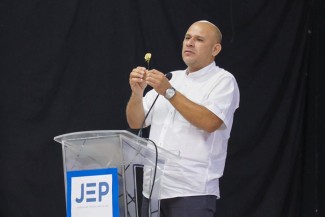
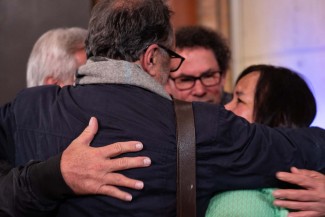
On June 21-23, 2022, Colombia’s Special Jurisdiction of Peace (la Jurisdicción Especial para la Paz, or JEP) held its first acknowledgment hearing on the taking hostages, serious deprivation of liberty, and other concurrent crimes (known as Case 01) at the Virgilio Barco Library auditor...

On June 21-23, Colombia’s Special Jurisdiction of Peace (JEP) held its first acknowledgment hearing on the taking hostages, serious deprivation of liberty, and other concurrent crimes (known as Case 01) in Bogotá. Seven former leaders of the guerrilla group Revolutionary Armed Forces of Colombia—People’s Army (FARC-EP) acknowledged their command responsibility for the kidnapping crimes that were the FARC-EP’s policy from 1993 to 2012 in the presence of victims, JEP officials, civil society representatives, and members of the press. This hearing marks the first time ever FARC-EP leaders publicly acknowledged their role in such systemic crimes. A decisive step in the country’s restorative justice process, it would not have been possible without years of preparation.