


1535 results

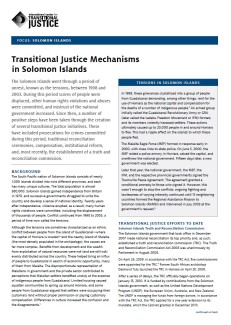
Since the Solomon Islands period of unrest, known as the tensions, between 1998 and 2003 a number positive steps have been taken through the creation of several transitional justice initiatives. These have included prosecutions for crimes committed during this period, traditional reco...

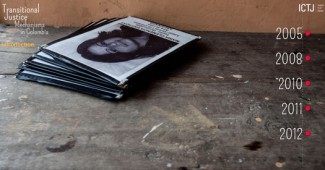
Next week, the Colombian courts will issue the first partial verdict in the Justice and Peace case against the paramilitary leader Hebert Veloza García, alias “HH,” one of the most significant cases of the Justice and Peace process. Ahead of the HH partial verdict on October 30th, ICTJ is launching a comprehensive timeline on transitional justice measures implemented in Colombia since 2005 that recognize victims' rights to truth, justice, reparations, and the guarantee of non-recurrence.

This report traces the human rights abuses under King Hassan II—including arbitrary arrest, torture, and disappearance—that led to the development of the Moroccan Equity and Reconciliation Commission (Instance Équité et Réconciliation (IER)). It provides both a historical reference an...

This initiative aims to promote accountability within the media through independent monitoring of the performance of the media during the TRC process. While freedom of the press is essential to the cultivation of a democratic culture, it is only fair for the media to labor in overcomi...

The protracted displacement of Palestinian refugees presents a complex set of challenges for the international refugee, humanitarian, and transitional justice fields. For the most part, these global movements have treated the Palestinian situation as a case apart: Palestinian refugees...

In this op-ed, ICTJ President David Tolbert argues that in order to meet the EU’s high standards on the rule of law and human rights, Serbia must address the legacy of its recent past in which Slobodan Milosevic’s regime and the institutions under its control were involved in some of the most notorious crimes committed in Europe since World War II.

On August 20, 2009, Afghans went to the polls for the third time since the U.S.-led military intervention in 2001. Accountability and justice were underlying themes in the election, as made clear by many of the issues that attracted public attention. Nonetheless “calls for justice” re...

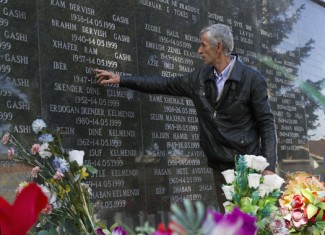
Background on the massive human rights violations in the states that declared independence from the Former Yugoslavia from 1991 onwards, including Croatia, Bosnia and Herzegovina and Kosovo, resulting in the deaths of over 140,000 people and four million displaced. The fact sheet cove...

In February 2024, the Office of the United Nations High Commissioner for Human Rights hosted an event in Seoul, South Korea, marking the 10th anniversary of the release of the report of the United Nations Commission of Inquiry on Human Rights in the Democratic People's Republic of Korea. ICTJ Senior Expert Ruben Carranza spoke at the event and discussed lessons learned involving nonjudicial forms of accountability. In this interview, he talks about why a broader approach to transitional justice is necessary and how transitional justice measures can help promote peace and possible reunification on the peninsula.

This policy brief reviews the work of the United Nations Human Rights Council as it relates to transitional justice, five years after the Council's establishment. Overall findings indicate that the Council and its mechanisms, notably the system of Special Procedures, have approached j...