


1535 results

This research report examines how civil society actors involved in transitional justice processes narrate and communicate their role, impact, and value. The study focuses on actors in Colombia, The Gambia, and Kenya, describing the content, form, and audiences of their communication w...

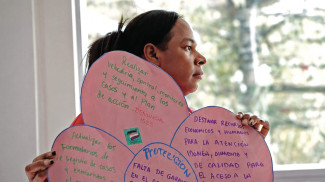
A person holds up a poater collage made up of pink paper with text in Spanish

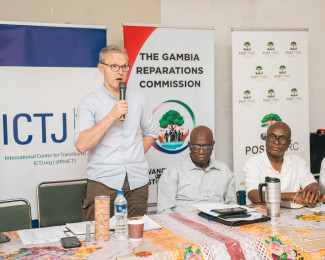
The establishment of the Reparations Commission in April 2025 and the recent appointment of British barrister Martin Hackett in April 2026 as The Gambia’s first special prosecutor represent crucial and long-awaited steps in the country’s transitional justice process. But to succeed, both require sustained public, political, and financial support.

This report assesses Uganda’s progress toward achieving the SDG16+ targets through a transitional justice lens. It highlights registered progress, existing gaps and challenges, and the contributions of civil society organizations to the realization of the SDG16+ targets.

Abstract cover of the report SDG16+ and Transitional Justice in Uganda: A Review of the Gains and Obstacles

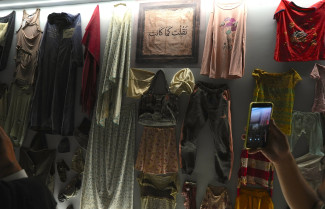
On August 30, the International Day of the Victims of Enforced Disappearances, I sat beside the president of Syria’s National Commission for Missing Persons at its headquarters in Damascus for a historic moment: the launch of a platform through which families will be able to report their missing loved ones. For Syrian families, August 30 has long been a day to remember those they lost to the unknown and renew their demand for truth. This year, marking it inside a Syrian institution created to search for them had a very different significance.

As Sudan’s devastating conflict enters its fourth year, the priorities of victims and Sudanese civilians must be central to efforts to end the violence and build sustainable peace. Against this backdrop, ICTJ and the Government of the Netherlands convened a policy roundtable in The Hague on advancing victim-centered justice for durable peace in Sudan.