


1530 results

Bangladesh has taken several steps to seek redress for mass atrocities committed during the course of their “Liberation War” in 1971 that split West and East Pakistan into modern Pakistan and Bangladesh. In March 2009, the Awami League party announced the creation of an International ...

The International Center for Transitional Justice (ICTJ), together with the University of Western Ontario Faculty of Law and the Permanent Mission of Canada to the United Nations, hosted an Expert Group Meeting entitled Closing the International and Hybrid Criminal Tribunals: Mechanis...

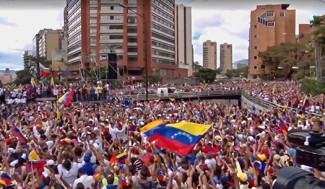
The political crisis in Venezuela seems to have reached a stalemate. In September, the Norway-mediated negotiations between the Maduro government and the opposition came to a halt, leaving both sides struggling for the upper hand. But since it remains difficult for either party to prevail, it is likely that this impasse is a momentary setback rather than an indication that the negotiations are defunct.

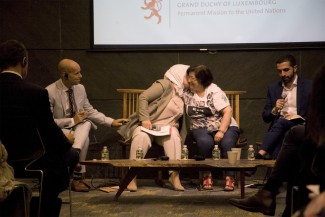
On September 15, ICTJ organized a side event on the missing and disappeared in Syria, sponsored by the governments of Luxembourg and Finland, during the 77th session of the United Nations General Assembly. The event was a timely one, as it addressed a recent proposal for the creation of a new...

More than 20 years after the end of the Yugoslav Wars of the 1990s, Kosovo is still contending with unresolved ethnic tensions. Formerly an autonomous region of Serbia within the former Yugoslavia, Kosovo declared independence in 2008. Ethnic tensions were a root cause of the violent conflicts, during which an estimated 140,000 died and numerous atrocities were committed. ICTJ recently sat down with ICTJ's Anna Myriam Roccatello and Kelli Muddell to learn more about ICTJ's work and the present challenges to truth and justice in the country.

The development of effective transitional justice policies in the Democratic Republic of Congo has been plagued by lack of security, fear of destabilization, limited political will, and scarce resources. This paper focuses on three specific measures of transitional justice: prosecutio...

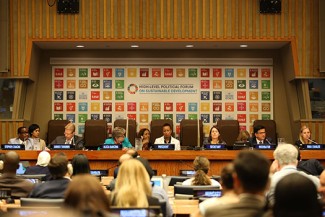
On July 10, the long-awaited UN High-Level Political Forum on Sustainable Development got underway in and around UN Headquarters in New York. This was the first time that Sustainable Development Goal 16 was up for review, so it marked a major event, and a pathway for the global justice and peacebuilding communities to shape conversations about development.

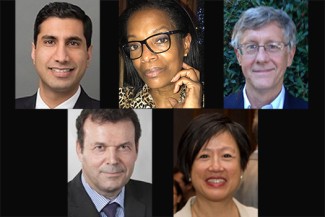
New York, February 22, 2022—The International Center for Transitional Justice (ICTJ) is pleased to announce the addition of five distinguished members to its Board of Directors. F. William (Bill) Barnett, Dr. Alexis Keller, Leisle Lin, Rahim Moloo, and Patricia Sellers bring to ICTJ decades of experience in leadership roles at major global institutions.

When reflecting on peace agreements and their implementation, it is tempting to begin by saying that these processes are generally slow and complex. While that may be true in many contexts, it contributes little to the discussion about what has happened in Colombia since the government signed a final peace deal in November 2016 with the Revolutionary Armed Forces of Colombia, or FARC-EP—the oldest and largest guerrilla group in the county—that ostensibly ended 50 years of war.

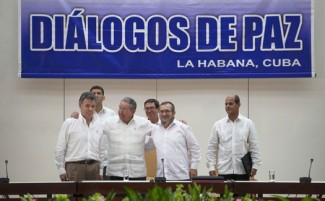
The International Center for Transitional Justice welcomes the recent agreement between the Government of Colombia and the Revolutionary Armed Forces of Colombia to create a special criminal jurisdiction as part of an integrated system of truth, justice, reparations and guarantees of non-recurrence.