1541 results

Since 2014, conflict in Yemen has caused hundreds of thousands of deaths, displaced millions, destroyed the economy, and exacerbated systemic marginalization, creating one of the world’s worst humanitarian catastrophes. Yet currently, transitional justice and reconciliation take up little space in the Yemeni political arena. In this context, ICTJ has released a new report that explores pathways to a just and sustainable peace in Yemen.

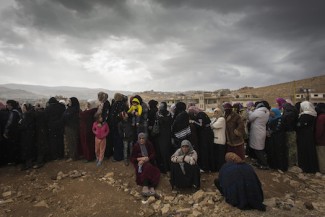
A culture of impunity for serious violations of human rights continues to thrive in Lebanon, says a report released today by ICTJ.

The field of transitional justice increasingly recognizes the relevance of mental health and psychosocial support in contexts of massive human rights violations. Despite growing advocacy and awareness at the global policy level, however, the field lacks a systematic approach to the issue. Now, a new ICTJ report contributes to such an approach.

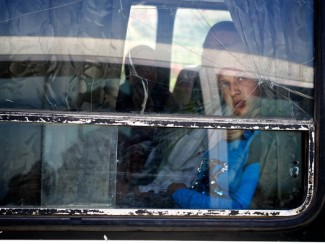
A new ICTJ report argues that discussions about a future return of refugees and coexistence among groups currently at war in Syria must begin now, even in the face of ongoing violence and displacement.

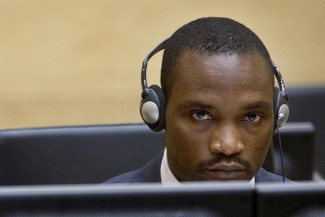
Germain Katanga, a warlord convicted by the International Criminal Court (ICC) for murder and other crimes, thought he was getting released from prison in January. Instead, authorities in the DRC have held Katanga following the conclusion of his ICC sentence and are now trying him on charges not originally addressed by the ICC. This represents a major step by the national judiciary in assuming its responsibility to prosecute international crimes.

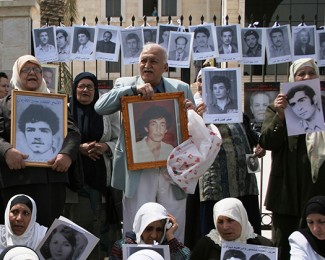
Ever since the armed conflict in Lebanon broke out in the mid-1970s, the main demand of the families of the missing and disappeared has been to secure the right to know the truth and the right to an effective investigation, verification of facts, and public disclosure of what happened. These families persisted in their demands over the decades, against the odds and despite social, political, and cultural forces pushing for collective amnesia. Their perseverance, along with civil society’s invaluable efforts, shined a continuous light on the issue of the disappeared, igniting a public debate that parliamentarians could no longer ignore. Last month, they voted in favor of the Law for the Missing and Forcibly Disappeared Persons in Lebanon.


In this op-ed, ICTJ's Aileen Thomson says the concerns of former political prisoners, ethnic minorities and conflict-affected communities must be taken into account if peace and democracy in Myanmar are to endure.

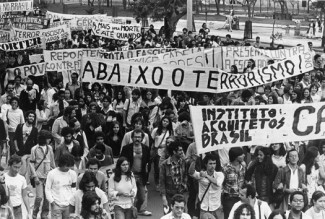
Human rights organizations in Brazil have created an online platform Brasil Nunca Mais Digital to preserve evidence and other documents related to more than 7,000 political prisoners tried before Brazil’s Military Supreme Court, during that country’s military dictatorship.

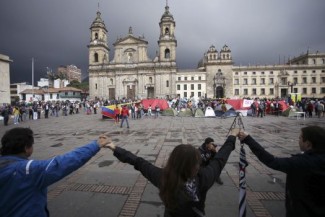
ICTJ welcomes the announcement the government of Colombia and the FARC-EP have agreed on a series of modifications to the peace accords, after the original version was narrowly rejected in the October plebiscite vote.

New York, January 25, 2021—"You cannot deliver 500 kilograms of transitional justice,” explains a high-level UN official in a new ICTJ report released today that explores the theoretical and practical challenges of measuring the results of transitional justice processes. These processes are complex and politically contested and are thus notoriously difficult to evaluate. The report offers key insights related to and tools for evaluating and monitoring transitional justice processes and assessing their impact.