
In 2005, Colombia passed the Justice and Peace Law, which established the country’s first formal transitional justice process. More than two decades have passed since the law’s enactment and the subsequent creation of a special criminal justice system to prosecute the serious crimes committed by paramilitary groups before their last mass demobilization in 2006.
To commemorate the anniversary, media outlet Verdad Abierta, the Friedrich Ebert Stiftung in Colombia, and ICTJ partnered to produce an investigative four-part series in Spanish that critically assesses Colombia’s first transitional justice experience. In an effort to share this incisive research with a wider audience, ICTJ has now translated the first two installments into English.
The second in the series, this article explores the unprecedented challenges the country faced as it carried out its first transitional justice system, including shedding light on the thousands of crimes committed, investigating and prosecuting those most responsible, and delivering on the promise for truth and reparations.
In Colombia, there is a corollary to the aphorism that the first casualty of war is the truth: When the fighting ends, the truth becomes the new battleground. This has been evident in the 20 years since the establishment of the first transitional justice system in Colombia, known as Justice and Peace.
During his surprising speech before the Colombian Congress on July 28, 2004, former paramilitary commander Salvatore Mancuso presented himself as a “hero” and declared that: “History will recognize the goodness and greatness of our cause.” The truths revealed through the Justice and Peace processes tell another story.
In fact, much of what we know today about paramilitary operations, their crimes, their connection to politicians and businessmen, and their victims, is the result of the Justice and Peace processes. These truths have been elucidated in the 91 sentences handed down by the judges (nine of which have been appealed before the Supreme Court). These rulings revealed not only the crimes committed, but also the systematic nature of paramilitary actions.
Justice and Peace, which began as a legal framework to prosecute mainly demobilized members of the United Self-Defense Forces of Colombia (AUC), has in the broadest sense been a process of truth-seeking and acknowledgment of responsibility by the postulados (former combatants who applied for benefits under this mechanism). According to the Attorney General’s Office, thus far, 841 individuals have been convicted of 14,901 criminal acts, each of which may comprise numerous crimes. Information has been provided on the structures, origins, and “logic” on which the paramilitary groups operated. In addition, the families of many of the victims of forced disappearance now know what happened to their loved ones and some have even recovered their bodies.
Click on each bar to explore the information for each department:

However, according to analysts, victims, and human rights organizations, despite everything that has been revealed, much remains to be exposed.
Sebastián Escobar, a lawyer from the Colectivo de Abogados José Alvear Restrepo (CAJAR), an organization that has been accompanying victims of paramilitarism since 2006, believes that the results of the Justice and Peace system are nuanced. “Given the role and nature of paramilitary crimes, much remains to be explored. We are still indebted to the victims, and we must further investigate the state’s involvement in the paramilitary strategy.”
“I do not think it has been a complete failure either. I use the Jaime Garzón case as an example of how the acknowledgment of responsibility by some members of paramilitary groups and the information they provided about the involvement of some state agents, both civilians and members of the public security forces, was crucial to driving other processes forward,” he adds.
Law 1592 of 2012 reformed the Justice and Peace Law and modified the investigative approach, which shifted from investigating individual acts to investigating patterns of macro-criminality committed by the AUC. Given the dearth of information about this armed organization before the law came into effect, this made it possible to identify the contexts and modus operandi of the different paramilitary structures.
For example, the sentence against Hernán Giraldo and others provided details about the criminal dynamics and modalities of the Bloque Resistencia Tayrona, which dominated the Sierra Nevada de Santa Marta. This included systematic gender-based violence, which became a lethal weapon of war used to control communities and territories. The sentence also revealed the alleged collaboration of members of the armed forces, who on occasion facilitated and in others simply enabled the paramilitary action. The sentence also identified the impact on the ethnic and cultural integrity of the Arhuaco, Kogi, and Wiwa peoples of the Sierra Nevada and the environmental destruction that occurred.
Extrajudicial Truths
Not all members of the paramilitary groups were selected to enter the Justice and Peace process, leaving thousands of former combatants in a legal limbo. In 2010, Law 1424 created a non-judicial mechanism for contributing to the truth and historic memory, specifically for this group of people. This law established a series of legal benefits for demobilized AUC members who had not committed serious crimes and could contribute to the truth. The Centro Nacional de Memoria Histórica, or CNMH (National Historic Memory Center) was tasked with collecting, preserving, and systematizing any information that arose from the Agreements to Contribute to Historic Truth and Reparations.
Álvaro Villarraga, the first director of the Truth Agreements Division, which received more than 14,000 demobilized AUC members who spoke about their experiences in the armed conflict, suggests that this extrajudicial mechanism complemented the information provided by the postulados in their voluntary accounts to the Attorney General’s Office.
According to Villarraga, “[This included information on] forms of collaboration between public security forces and paramilitaries, the involvement of certain authorities or people within the population or even some acts of violence, some accounts of murders, forced disappearances, or complementary information about important incidents unknown to the Justice and Peace system.”
Based on these narratives, the Truth Agreements Division has published 21 regional reports on the operation of different paramilitary groups at the departmental and regional levels.
According to a 2018 report by the Truth Agreements Division, these regional reports revealed that rather than a single chain of command, the AUC was divided into 39 blocs, each with its own chain of command and involvement in specific acts of violence in each of the 665 municipalities of the 31 Colombian departments where they operated.
With regard to this non-judicial mechanism, in 2010, the Constitutional Court had already explained that the strategy to confront a criminal phenomenon such as paramilitarism could not be “reduced to a sworn statement by a member of the criminal organization,” but that it “should extend to the power relations and interests between the instigators and the perpetrators, unpacking the policies, practices, and contexts that determined or facilitated the perpetration of systematic and widespread human rights violations and breaches of international humanitarian law.”
Moreover, in its 2018 evaluation of the non-judicial mechanism, the CNMH reflected that while relevant aspects had been clarified (such as the nature of the structures or the existence of criminal patterns and practices), the scope of these efforts with respect to the paramilitary phenomenon as a whole “may be limited due to the profile of most of the demobilized former combatants that had participated in the mechanism.”
In other words, one of the main problems that arose relates to the truth offered by the demobilized former combatants who, because having been admitted for “basic” crimes (criminal conspiracy, illegal possession of firearms, and wearing police or military uniforms), they limited themselves to providing information on these crimes only and did not address other serious conduct of which they were aware.
Individual Truths
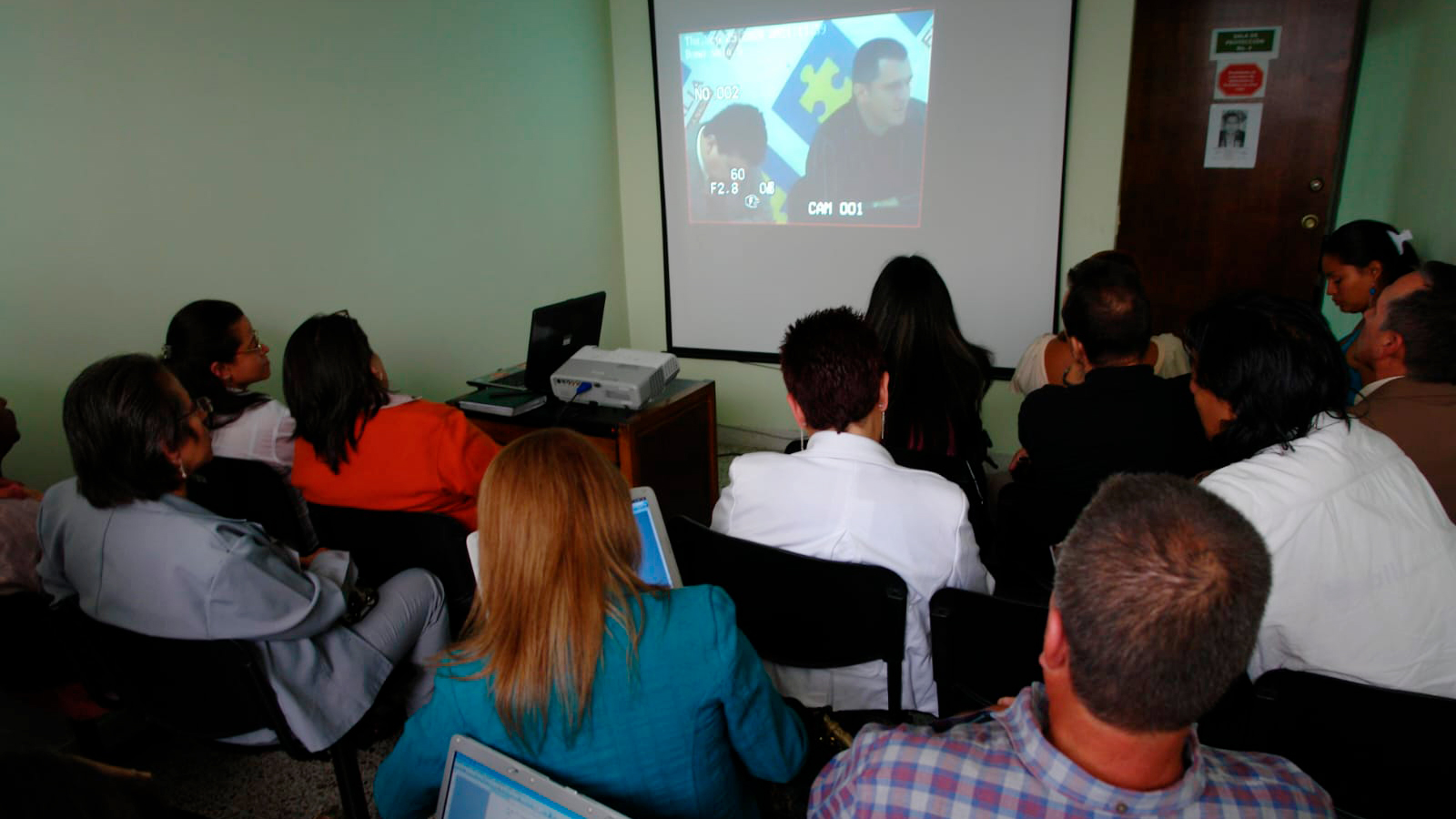
Those who suffered at the hands of the paramilitaries believe that the Justice and Peace process has vindicated their versions of the facts.
In its Ruling C-936 of 2010, the Constitutional Court emphasized the fight against impunity, thus guaranteeing the inalienable right to truth, the duty to remember, and victims’ right to know. This includes victims’ and society’s right to know what really happened, both in individual cases and during the conflict as a whole. “An individual’s human dignity is affected if they are deprived of vital information. Access to truth is thus intimately linked to respect for human dignity and to the memory of the victims and the way they are viewed,” reads the sentence.
According to Ana María Rodríguez Valencia, director of the Colombian Commission of Jurists (CCJ), at least some of the contributions by the paramilitaries in their voluntary accounts helped increase understanding about the massacres that occurred in Colombia’s Caribbean coast region, such as Montes de María, in Antioquia, or in Meta, and provided information about the crematory ovens in Norte de Santander.
“It was not enough to disappear people; the way the bodies were disposed of ensured that they would never be found,” she says. “On this issue, it will most likely be very difficult to find out the full truth and give the families complete answers.”
Despite these difficulties, the demobilized former combatants have participated in more than 40,000 sessions organized by the Attorney General’s Office to give their voluntary accounts, which have in some cases served to locate the remains of people who had been forcibly disappeared during the conflict. As of May 2025, they have confessed 117,879 criminal acts to Justice and Peace prosecutors.
“The Justice and Peace system’s work over so many years and the task it was assigned to discover the networks of disappearances, before the Search Unit was established, have been very important, as the information we received enabled us to advance our own investigations,” says Carlos Hernán Marín, technical and territorial deputy director general of the Unit for the Search for Persons Deemed as Disappeared (UBPD).
Marín adds that the UBPD, created by the 2016 Peace Agreement between the Colombian government and the Revolutionary Armed Forces of Colombia (FARC), works in coordination with the Attorney General’s Office, specifically the Group to Search for, Identify, and Deliver the Remains of Disappeared Persons (GRUBE) and the Transitional Justice division.
Over the past 20 years, the GRUBE has exhumed 12,330 bodies, 5,148 of which were delivered to their families in ceremonies carried out for this purpose.
One of the criticisms from the families of the victims and non-governmental organizations was then President Álvaro Uribe Vélez’s misguided decision in 2008 to extradite paramilitary commanders, just when they had begun talking about the participation of third-party civilians. As the families complained to the media, the government had “extradited the truth.”
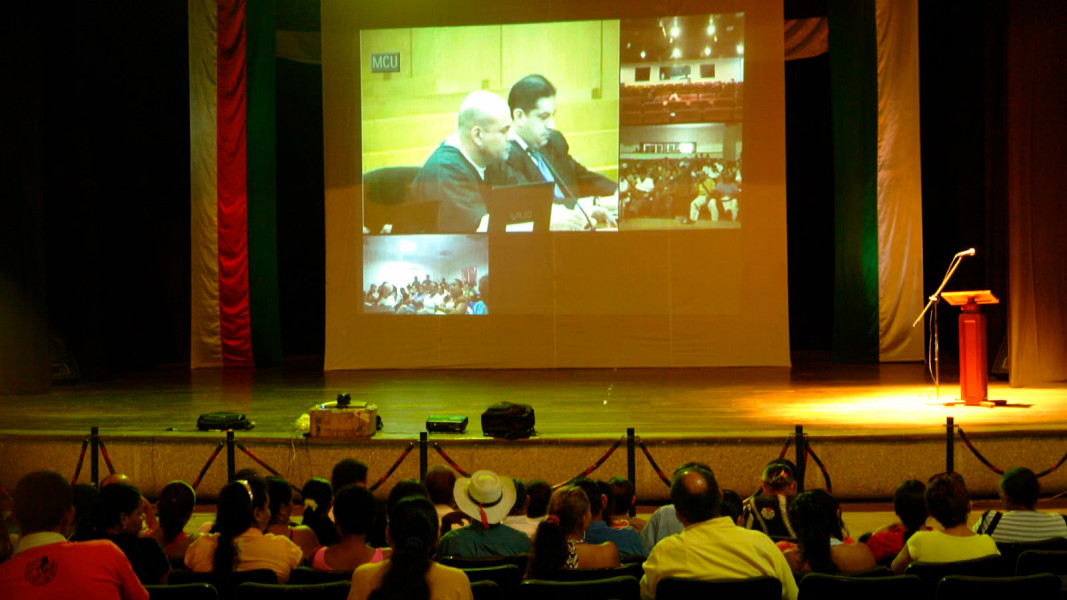
However, some former paramilitary commanders continued to participate in the Justice and Peace process via videoconference, including Salvatore Mancuso, who continued to provide voluntary accounts and was convicted in three sentences handed down by Justice and Peace judges. Ever Veloza García, alias “HH,” former commander of the Bananero and Calima blocs, continued to appear even after completing his sentence in the United States on drug trafficking charges. However, others, such as “Jorge 40,” former commander of the Bloque Norte, and “Gordolindo,” former commander of the Bloque Pacífico, were expelled from the Justice and Process for failing to comply with their commitments as postulados.
The Participation of Third-Party Civilians in the Armed Conflict
One of the major revelations of the Justice and Peace process were the links between some Colombian politicians and paramilitarism, known as the “parapolitics” scandal. Seventy members of congress have been convicted, including four former presidents of the Senate and one president of the Chamber of Representatives. The group of 257 politicians involved in different ways with paramilitarism also included nine departmental governors. This involvement was insinuated by Salvatore Mancuso when he said that 35 percent of Congress was “friends” of the AUC.
Adriana Arboleda, spokesperson for the Movimiento Nacional de Víctimas de Crímenes de Estado (MOVICE), says that, while revealing the parapolitics scandal had been important, it had focused solely on the Caribbean coast. “Many more cases of parapolitics in Antioquia, where only Mario Uribe and Luis Alfredo Ramos have been investigated, must still be clarified. While the modest progress made should be recognized, impunity persists. No sanctions have been issued against military commanders, police officials, or many politicians.”
Rodríguez Valencia, director of the CCJ, agrees that the paramilitaries have provided important information about the operation of the groups to which they belonged, revealing a certain degree of truth. However, she adds, “one could say that the truth is incomplete in terms of the responsibility of these other sectors and actors who directly influenced either the creation or the operation of these paramilitary groups or who benefited from their actions.”
One of the major difficulties in Justice and Peace, according to Escobar, attorney from CAJAR, is that it was limited to investigating only members of the paramilitary groups. “This meant that when the paramilitaries referred to third parties or to members of the public security forces, the investigations were transferred to prosecutors in the ordinary justice system through a mechanism called the compulsa de copias (transfer of case files), the investigations of which are still pending."
However, this victims’ advocate contends that the country was left with the idea that paramilitarism was a separate phenomenon, whose origin story maintains that they took up weapons to defend themselves from the guerrillas, “when in reality the paramilitary project seems to tell a different story: the role of state actors in promoting these structures through models, including legal ones, like the Convivir. This became somewhat obscured by the strictly judicial competence of Justice and Peace, which focused on the responsibility of members of the paramilitary groups.”
The Difficulties in the Transfer of Case Files
One of the incomplete truths refers to the pending investigations by the ordinary justice system of other actors who supported or financed the AUC and whose names have been revealed by the postulados to Justice and Peace.
Rubén Darío Pinilla, judge of the Justice and Peace Chamber of Medellín between 2011 and 2017, says that he transferred cases against businesspeople, private companies, members of the public security forces, and politicians to the Attorney General’s Office. However, this office did not deem them important and had neither the willingness nor the determination to advance the investigations.
The director of the CCJ also laments the lack of action by the Attorney General’s Office. “Justice and Peace transferred hundreds of cases to the Attorney General’s Office. Unfortunately, so many years later, the Attorney General’s Office never did the work. In these cases, a much more comprehensive truth about what happened was cut short,” she says.
Arboleda, of MOVICE, echoes this frustration. “The business sector is off limits in this country. Twenty years later, the trial against Chiquita Brands is still ongoing and it appears that it will prescribe. The same goes for the cases against Drummond, Ecopetrol, Federación Nacional de Ganaderos, and a series of companies mentioned by the appearing parties (postulados or demobilized), which will certainly end in preclusion and no sanctions against those responsible,” she says.
According to the Attorney General’s Office’s Justice and Peace Information System (SIJYP), as of May 2025, 19,204 cases had been transferred. Of these, 1,370 were against third parties, such as civilians, companies, businessmen, or merchants, and 2,179 against state agents, such as public officials or members of the public security forces. The remaining 15,658 correspond to members of armed groups who are not postulados to Justice and Peace. Thus far, only 183 sentences have been handed down via this recourse.
In addition to the criminal justice system defined by Law 600, copies have also been certified for processing under Law 906.
According to Juan Carlos Arias, director of the Attorney General’s Office’s Transitional Justice Unit, some third parties have benefitted from paramilitary actions, acquired lands, or increased the value of land they already owned thanks to paramilitary protection, and others have developed agro-industries. “However, in some cases it has been difficult to identify the third parties. For example, some third-party financiers were coerced by the paramilitaries into paying; this group includes banana growers, cattle ranchers, oil palm growers. This is precisely what we have been trying to identify: What third-party civilians should the justice system focus on in terms of criminal prosecution and restitution to the victims and to the country,” he says.
Judge Romel David Arévalo, current president of the Justice and Peace Chamber of Barranquilla, believes that the Attorney General’s Office should have established a special unit to handle the case files transferred from the transitional justice system. “However, this was not done and there is nothing else we can do, as this would be considered undue influence. If these investigations do not move forward, we will never establish the truth as a society and how can we overcome the conflict without truth?” he asks.
María Isabel Arango, Justice and Peace judge and president of the Chamber of Medellín since 2019, explains that she summons the Attorney General’s Office to the comprehensive reparations hearings and asks them to inform her about progress in the cases transferred to them related to the paramilitary bloc on which they are working.
“The cases have generally been closed, precluded, or no investigation was conducted. When cases are transferred to the Attorney General’s Office, the person making the statement has been sworn in and has clearly presented the involvement of the third party, their name, their home address. With this information, the Attorney General’s Office could already begin an investigation but, unfortunately, nothing has happened. This is a failure of the ordinary justice system, because we all have to work on this together,” she says.
Arango explains that this situation depends largely on who the Attorney General is at the time. “It is difficult to understand what happens, but there is a lack of political will. And the same is the case with the many excluded postulados, whose case files are sent to the ordinary justice system, such as the case of 'Jorge 40.' He is out there, without a care in the world, but with thousands of outstanding accusations against him, and we don’t know what’s happening in the ordinary justice system. That is why there is impunity.”
From the outset, the Justice and Peace Chamber of Medellín ordered the investigation of former high-level public officials and retired military personnel involved in the AUC’s Bloque Cacique Nutibara and who had participated in Operation Orion in the 13th commune of Medellín. This operation was ordered by then President Álvaro Uribe to combat the FARC militias, the National Liberation Army (ELN), and the Comandos Armados del Pueblo that operated in this neighborhood. The chamber judges also asked the Attorney General’s Office to investigate a group of private sector businessmen that had been mentioned in the voluntary accounts given by members of this bloc. (Read more in “La sentencia del Tribunal de Medellín: más allá de Uribe.”)
“It makes no sense that after transferring all of these case files—and I’m talking only about those I issued myself when I was in the Superior Tribunal of Medellín—I cannot remember one single conviction, and I don’t think there was even one single investigation. I remember that the sentence against Jesús Ignacio Roldán, alias ‘Monoleche,’ contains names, many people’s names; the names of businesspeople of Chocó are also mentioned in the sentence against the Bloque Pacífico; in the sentences against the Bloque Suroeste and the Bloque Córdoba. I mean, they included the names of all those with links to paramilitary groups. It is unclear why all these case files are still there,” says former judge Pinilla.
He adds that he regularly asked the Attorney General’s Office to inform him about progress in these cases, and he found that, in most cases, no investigation had been initiated or that the Justice and Peace prosecutor had already transferred the case files to the respective offices for the corresponding investigations, based on the confessions of the postulados during their voluntary accounts.
The Mothers—and the Justice and Peace System—Were Right
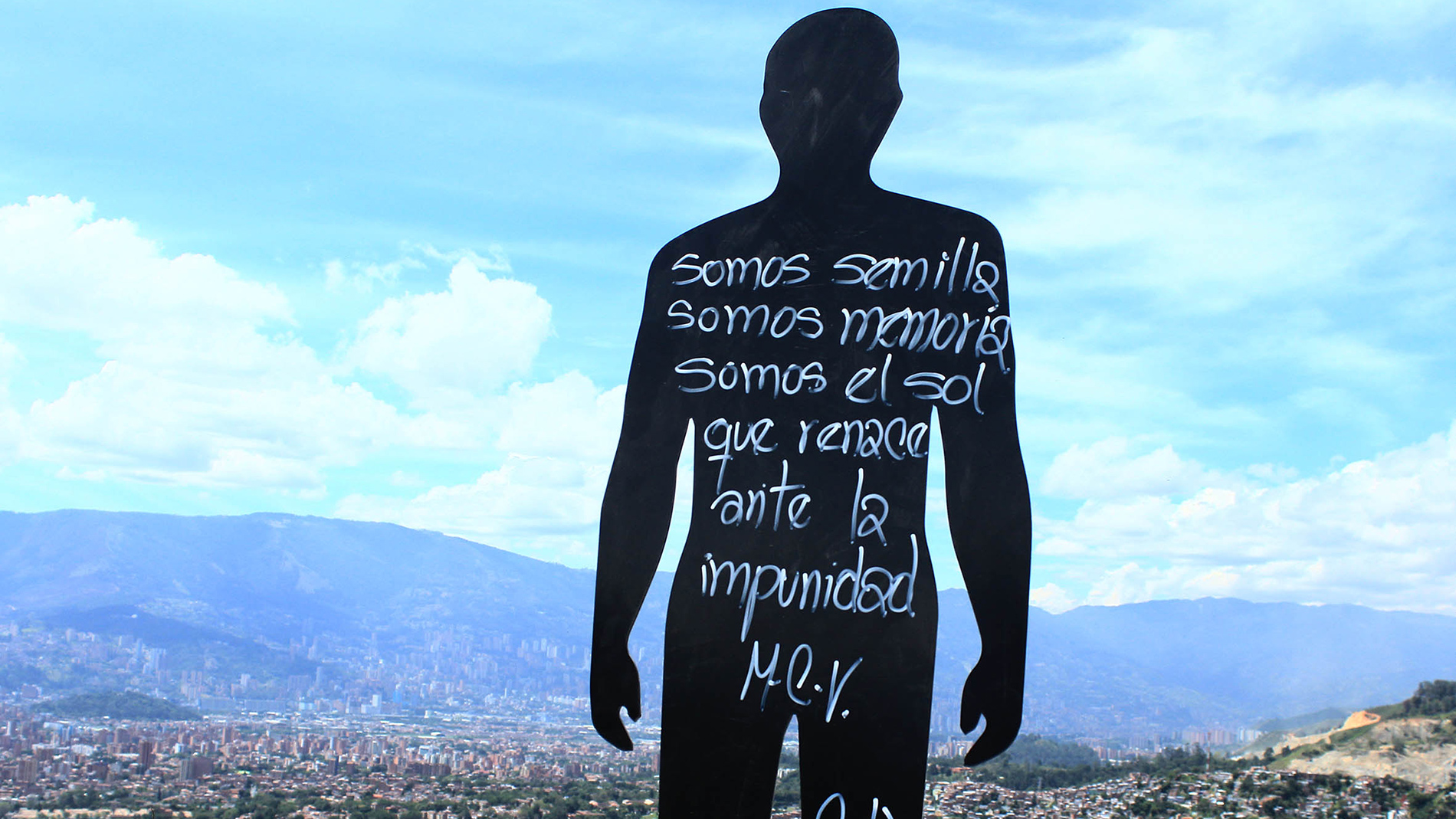
Ever since October 16 and 17, 2002, when Operation Orion was conducted in the 13th Commune of Medellín, the families of the victims knew what had happened to their disappeared loved ones. For years, they had been denouncing that the bodies had been buried at the sites called La Escombrera and La Arenera.
Former judge Pinilla was one of the few who decided that it was worth investigating. “In 2012, we put this on the public agenda and brought it to the attention of the police, denouncing that acts of mass disappearance had been committed. In 2013, a preliminary order was issued to begin the search and the definitive order was given in 2015.”
A 2015 sentence against the Bloque Cacique Nutibara ordered the Medellín Office of the Mayor to search for the missing persons and make all possible technical and scientific efforts to find them. The Justice and Peace Chamber also called on the mayor’s office to suspend the dumping of debris into La Escombrera and La Arenera, prepare these areas for the search process, and perform an act of remembrance and dignification of the victims.
However, the Supreme Court of Justice overturned this directive. “It argued that we did not have the authority to issue such orders and that the most we could do was to urge and invite the authorities to do so,” remembers Pinilla with frustration. “More than eight years went by before any progress was made on this issue.”
Debris from around the city continued to be dumped there and several mining companies continued their excavations. Judge Arango says that Justice and Peace had ordered a search for the bodies in La Escombrera, but the Attorney General’s Office limited its work to one area; in addition, successive mayors did not allow the work to continue. “They did not stop the construction of buildings in the area; in other words, they did not comply with the order and have not allowed truth seeking to take place.”
Thanks to the persistence of the organizations Colectivo Mujeres Caminando por la Verdad, Corporación Jurídica Libertad, MOVICE, and Fundación Obra Social Madre Laura, in 2015, the Attorney General’s Office began the search. However, the intervention was suspended for budgetary restrictions and lack of results. According to the UBPD, 502 disappeared persons are believed to be buried in La Escombrera.
In 2020, the Special Jurisdiction for Peace (JEP) issued precautionary measures in La Escombrera to begin excavations, and the UBPD expanded the search area to carry out an extrajudicial and humanitarian intervention in the sector. In November 2022, the Search Unit began a technical-forensic intervention followed by a large-scale excavation in July 2024.
The remains of four people were found on December 18 of that year. According to JEP reports, they had been forcibly disappeared between July and September 2002; their injuries were consistent with gunshot wounds, and they showed signs of torture. On July 15, 2025, two other bodies were found a few meters from the previous ones. According to the JEP, they were also victims of forced disappearance. A total of six bodies has been found thus far: Three have already been identified and delivered to their families.
“This demonstrates that the families who had been searching and the Justice and Peace system were right. ‘The mothers were right’ as the saying goes,” emphasizes judge Arango.
She adds that one of the greatest challenges for the Justice and Peace process is to discover the complete truth. “Since we only have information about one part of the conflict; the only version we have is of those who are in the process. The truth has been fragmented; the truth is not complete.”
___________
FEATURE PHOTO: Courtesy of Colombia’s National Prosecutor’s Office.

