23 results
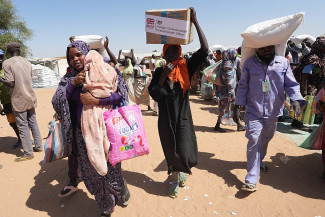
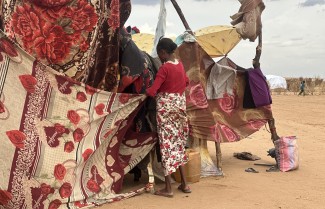
As the world marks the third anniversary of the brutal war in Sudan, it is a moment to reflect on a conflict that rarely receives the media attention it deserves and to consider the millions of Sudanese caught in cycles of violence.

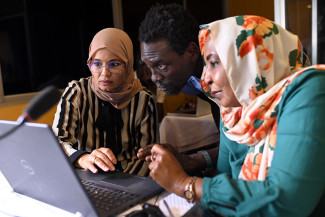
ICTJ recently convened human rights defenders, journalists, and lawyers from Libya, Sudan, Syria, Tunisia, and Yemen for a workshop on digital, open-source investigations. Held on November 3-8 in Kampala, Uganda, the course trained participants on open-source tools with a view to strengthening their work investigating, documenting, and monitoring human rights violations.

Throughout 2025, ICTJ’s experts offered thoughtful analysis on conflicts and major political developments in more than 10 countries as part of the World Report newsletter. Their insightful commentaries shed light on the obstacles that victims, civil society, and their partners must navigate as they pursue sustainable peace and justice. In this edition, we look back on the past year through the Expert’s Choice column.

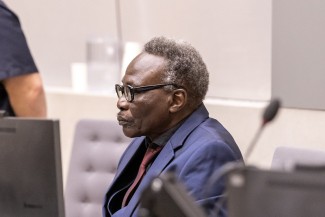
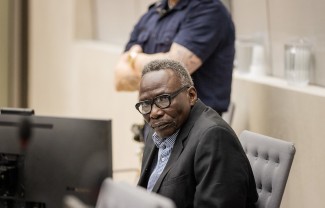
On October 6, the International Criminal Court (ICC) found former Janjaweed militia leader Ali Muhammad Ali Abd-Al-Rahman (also known as Ali Kushayb) guilty of 27 counts of crimes against humanity and war crimes committed in Darfur between August 2003 and March 2004. This landmark verdict counters cycles of impunity in Sudan and sends a powerful message that these crimes are not tolerated.

Despite the enormous challenges, Sudanese civil society and other stakeholders are prioritizing transitional justice, acknowledging the need to address past injustices to end the cycle of conflict in their country. ICTJ continues to support them as they envision and design victim-centered, gender-sensitive, and inclusive strategies. Leading these efforts is ICTJ's Ilaria Martorelli. In this interview, she discusses the prospects for lasting peace, accountability, and repair in Sudan.

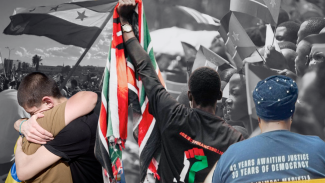
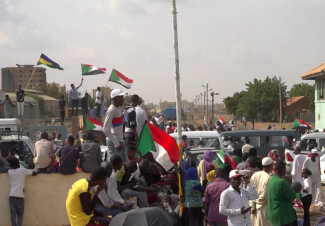
This April, Sudan marked a double anniversary: one of the 2019 revolution that toppled President Omar al Bashir’s decades-long repressive regime, the other of the 2023 outbreak of the ongoing civil war that has devastated the country. These contrasting occasions bring with them great hopes and deep pain. They also raise pressing questions: How long will Sudan have to suffer while the world’s attention seems turned the other way? How long will the voices of Sudanese who yearn for peace and justice continue to be sidelined?

ICTJ accompanied more than 10 Sudanese victim stakeholders to the International Criminal Court (ICC) in The Hague to attend the closing statements in the case of The Prosecutor v. Ali Muhammad Ali Abd-Al-Rahman ("Ali Kushayb"). The statements took place on December 11 to 13. ICTJ supported the ICC in the selection of the stakeholders, who were chosen for their strong ties with affected communities.

Sparing almost no corner of the world from its wrath, the COVID-19 pandemic has now spread to every country. In an effort to slow the contagion, governments in most countries have been taking drastic measures requiring all residents other than essential workers to confine themselves in their homes, and shutting down vast sectors of their economies. The impact has been crushing. COVID-19 has profoundly affected every country where ICTJ currently works: Armenia, Colombia, Cote d’Ivoire, Ethiopia, Gambia, Kenya, Lebanon, Libya, Sudan, Syria, Tunisia, and Uganda. We recently caught up with ICTJ’s heads of country programs to learn more about the impact the pandemic is having on transitional justice and society more broadly.

After decades of repressive rules, military coups, and conflicts in the country’s marginalized peripheries, the Sudanese people have come together and proven their resolve to break with the past and begin a new chapter of their nation’s history. Undeterred by a brutal crackdown, thousands of...

In Africa's Great Lakes region, countries face common challenges like bad governance, inequitable distribution of natural resources, and ethnic divisions. As nations like Burundi, Central African Republic and South Sudan work towards peacebuilding and accountability, they should learn from what has worked and what has not in neighboring countries, writes Sarah Kihika Kasande, ICTJ's Head of Office in Uganda.