93 results

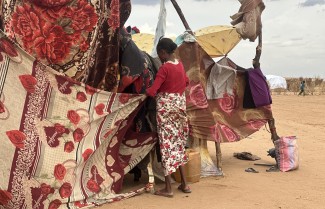
As the world marks the third anniversary of the brutal war in Sudan, it is a moment to reflect on a conflict that rarely receives the media attention it deserves and to consider the millions of Sudanese caught in cycles of violence.

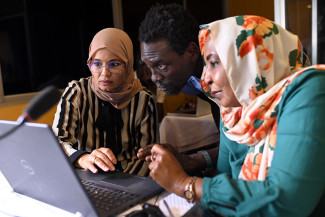
ICTJ recently convened human rights defenders, journalists, and lawyers from Libya, Sudan, Syria, Tunisia, and Yemen for a workshop on digital, open-source investigations. Held on November 3-8 in Kampala, Uganda, the course trained participants on open-source tools with a view to strengthening their work investigating, documenting, and monitoring human rights violations.

Throughout 2025, ICTJ’s experts offered thoughtful analysis on conflicts and major political developments in more than 10 countries as part of the World Report newsletter. Their insightful commentaries shed light on the obstacles that victims, civil society, and their partners must navigate as they pursue sustainable peace and justice. In this edition, we look back on the past year through the Expert’s Choice column.

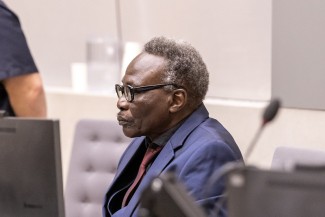
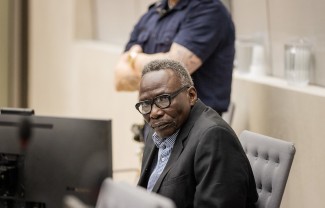
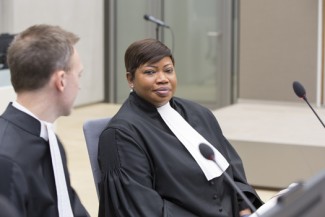
On October 6, the International Criminal Court (ICC) found former Janjaweed militia leader Ali Muhammad Ali Abd-Al-Rahman (also known as Ali Kushayb) guilty of 27 counts of crimes against humanity and war crimes committed in Darfur between August 2003 and March 2004. This landmark verdict counters cycles of impunity in Sudan and sends a powerful message that these crimes are not tolerated.

Despite the enormous challenges, Sudanese civil society and other stakeholders are prioritizing transitional justice, acknowledging the need to address past injustices to end the cycle of conflict in their country. ICTJ continues to support them as they envision and design victim-centered, gender-sensitive, and inclusive strategies. Leading these efforts is ICTJ's Ilaria Martorelli. In this interview, she discusses the prospects for lasting peace, accountability, and repair in Sudan.

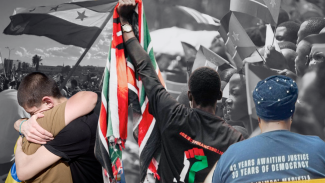
This April, Sudan marked a double anniversary: one of the 2019 revolution that toppled President Omar al Bashir’s decades-long repressive regime, the other of the 2023 outbreak of the ongoing civil war that has devastated the country. These contrasting occasions bring with them great hopes and deep pain. They also raise pressing questions: How long will Sudan have to suffer while the world’s attention seems turned the other way? How long will the voices of Sudanese who yearn for peace and justice continue to be sidelined?

ICTJ accompanied more than 10 Sudanese victim stakeholders to the International Criminal Court (ICC) in The Hague to attend the closing statements in the case of The Prosecutor v. Ali Muhammad Ali Abd-Al-Rahman ("Ali Kushayb"). The statements took place on December 11 to 13. ICTJ supported the ICC in the selection of the stakeholders, who were chosen for their strong ties with affected communities.

More than 20 years after the end of the Yugoslav Wars of the 1990s, Kosovo is still contending with unresolved ethnic tensions. Formerly an autonomous region of Serbia within the former Yugoslavia, Kosovo declared independence in 2008. Ethnic tensions were a root cause of the violent conflicts, during which an estimated 140,000 died and numerous atrocities were committed. ICTJ recently sat down with ICTJ's Anna Myriam Roccatello and Kelli Muddell to learn more about ICTJ's work and the present challenges to truth and justice in the country.

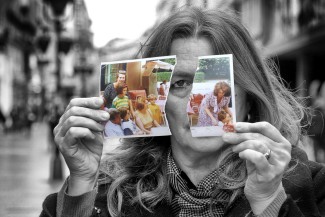
The photography exhibition “All Our Tears” weaves together the stories of victims from the wars in the Western Balkan region in the 1990s. It consists of photographs taken by four photographers in various locations in Kosovo, North Macedonia, and Serbia, and was part of a three-year project funded by the European Union that brought together civil society organizations and victims’ groups in Kosovo, North Macedonia, and Serbia, along with the international organizations ICTJ and PAX to develop meaningful, victim-led peacebuilding and reconciliation initiatives in the region.

The photography exhibition “All Our Tears” weaves together the stories of victims from the wars in the Western Balkan region in the 1990s. It consists of 34 original photographs, taken by four photographers in various locations in Kosovo, North Macedonia, and Serbia. The photographs fea...

This study explores specialized units established in 23 countries to investigate and prosecute serious international crimes. Notwithstanding the challenges faced by these units, the study concludes that countries with a specialized institutional approach are considerably more successf...

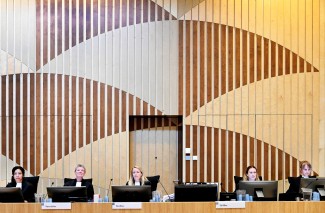
several judges dressed in black gowns sit on a judicial bench.

This study explores a transitional justice approach to the dilemma of foreign fighters in violent conflict. Such an approach can help center human rights in comprehensive responses to foreign fighters, and shift the current focus from security and punishment to justice and long-term p...

Image of Children looking through holes in a tent at al-Hol displacement camp in Hasaka governorate, Syria, on April 2, 2019.

New York, December 10, 2021—In contexts such as Afghanistan, Bosnia, Chechnya, Iraq, Somalia, and Syria, hundreds, sometimes thousands, of individuals have crossed national borders to engage in violent conflicts in which serious human rights violations and mass atrocities have been committed...

Sparing almost no corner of the world from its wrath, the COVID-19 pandemic has now spread to every country. In an effort to slow the contagion, governments in most countries have been taking drastic measures requiring all residents other than essential workers to confine themselves in their homes, and shutting down vast sectors of their economies. The impact has been crushing. COVID-19 has profoundly affected every country where ICTJ currently works: Armenia, Colombia, Cote d’Ivoire, Ethiopia, Gambia, Kenya, Lebanon, Libya, Sudan, Syria, Tunisia, and Uganda. We recently caught up with ICTJ’s heads of country programs to learn more about the impact the pandemic is having on transitional justice and society more broadly.

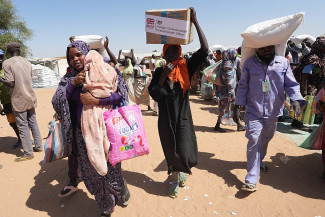
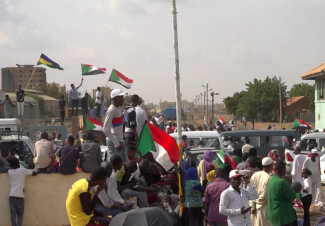
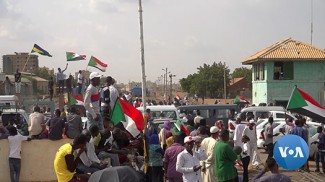
After decades of repressive rules, military coups, and conflicts in the country’s marginalized peripheries, the Sudanese people have come together and proven their resolve to break with the past and begin a new chapter of their nation’s history. Undeterred by a brutal crackdown, thousands of...

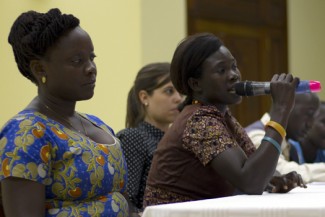
ICTJ’s Gender Symposium, held on February 2 to 4, 2019, in Tunis, Tunisia, brought together fearless women leaders working in 8 countries to advance the needs of victims and to bring gender issues to the center of transitional justice processes. What was achieved? What experiences cut across these diverse contexts? Kelli Muddell and Sibley Hawkins reflect on these questions and more in this short podcast.

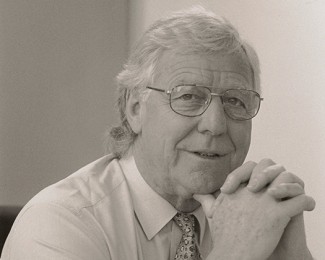
Alex Boraine, founder of the ICTJ and soldier in the struggle for human rights around the world, will be laid to rest in Cape Town today. He has been called the “Prince of Peace” for his lifelong commitment to transforming South Africa’s society through truth, reconciliation, justice, following the horrors of apartheid.

This report aims to help practitioners in the transitional justice field to understand the experience of establishing and operating hybrid courts and to address some common assumptions about these entities. To do so, it looks at hybrid or mixed courts in practice, drawing on experienc...

In Africa's Great Lakes region, countries face common challenges like bad governance, inequitable distribution of natural resources, and ethnic divisions. As nations like Burundi, Central African Republic and South Sudan work towards peacebuilding and accountability, they should learn from what has worked and what has not in neighboring countries, writes Sarah Kihika Kasande, ICTJ's Head of Office in Uganda.

A new ICTJ report argues that in Africa's interconnected Great Lakes region, each country’s attempt to provide justice for past violations offers lessons for similar processes in others. We gathered civil society activists from across the region to discuss which strategies have worked for them, which have not, and opened up about the greatest challenges they face in securing justice.

In many countries of the African Great Lakes region, state-led approaches to transitional justice have been created by wide-ranging agreements or policies that have been later forgotten or only partially implemented. Even when implemented, they are often subject to years of delay and/...

The Africa Union's resolution to collectively support a strategy to withdraw from the ICC looks more like a machination of those who have instrumentalized an argument against the court to protect themselves from the long arm of justice, write ICTJ's top experts on Africa.

Following two days of historic public testimony last month, Tunisia's Truth and Dignity Commission's second set of public hearings continue. Watch the livesteam below and follow us on twitter at @theICTJ for live coverage.

South African authorities apparently believe that once the country has officially withdrawn from the ICC, it will be free to invite the likes of Sudanese President al-Bashir to the country. That's not so, writes ICTJ's Howard Varney, who explains why the country's obligations would continue beyond its departure from the court.

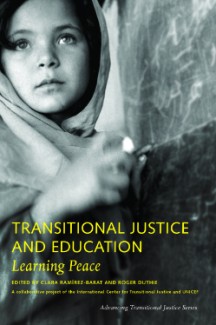
A groundbreaking new book from the International Center for Transitional Justice (ICTJ) and UNICEF examines the complicated relationship between education, justice and peacebuilding in societies grappling with a legacy of violent conflict. It offers lessons on how education can be harnessed in a divided society to overcome the past and create the conditions for peace, often under very difficult circumstances.

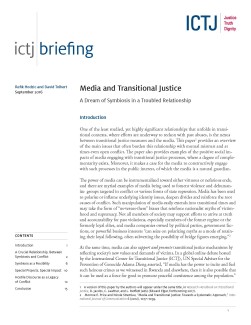
In transitional contexts, reporting does not simply present the facts, but instead shapes the parameters for interpreting divisive political issues. Coverage in such polarized contexts can mitigate or obscure the substance of transitional justice efforts to establish what happened, wh...

In a society grappling with the legacy of the past, citizens must make informed judgements and disentangle the facts from the sticky web of political rhetoric, denial, and polarizing propaganda. To do so, they rely on one key agent of social change: the media. But how can transitional processes effectively partner with the media and engage key constituencies? And what happens when media play a decisively negative role in mediating information about war crimes?

This volume examines the effects, risks, and potential of extending the field of transitional justice to cases that do not present a key moment of political transition to peace or democracy and instead are defined by political continuity and ongoing conflict. It begins with analyses o...

The struggle against impunity remains as important –and precarious –as ever as we celebrate International Justice Day on July 17. ICTJ marks the occasion with a look at complementarity, a concept critical to understanding the role that the ICC and national courts play in this struggle.

The first piece in of our "Transitional Justice and Education" series examines the role of school systems in Bosnia and Northern Ireland.

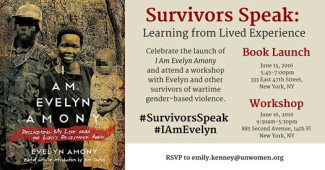
Evelyn Amony tells the harrowing story of her years in captivity with the LRA, and experience of grinding poverty and stigma after returning home with two children, in her new memoir, I Am Evelyn Amony: Reclaiming my Life from the Lord's Resistance Army. The autobiography, which tells the difficult truths of women and girls in wartime as only a firsthand witness can, will be launched today in New York, at the Japan Society.

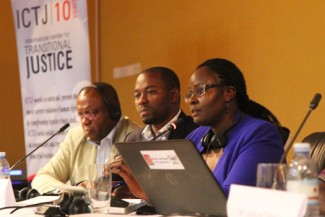
Today, ICTJ opened a two-day conference in Kampala, Uganda, gathering activists and officials from the African Great Lakes Region to discuss efforts at redress and accountability for serious human rights violations committed in their countries.

Civil society leaders, members of victims' groups and state officials throughout the Great Lakes region will convene in Kampala, Uganda next week at a conference hosted by ICTJ. Attendees will share their experiences working for redress in their communities and discuss what strategies have proven effective at the local level.

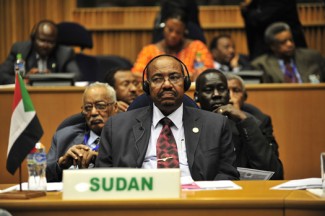
Human Rights Network-Uganda (HURINET-U), The Uganda Coalition on the International Criminal Court (UCICC), The International Center for Transitional Justice, Avocats San Frontiers and Atrocities Watch are dismayed to learn that Government of Uganda has extended an invitation to President Omar al...

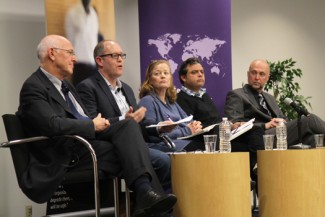
What happens when a state refuses to acknowledge the suffering of victims of mass atrocities? Or when the public celebrates perpetrators as heroes? Earlier this month, a panel discussion hosted by The International Center for Transitional Justice and New York University’s Center for Global Affairs grappled with the impact of denial on justice.

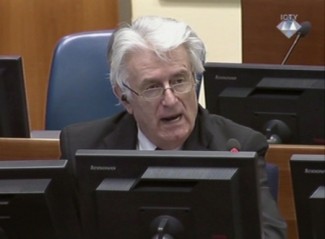
Bosnian Serb leader Radovan Karadzic was recently sentenced by the ICTY to 40 years for genocide and crimes against humanity, crimes which have decisively shaped the society in Bosnia and Herzegovina. In this essay, ICTJ’s Refik Hodzic explores what would it take for this poisonous legacy to be dismantled and makes a case for acknowledgement and reparations as matters of moral imperative, but also of political necessity.

The intimacy of violence has left deep scars in Prijedor, Bosnia and Herzegovina. Seemingly overnight, neighbors turned into perpetrators of incomprehensible violence. Today, twenty years since the end of the war, mothers of the disappeared often live next to those who disappeared their...

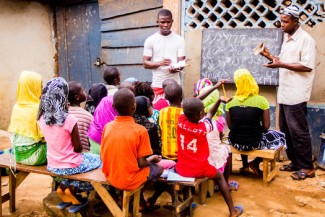
In this op-ed, ICTJ Vice President Paul Seils discusses how education can be used to address legacies of mass violence and dictatorship.

Some of the relatives’ stories start with the banging of a door at night, followed by a sudden abduction; others begin with a seemingly innocent citation to appear at a police station for a “routine procedure”. In any case, the stories always unfold in a desolate manner: as a loved one ...

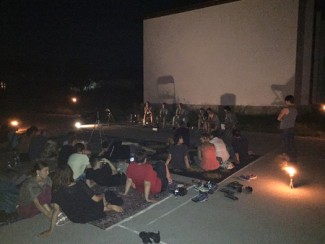
For the last three years, a group of young activists gather on the night of the 5th of August at the site of Trnopolje camp, out in the open, to reenact the way prisoners spent their night and through dialogue explore alternative ways of dealing with the past.

Bosnia and Herzegovina is marking the twentieth anniversary of the Srebrenica genocide. In this Op-Ed, ICTJ's Refik Hodzic asks, can we constructively talk about reconciliation in a country still gripped by war?

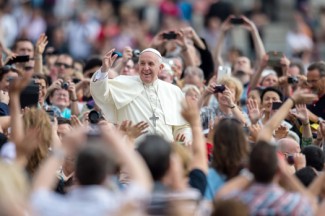
Ahead of Pope Francis' visit to Bosnia Herzegovina, ICTJ's Communications Director, Refik Hodzic, asks the leader of the Catholic Church to actively contribute to "a genuine reckoning needed for a genuine peace" in a society still stuck in the past, even 20 years after the war.

A new short documentary film “Remember Me” tells a powerful story of two young women whose fathers were disappeared during the conflict in Bosnia and Herzegovina.

In this op-ed, ICTJ's Refik Hodzic says that five years of a trial, thousands of documents and evidence exhibits, hundreds of witnesses, and hours testimony have not moved Radovan Karadzic closer to acknowledgement of the suffering he inflicted on countless lives.

On International Criminal Justice Day, 2014, ICTJ joins the global celebrations marking the groundbreaking establishment of the Rome Statute in 1998, which created the International Criminal Court (ICC). To mark the day, we review five contexts where national systems proved it was possible to bring perpetrators to justice where it matters the most.

The recent re-election of Colombia’s president, Juan Manuel Santos, brings hope to a country seeking to end a half-century of conflict. But, as with so many peace processes, finding a balance between creating a stable accord and acknowledging the terrible injustices that occurred during the conflict can be difficult to achieve.

ICTJ participated in the launch of a new report on the relationship between transitional justice and development, launched by the Swedish International Development Agency (Sida).

In this op-ed, ICTJ President David Tolbert argues that in order to meet the EU’s high standards on the rule of law and human rights, Serbia must address the legacy of its recent past in which Slobodan Milosevic’s regime and the institutions under its control were involved in some of the most notorious crimes committed in Europe since World War II.

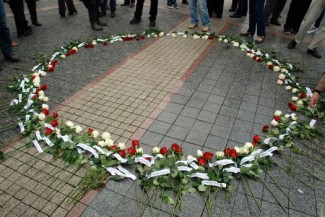
A group of leading world experts on truth-seeking and memorialization has called for the mayor of Prijedor, in Bosnia and Herzegovina, to publicly acknowledge and memorialize the non-Serb victims of atrocities committed in the city in the early 1990s.