



57 results

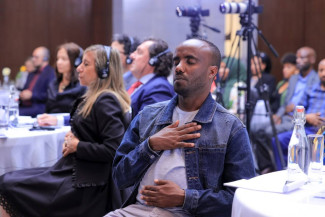
Victims, civil society advocates, policymakers, and development partners recently met for a high-level policy roundtable on integrating mental health and psychosocial support (MHPSS) in Ethiopia’s transitional justice process. Organized by ICTJ and the Advocacy Center for Democracy and Development, the convening offered a space for participants to discuss the need for MHPSS and how to improve access to it across the country.

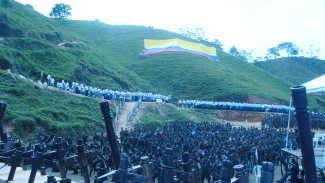
To commemorate the 20th anniversary of the Justice and Peace Law—which created Colombia's first transitional justice system—media outlet Verdad Abierta, the Friedrich Ebert Stiftung, and ICTJ partnered to produce an investigative four-part series in Spanish that critically assesses its legacy. Now translated into English, this first installment provides an overview of the process.

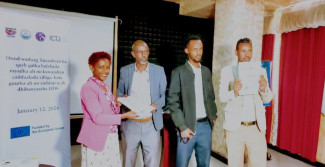
On July 28, 2025, the Somali Regional State Council passed a resolution designating April 6 as Victims’ Memorial Day, formally recognizing those who experienced violence and human rights violations across Ethiopia’s Somali Region. For years, victims and civil society actors, with support from ICTJ and other international partners, have persistently advocated for this acknowledgment, which marks a milestone in Ethiopia’s journey toward accountability and repair.

The field of transitional justice is increasingly recognizing the relevance of mental health and psychosocial support (MHPSS) in contexts of massive human rights violations. Despite growing advocacy and awareness at the global policy level, however, the field lacks a systematic approa...

an image of colorful painting featuring a young girl

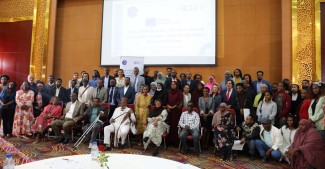
ICTJ and the Consortium of Ethiopian Human Rights Organizations cohosted a national event to increase victims’ and civil society’s meaningful participation in Ethiopia’s transitional justice process. The event brought together Ethiopian government officials and policymakers, civil society representatives, members of the media, and international stakeholders to discuss strategies to ensure victims and gender-related concerns remain at the center of the efforts underway in the country to deal with recent and past violence and its consequences.

Canadian youth not only want to know the truth about what happened at the Indian Residential Schools –they want to learn about it in their classrooms.

This study explores a transitional justice approach to the dilemma of foreign fighters in violent conflict. Such an approach can help center human rights in comprehensive responses to foreign fighters, and shift the current focus from security and punishment to justice and long-term p...

Image of Children looking through holes in a tent at al-Hol displacement camp in Hasaka governorate, Syria, on April 2, 2019.

New York, December 10, 2021—In contexts such as Afghanistan, Bosnia, Chechnya, Iraq, Somalia, and Syria, hundreds, sometimes thousands, of individuals have crossed national borders to engage in violent conflicts in which serious human rights violations and mass atrocities have been committed...

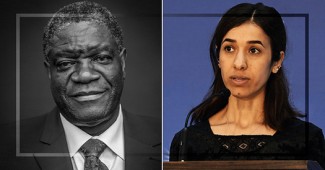
Recent recognition of the work of Nobel Laureate Nadia Murad has drawn global attention to the issue of sexual violence and gender-based violence in conflict. But, as ICTJ Expert Kelli Muddell argues, the nuances of gender norms and how they impact women, men, and vulnerable populations are still often missing from conversations about victims.

Although youth are key political and social stakeholders who have much to contribute to—and gain from—transitional justice processes, they often remain marginalized from such processes or are given only a limited and predetermined space in which to engage. In recent years, the peacebu...