



1530 results

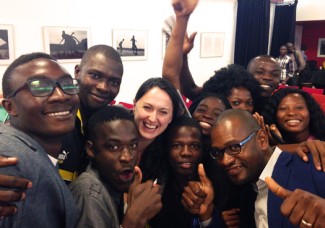
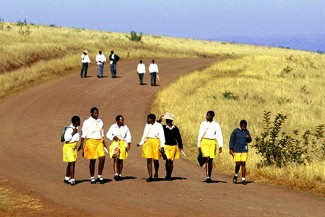
In Cote d’Ivoire, avenues for education system reform are limited. To help youth find their voice, ICTJ and UNICEF facilitated an innovative truth-telling project led by Ivorian young people themselves. The result: an exploration of the unique experiences of young people during the conflict, told through radio broadcasts, public discussions and reports to government officials.

The International Center for Transitional Justice (ICTJ) decries the announcement that the country will seek to withdraw from the Rome Statute, the treaty that created the International Criminal Court and an international framework for fighting impunity for egregious crimes.

UN operations are due to end in Côte d’Ivoire next June, but the country must pursue a victim-centered approach to justice even after UNOCI leaves. An ICTJ-organized conference works to prepare government, civil society, and the diplomatic community for the UN departure and chart a way towards justice and a stable peace for all of Côte d’Ivoire.

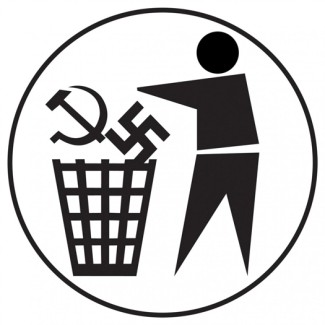
Ukraine's Maidan Revolution in 2014 ushered in a wave of decommunization efforts, ostensibly in order to ensure respect for human rights and to prevent a recurrence of the crimes of Communist and Nazi regimes. However, the laws were largely a product of contentious politics of memory: they further a particular understanding of past events that will likely continue to fuel division and distrust among Ukrainians, and between Ukraine and Russia.

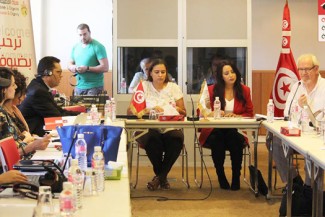
A new project launched by ICTJ and the British Council challenges young Tunisians to explore youth marginalization through photography.

Amid deteriorating human rights conditions in the country, the lower house of Burundi’s National Assembly voted overwhelmingly in favor of withdrawing from the Rome Statute, the treaty that created the International Criminal Court. “Burundi should reconsider this ill-conceived decision, which undermines efforts at the national level to bring justice, peace, and stability to the country,” said ICTJ President David Tolbert.

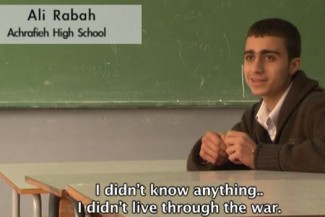
While Lebanon is post-peace agreement, it is not necessarily "post-conflict." The country struggles to address the legacy of decades of violence, and the lack of a comprehensive approach to dealing with the past means the country's youth are growing up with scant knowledge of their history. But they want to know more: one project is helping them ask those around them about the past, and giving those who lived it a chance to tell their stories.

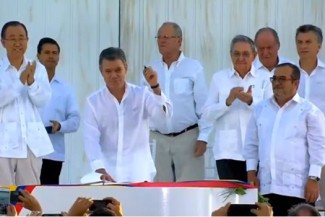
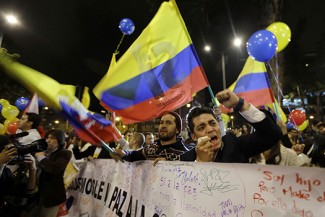
ICTJ welcomes the historic peace agreement signed today between the Colombian government and the Revolutionary Armed Forces of Colombia (FARC) – an essential step toward building lasting peace in the country.

In transitional contexts, reporting does not simply present the facts, but instead shapes the parameters for interpreting divisive political issues. Coverage in such polarized contexts can mitigate or obscure the substance of transitional justice efforts to establish what happened, wh...

In a society grappling with the legacy of the past, citizens must make informed judgements and disentangle the facts from the sticky web of political rhetoric, denial, and polarizing propaganda. To do so, they rely on one key agent of social change: the media. But how can transitional processes effectively partner with the media and engage key constituencies? And what happens when media play a decisively negative role in mediating information about war crimes?

In Côte d’Ivoire, the state aims to restore victims’ rights and offer reparations to those affected by 2010’s post-election violence. A couple of years ago ICTJ came to the conclusion that discussions about how to provide reparations to victims had not sufficiently considered victi...

This volume examines the effects, risks, and potential of extending the field of transitional justice to cases that do not present a key moment of political transition to peace or democracy and instead are defined by political continuity and ongoing conflict. It begins with analyses o...

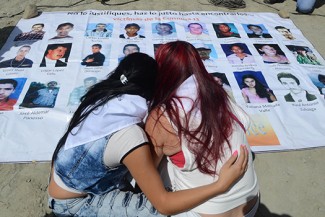
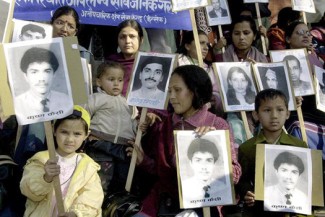
On International Day of the Victims of Enforced Disappearances, the families of the missing maintain their vow: "until we find them." As special bodies to search for their loved ones develop, what do victims expect?

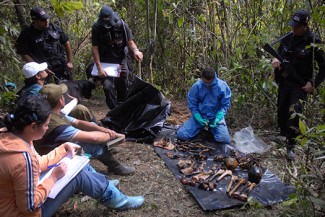
As the government and FARC reach a peace deal, they have agreed to the creation of a special unit that will search for, locate and identify the disappeared. What do victims expect from this new body?

1,300 are still missing in Nepal, nearly a decade after the country's bloody civil war ended. The peace agreement was meant to provide for the families of the disappeared, but today they are still searching for answers. As a new government body begins investigations, victims wonder: is the commission fully committed to addressing their needs?

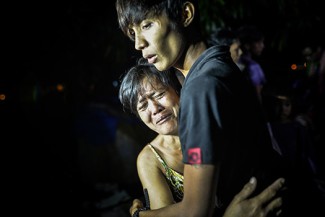
In less than two months since the inauguration of Rodrigo Duterte as president of the Philippines some 1,900 people have been killed at the hands of the police and death squads for suspected drug dealing or drug addiction. These unlawful murders echo the pattern of widespread and systematic extrajudicial killings that the country suffered under dictator Ferdinand Marcos.

The agreement represents "an historic opportunity for Colombian society to build a peaceful future on foundations of respect for human rights and the rule of law,” said David Tolbert, president of ICTJ. “We have for years worked in support of victims’ rights in Colombia and will continue to do so with renewed energy and hope.”

The international organizations who have signed this statement are appalled at the illegal raid which occurred on August 15, 2016 at the residence of Guatemalan lawyer and human rights defender Ramón Cadena, Central America Director of the International Commission of Jurists.

Can education help right the wrongs of the past, especially when the majority of the population was affected by those wrongs? Teboho Moja examines that question in the context of South Africa, where efforts to reform a discriminatory educational system and redress its consequences have been met with mixed results.

Complementarity is an essential tool in the fight against impunity - by working together, national courts and the ICC can seek justice for the worst crimes. But how is the fight against impunity playing out in Côte d’Ivoire? And how exactly can the Ivorian judiciary and the ICC ensure justice in CDI? A new review of our Handbook on Complementarity examines those questions and assesses how the Handbook can be used in his country.

Germain Katanga, a warlord convicted by the International Criminal Court (ICC) for murder and other crimes, thought he was getting released from prison in January. Instead, authorities in the DRC have held Katanga following the conclusion of his ICC sentence and are now trying him on charges not originally addressed by the ICC. This represents a major step by the national judiciary in assuming its responsibility to prosecute international crimes.

Prosecution efforts so far have exacerbated, rather than alleviated, ethnic and regional divisions. Credible prosecutions against those most responsible on all sides of the conflict would offer a clear statement to all citizens of Côte d’Ivoire that the justice system is blind to ethnicity and is there to serve and protect all its citizens.

A new paper from the International Center for Transitional Justice (ICTJ) offers clear, concrete proposals for a new reparations policy in Côte d’Ivoire for victims of serious human rights violations. The recommendations, informed by extensive work in the affected communities, consider a range of options, including compensation (cash payments), rehabilitation, and symbolic measures.

In order to create lasting reconciliation between the victims of post-election violence and the Côte d’Ivoire state, the reparations program must respond to the most serious consequences of the violence for victims through measures that address their long-lasting socioeconomic, psychosocial, and education-related effects for victims and their children. To do that, ICTJ's Cristián Correa and Didier Gbery spent more than a year discussing needs with victims groups throughout the country.

Côte d’Ivoire is obligated to provide reparations to victims of both the political violence that shook the country following the 2010 presidential elections and the different episodes of political violence and armed conflict since 1990. Fulfilling this obligation will show that the st...