1530 results

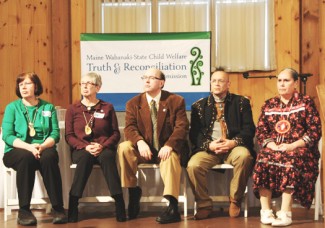
Maine’s foster care system was intended to act in the best interests of all children. But for indigenous children removed from their communities and placed with white families, often without the consent of their parents or tribes, the foster care system caused the painful loss of their cultural identity and traumatic severing from their heritage.

ICTJ advocates for the inclusion of mental health and psychosocial support (MHPSS) in all transitional justice initiatives and undertakes research on best practices for the field. Leading this work is ICTJ Senior Expert Virginie Ladisch. She is the lead author of the forthcoming report, ‘The Search for People’s Well-Being’: Mainstreaming a Psychosocial Approach to Transitional Justice. In this interview, Ladisch discusses the importance of MHPSS for transitional justice and her work on the topic.

As gunfire dies down over Tripoli, the new Libyan authorities will be coming to terms with enormous dilemmas about the hierarchy of priorities in building a new society. Their offices will see long processions of emissaries from near and far in the coming days and weeks. Some will be sternly pressing for issues of security to be immediately addressed and others will demand that business and development concerns precede all else, while there are also bound to be those advocating for justice to be done first and quickly.

In this op-ed, ICTJ Vice President Paul Seils argues that the front line of justice must always be national courts and justice systems. "Citizens must see social institutions at work in their home countries, as it is there that courts can repudiate wrongdoing and reaffirm the most fundamental elements of the contract that binds a society together. It is there that having the dignity of a citizen can have its fullest meaning," writes Seils on International Justice Day.

The Task Force on Justice is gathering inputs in order to encourage greater provision of justice to people and communities outside the protection of the law. As the Task Force has pointed out, the “justice gap” that it seeks to reduce is greatest in conflict-affected countries, where only 3 percent of development assistance goes to justice.

Mali's Truth Justice and Reconciliation Commission has a mandate to examine violence dating back to 1960, but it faces serious challenges. Can it serve as a foundation of a peaceful future in Mali? We discuss with transitional justice expert Kora Andrieu, who is currently working with the TJRC as an independent consultant.

To commemorate the 20th anniversary of the Justice and Peace Law—which created Colombia's first transitional justice system—media outlet Verdad Abierta, the Friedrich Ebert Stiftung, and ICTJ partnered to produce an investigative four-part series in Spanish that critically assesses its legacy. Now translated into English, this second installment explores the unprecedented challenges the country faced as the process got underway.

To date there has been limited judicial accountability for crimes committed by the Indonesian military forces in Aceh despite compelling evidence of their involvement in mass crimes. Commitments that were part of the 2005 Helsinki Memorandum of Understanding, to establish a truth and ...

In this analysis piece, director of ICTJ's Reparative Justice program Ruben Carranza talks about the challenges Tunisia is facing in implementing individual and collective reparations measures since the fall of the Ben Ali dictatorship.

On November 25, 2021, The Gambia’s Truth, Reconciliation and Reparations Commission (TRRC) presented its 17-volume final report and recommendations to President Adama Barrow, after multiple delays. The final report includes a record of serious human rights violations committed under Jammeh’s repressive regime and recommendations for pursuing justice. Despite the challenges, steps have already been taken that offer hope that the TRRC’s recommendations will take effect.

Because transitional justice processes are complex, politically contested, and not necessarily linear, they present unique theoretical and practical challenges for measuring their results. This report seeks to improve monitoring and evaluation practices and support evidence-based proc...

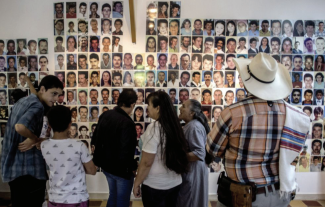
Children, women, and men look at a wall covered in faces of people.

In transitional contexts, reporting does not simply present the facts, but instead shapes the parameters for interpreting divisive political issues. Coverage in such polarized contexts can mitigate or obscure the substance of transitional justice efforts to establish what happened, wh...

Diala Brisly and Hani Abbas, two cartoonists and contemporaries, know firsthand the power of images to document conflict, and of cartoons —consumed by children and adults alike —to promote action.

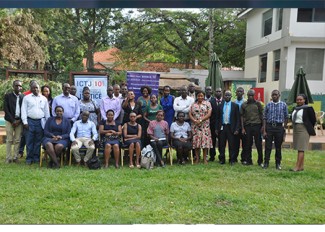
For years, ICTJ has championed the media and the role it plays in supporting truth-seeking and advancing accountability and redress for victims of conflict-related atrocities. In the places where we work, from South Africa, to the Gambia, Guatemala, Colombia and the Philippines, media projects and coverage—both mainstream and alternative—have been crucial in ensuring participation, mediating public discourse, contributing to acknowledgment for victims, and revealing long-hidden truths about crimes. This month, we share a dispatch from our work in Uganda.

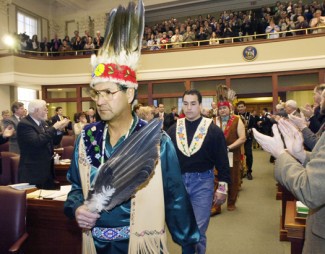
Following the first international conference on the subject (Memorialization and Democracy), this report considers how memorialization efforts around the globe can serve democracy. It encourages policy-makers to view memorials as serious social and political forces and to create innov...

Dr. Alex Boraine, founder of the ICTJ, was larger than life. In his long career, he touched the lives of thousands in his beloved South Africa and around the world.

ICTJ and the Center for Memory, Peace and Reconciliation of Colombia are organizing an event on Memory: Public Policy for Transformation. Dialogue at the conference will serve as the basis for providing recommendations to the process of creating the Center for Historical Memory and designing public memory policy in the country.

In a simple house made of wood and straw and smelling of earth, women, girls, and the occasional man narrate, sometimes laughing and other times crying, the stories of how their life used to be before being forcibly displaced to San Juan Nepomuceno. This is one of the many local memory initiatives taking place throughout Colombia today.

The taboo around sexual violence against men and boys can leave victims in the shadows, write ICTJ's Kelli Muddell and Sibley Hawkins. Without acknowledgment of these crimes, efforts to address injustices of the past will be hard-pressed to develop inclusive and effective responses.

The transitional justice mechanisms the Mexican government put in place to investigate the grave human rights violations committed before the political transition of 2000 did not achieve their aims.

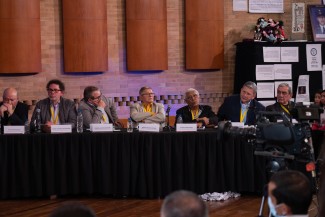
The issuance of the first sentences by Colombia’s Special Jurisdiction for Peace marks a turning point for transitional justice in the country. These historic convictions against those most responsible for war crimes and crimes against humanity committed during the armed conflict constitute the realization of justice and express both judicial and moral condemnation.

Colombia's Special Jurisdiction for Peace (SJP) aims to achieve criminal accountability through a mixed system of restorative and retributive justice. Generally speaking, the SJP envisions large-scale restorative justice measures involving public acknowledgments of responsibility, as ...

Issoumaila Touré grew up during Côte d'Ivoire’s devastating First Civil War (2002-2007), watching his community be torn apart by political manipulations and ethnic differences. When his country once again descended into civil war following the 2010 presidential elections, Issoumaila, then a young man in his early 20’s, came to a major crossroads in his life.

ICTJ’s Gender Symposium, held on February 2 to 4, 2019, in Tunis, Tunisia, brought together fearless women leaders working in 8 countries to advance the needs of victims and to bring gender issues to the center of transitional justice processes. What was achieved? What experiences cut across these diverse contexts? Kelli Muddell and Sibley Hawkins reflect on these questions and more in this short podcast.

Ahead of Pope Francis' visit to Bosnia Herzegovina, ICTJ's Communications Director, Refik Hodzic, asks the leader of the Catholic Church to actively contribute to "a genuine reckoning needed for a genuine peace" in a society still stuck in the past, even 20 years after the war.

Official public apologies are an important element of a transitional justice policy. As a form of symbolic reparation, an apology is a formal, solemn and, in most cases, public acknowledgement that human rights violations were committed in the past, that they caused serious and often ...

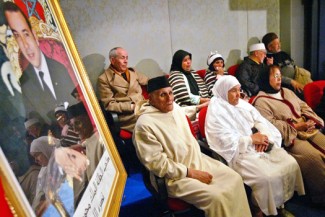
Morocco’s “Years of Lead” period was marked by policies of state violence against political dissidents including torture, arbitrary detention, and enforced disappearances. “ Morocco: Gender and the Transitional Justice Process” analyzes whether the various transitional justice processes undertaken by the IER sufficiently fulfill the gender-specific focus of its mandate.

Established in 2004, Morocco’s Equity and Reconciliation Commission (IER: l’Instance équité et réconciliation) was one of the first attempts made in the Arab world to address human rights violations perpetrated in the post-independence period. It also aimed to include female victims o...

The month of January has a particular significance in the Middle East and North Africa. It was the month when the Arab uprisings were sparked five years ago. It was also the month when the transitional justice process was inaugurated in Morocco, 12 years ago. What can be learned from Morocco’s experience?
NEW YORK, February 2, 2016 – A short documentary film depicting the devastating effects of stigma and discrimination against children born of wartime sexual violence, and their mothers, in northern Uganda was released today by the International Center for Transitional Justice (ICTJ) and MediaStorm....

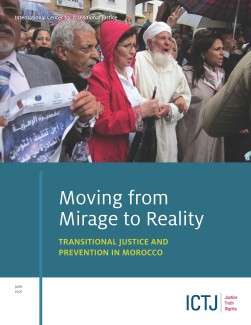
This study examines how transitional justice measures in Morocco have helped prevent state violence repression and social and economic exclusion. These measures included the Equity and Reconciliation Commission, which diagnosed some historical wrongdoings and called for reform to prev...

Through its initiatives in several countries, ICTJ has learned that hip hop music can be a powerful and effective way to engage young people in transitional justice issues, such as truth, memory, and reconciliation, and encourage their participation in ongoing processes. The music, whic...

In this op-ed, David Tolbert says Spain's democratic institutions exist side by side with long-term impunity, and argues that it's time for the country to address deep wounds that linger between different sides of the conflict.

When 26-year old Tunisian street vendor Mohamed Bouazizi incinerated himself on December 17, 2010, his act resonated across an entire region and sparked what is known as the Arab Spring. His cry echoed across the world because it was a universal call for justice, basic fairness, and equal treatment. Indeed, it was a call for the rule of law. In a new op-ed, ICTJ's President David Tolbert calls upon the UN General Assembly to prove its commitment to justice and the rule of law.

The War Crimes Chamber of Bosnia’s State Court is one of the most successful undertakings to address the legacy of mass atrocities in national courts. As this important institution finds itself under serious threat, the European Union must act quickly to put a stop to attempts of the Bosnian Serb political leadership to undermine Bosnia’s capacity to prosecute war crimes at state level.

On November 28, 2023, ICTJ organized an international dialogue in Bogotá, Colombia, to share innovative strategies for advancing victims’ rights to redress for human rights abuses and for establishing more victim-centered development policies. The gathering also marked the official launch of ICTJ’s new report—Advancing Victims’ Rights and Rebuilding Just Communities Local Strategies for Achieving Reparation as a Part of Sustainable Development—which presents findings from a two-year comparative study of local efforts in Colombia, The Gambia, Tunisia, and Uganda to advance reparations.

In 2008 and 2009, the International Center for Transitional Justice (ICTJ) conducted extensive research on impunity in Myanmar (previously known as Burma). This submission is based largely on that research, as well as developments in the last six months.

Despite earlier efforts to envision a national transitional justice policy, Ukraine remains overly cautious about establishing one. This report provides a robust substantiation of why Ukraine should revive its holistic transitional justice policymaking. In the first part, it debunks t...

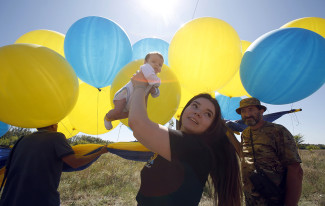
A women holds up an infant in the air on sunny day outdoors, surrounded by yellow and blue balloons

ICTJ strongly advocates for a holistic transitional justice vision for Ukraine as part of its programmatic activities. Leading this work is the head of ICTJ’s Ukraine program, Kateryna Busol. She is the author of the new report, “Myths and Ways Forward: Transitional Justice for Ukraine." In this interview, Busol discusses the path toward holistic justice for the country.

Natural resources are a natural connecting point for postconflict development and transitional justice. Understanding the specific role of natural resources in the maintenance of authoritarian regimes and the facilitation of armed conflicts is central to transitional justice's aim of ...

During peace negotiations, there is often a belief that providing amnesties for certain crimes will help promote national reconciliation. Nepal's Truth and Reconciliation Commission (TRC) Bill currently contains provisions on both amnesty and reconciliation. However, the Bill itself i...

As Nepal’s parliament enters the final discussions on a draft Truth and Reconciliation Commission (TRC) bill, questions remain regarding the relationship between amnesty and reconciliation provisions within the bill.

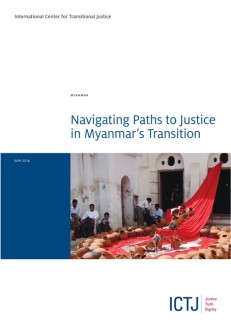
This report asserts that dealing with past abuses in Myanmar is essential to achieving genuine progress on peacebuilding and economic development in the country. Conflict and high levels of political repression have racked Myanmar for more than half a century. Both President Thein Sei...

As the United States and global audiences were informed of the death of Osama bin Laden at the hands of U.S. special forces, we are reminded how crucially important justice is in the discourse on America’s fight against terrorism. On the eve of these momentous events, ICTJ President David Tolbert spoke to an audience at American University in Washington about the need for the U.S. to ensure accountability for the conduct of its “war on terror.”

This report outlines Indonesia's international law obligations to provide remedies to the "1965 victims" of General Soeharto's persecution and stigmatization of those affiliated with the Indonesia Communist Party. It traces the history of this persecution, provides an overview of curr...

Negotiating Justice: Guidance for Mediators provides guidance on grappling with justice issues in peace negotiations. Co-published with the Centre for Humanitarian Dialogue, the report seeks in particular to provide peace process actors with basic facts of law, guidance on amnesties a...

The International Center for Transitional Justice (ICTJ) and the Barcelona International Peace Resource Center (BIPRC) are pleased to announce an Intensive Course on Transitional Justice and Peace Processes, taking place in Barcelona, Spain, June 6 - 10, 2016. It will focus on practical examples of recent or paradigmatic peace processes where the question of justice formed a significant part of the negotiating context.

ICTJ is pleased to announce an intensive course on transitional justice and peace processes to be held in Barcelona, Spain on October 9-13. Applications are now open.

Indonesia’s history is littered with episodes of mass violence, whether state-sponsored, communally driven or separatist in nature. But in recent times the Indonesian government has successfully negotiated several peace agreements and brought about an end to mass human rights violatio...