1530 results

A new project launched by ICTJ and the British Council challenges young Tunisians to explore youth marginalization through photography.

Ukraine's Maidan Revolution in 2014 ushered in a wave of decommunization efforts, ostensibly in order to ensure respect for human rights and to prevent a recurrence of the crimes of Communist and Nazi regimes. However, the laws were largely a product of contentious politics of memory: they further a particular understanding of past events that will likely continue to fuel division and distrust among Ukrainians, and between Ukraine and Russia.

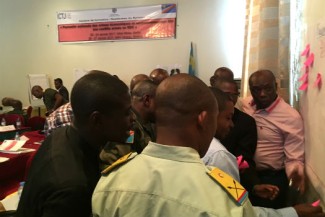
UN operations are due to end in Côte d’Ivoire next June, but the country must pursue a victim-centered approach to justice even after UNOCI leaves. An ICTJ-organized conference works to prepare government, civil society, and the diplomatic community for the UN departure and chart a way towards justice and a stable peace for all of Côte d’Ivoire.

The International Center for Transitional Justice (ICTJ) decries the announcement that the country will seek to withdraw from the Rome Statute, the treaty that created the International Criminal Court and an international framework for fighting impunity for egregious crimes.

In Cote d’Ivoire, avenues for education system reform are limited. To help youth find their voice, ICTJ and UNICEF facilitated an innovative truth-telling project led by Ivorian young people themselves. The result: an exploration of the unique experiences of young people during the conflict, told through radio broadcasts, public discussions and reports to government officials.

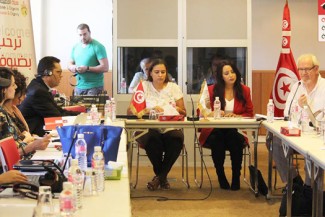
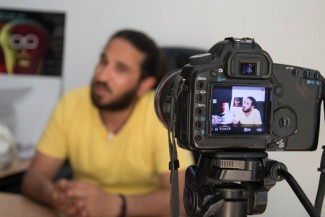
Later this month, Tunisians will have an opportunity to hear the truth about the dictatorship's abuses directly from victims in a series of public hearings hosted by the Truth and Dignity Commission. However, in order for these public testimonies to be effective, the media must cover victims' stories fully and explore the issues underpinning their experiences. South African journalist Max du Preez spoke with his Tunisian counterparts to help prepare them for the challenges they will face. We sat down with him afterwards to discuss the role of media in transitional justice processes.

In the years immediately before the 2015 election, there was a palpable sense of waiting among those working in Burmese civil society. Many of their plans depended on one or two critical developments to take hold: the NLD coming to power and the signing of a nationwide ceasefire agree...

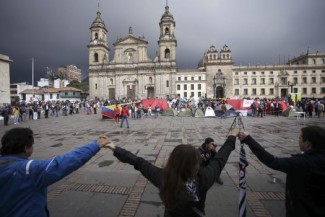
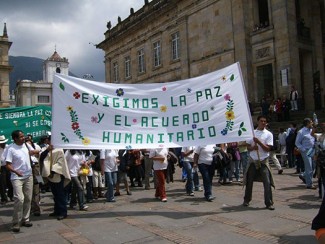
ICTJ welcomes the announcement the government of Colombia and the FARC-EP have agreed on a series of modifications to the peace accords, after the original version was narrowly rejected in the October plebiscite vote.

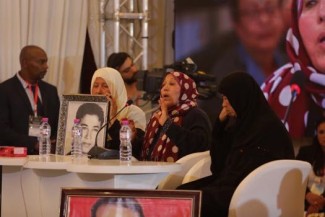
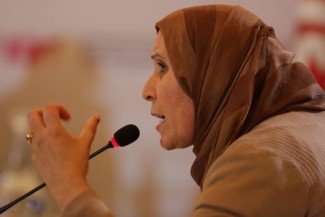
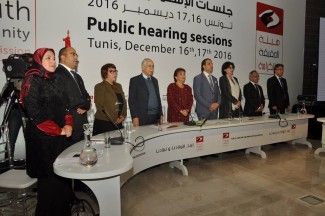
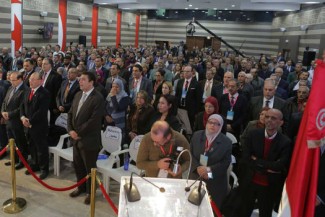
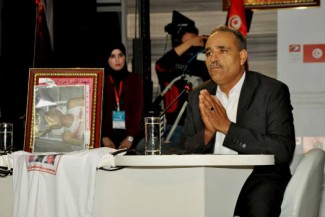
Victims of Tunisia’s dictatorship shared their stories publicly on November 17 in a historic moment for the country. The Truth and Dignity Commission (TDC) - charged with investigating gross human rights violations in the country since 1955 committed under the dictatorship - held its first public hearings in Tunis, gathering victims to testify to their experiences under dictatorship. The hearings present an essential opportunity for the country to confront its painful past. Since its inception in 2014, the TDC has received over 62,000 submissions and heard testimony from about 11,000 people.

“I hesitated a lot before giving this testimony. But after much debate I decided to. History is not to be written in the palaces." That’s how Bechir Laabidi opened testimony on day two of public hearings at Tunisia’s Truth and Dignity Commission, where Tunisians continued to write the history of the country from the victims’ perspective. This final day of testimony focused on torture perpetrated by the dictatorship, with eight victims sharing their stories into the early hours of the morning.

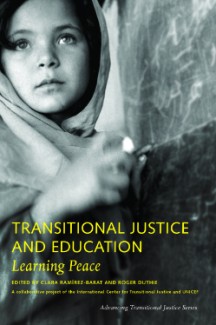
A groundbreaking new book from the International Center for Transitional Justice (ICTJ) and UNICEF examines the complicated relationship between education, justice and peacebuilding in societies grappling with a legacy of violent conflict. It offers lessons on how education can be harnessed in a divided society to overcome the past and create the conditions for peace, often under very difficult circumstances.

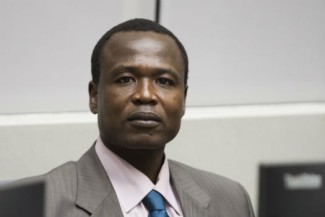
Dominic Ongwen's ICC trial will determine whether the former child-soldier-turned-LRA-commander is guilty or innocent. However, for those of us supporting justice globally, discussion must extend beyond simple dichotomies: the reality of Ongwen’s actions and the context in which they occurred is much more complex than whether he is guilty or innocent. Moreover, the calls for justice by victims in Uganda extend far beyond the trial of a single man, and demand a multifaceted response.

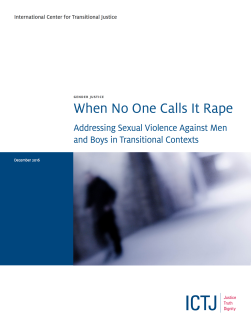
Sexual violence against men and boys in times of conflict or repression is alarmingly common— and takes a markedly consistent form across contexts in terms of how it affects victims and societies as a human rights violation that is taboo to talk about. It has been committed in all cul...

Sexual violence against men and boys is alarmingly common amidst conflict or repression, but these crimes are often mishandled. A new ICTJ report examines how transitional justice efforts in South Africa, Kenya, Cambodia, and beyond have responded to the needs of male victims of sexual violence. What lessons can be drawn from these approaches?

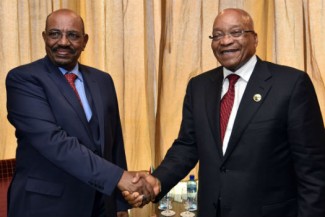
South African authorities apparently believe that once the country has officially withdrawn from the ICC, it will be free to invite the likes of Sudanese President al-Bashir to the country. That's not so, writes ICTJ's Howard Varney, who explains why the country's obligations would continue beyond its departure from the court.

As we look back on 15 years of ICTJ's work, we recognize that our greatest asset is the people whose knowledge, experience, and dedication made our contribution possible. To celebrate all who have been part of ICTJ’s story over the years, we asked some of our former colleagues to share their reflections and memories of moments that stand out: moments that throw the stakes of our work into sharp relief. First up: Louis Bickford, former Director of ICTJ’s Memory and Memorials Unit (2001–2009), reflects on testimony given during Peru's Truth and Reconciliation Commission.

As ICTJ looks back on its 15 years of work, join us in celebrating our allies across the globe who join us in the struggle for human rights, against impunity. To honor their efforts in the trenches of this shared struggle, we will bring you their stories in the weeks and months to come. We begin with Kenya's Jaqy Mutere, who provides both an empathetic ear and a political voice to survivors of sexual violence.

Join President David Tolbert as we celebrate ICTJ at 15 years, during which there have been many pivotal moments, both for our organization and the struggle for justice globally.

Following two days of historic public testimony last month, Tunisia's Truth and Dignity Commission's second set of public hearings continue. Watch the livesteam below and follow us on twitter at @theICTJ for live coverage.

On January 14, Tunisia's Truth and Dignity Commission will resume public hearings. Salwa El Gantri outlines how ICTJ has worked with the TDC and civil society to amplify victims' voices.

On December 17th, six years to the day after Mohamed Bouazizi set fire to himself and sparked the “Jasmine Revolution,” Tunisia’s Truth and Dignity Commission heard public testimony about events that unfolded during the revolution and the abuses of the regime it overthrew. Read victims' moving testimony about state violence, torture, corruption and marginalization as the country continues to grapple with its painful past.

As we look back on 15 years of ICTJ's work, we recognize that our greatest asset is the people whose knowledge, experience, and dedication made our contribution possible. To celebrate all who have been part of ICTJ’s story over the years, we asked some of our former colleagues to share their reflections and memories of moments that stand out: moments that throw the stakes of our work into sharp relief. In the weeks and months to come we will bring you their stories in Reflections on the Struggle for Justice. Caitlin Reiger, ICTJ's former Deputy Director of Prosecutions (2005–2010), reflects on the humanizing power of testimony, on display in East Timor.

Six years to the day after Ben Ali fled the country, Tunisians are gathering around televisions, radios and computers for more victim testimony hosted by the Truth and Dignity Commission. Watch the livesteam below and follow us on twitter at @theICTJ for live coverage.

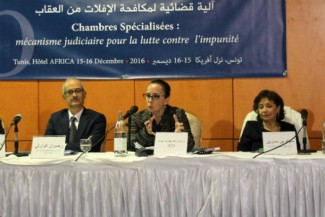
In Tunisia, efforts to seek criminal accountability have been characterized by an absence of strategy and the lack of political will. An ICTJ conference sought to address these issues and ease the confusion and political gridlock surrounding the Specialized Judicial Chambers.

Jaya Luintel was a radio reporter in Nepal during the country's civil war, covering the conflict's impact on women. Now, she's helping female victims produce and broadcast their own stories to a national audience. Discover how her organization, The Story Kitchen, empowers women in Nepal.

As we look back on 15 years of ICTJ's work, we recognize that our greatest asset is the people whose knowledge, experience, and dedication made our contribution possible. To celebrate all who have been part of ICTJ’s story over the years, we asked some of our former colleagues to share their...

On the 39th anniversary of Tunisia's "Black Thursday," the Truth and Dignity Commission continues its public hearings.

ICTJ has formally accepted the invitation to participate in Colombia’s Selection Committee, reflecting its commitment to work for peace and victims’ rights in that country. It has not yet selected its delegate, contrary to prior reports.

Donald Trump is on a road to undermine the progress that decades of struggle has achieved - the time for action and resistance is now. The human rights movement must come together to resist his agenda, writes ICTJ President David Tolbert.

Potential political interference, poor evidence gathering and difficulty accessing remote areas are some of the main challenges to prosecuting economic and environmental crimes related to armed conflict in the Democratic Republic of Congo. Overcoming these challenges was the focus of a two-day workshop for judges and prosecutors in Goma and Bukavu, organized by the International Center for Transitional Justice (ICTJ), in collaboration with the United States Institute for Peace.

I Am Not Who They Think I Am, a new film by ICTJ and MediaStorm, exposes the stigma facing children born of conflict and their mothers and advocates for their right to reparations and redress from the state.

NEW YORK, February 2, 2016 – A short documentary film depicting the devastating effects of stigma and discrimination against children born of wartime sexual violence, and their mothers, in northern Uganda was released today by the International Center for Transitional Justice (ICTJ) and MediaStorm....

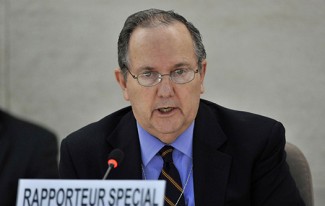
ICTJ has named the globally recognized jurist and human rights expert Juan E. Méndez as its delegate to the Colombian Selection Committee created by the 2016 peace agreement signed between the Colombian government and the Revolutionary Armed Forces of Colombia (FARC).

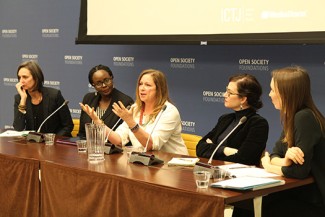
A panel of policy and media experts discusses women's experience in war and the responsibility of media covering their stories at the New York City premiere of a new documentary.

To mark 15 years of ICTJ, we asked staff past and present for memories that stand out to them - moments that throw the stakes of our work into sharp relief and resonate with them years later. Cristián Correa, Senior Associate in ICTJ’s Reparative Justice Program, shares a story about a Chilean mother's thirst to tell her daughter the truth about their past.
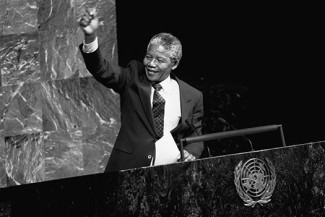
The Africa Union's resolution to collectively support a strategy to withdraw from the ICC looks more like a machination of those who have instrumentalized an argument against the court to protect themselves from the long arm of justice, write ICTJ's top experts on Africa.

For years the Lord’s Resistance Army (LRA) captured thousands of young girls in northern Uganda, forcing them to be not only soldiers, but wives and mothers too. When these women finally escaped their captors, children in tow, they hoped to be welcomed back into their com...

Since Georgia’s independence in 1991, successive governments have struggled to deal with endemic corruption, organized crime, and various disputes along its borders, which sometimes sparked into armed conflict. Efforts to combat corruption and organized crime through its “zero-toleran...

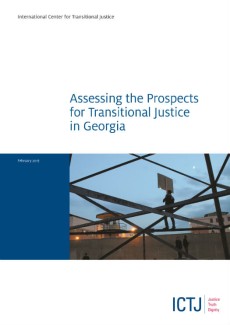
A new ICTJ report finds that the time is ripe for Georgia to take meaningful steps to reckon with the dark chapters of its recent past and ensure that abuses never happen again. The report warns that while political conditions in the country may not be perfect, waiting longer to acknowledge victims and deal with the past may lead to more abuses and a possible conflict in the long run.

To mark 15 years of ICTJ, we asked staff past and present for memories that stand out to them - moments that throw the stakes of our work into sharp relief and resonate with them years later. Reshma Thapa, former ICTJ senior program associate in Nepal (2009- 2013), looks back on one particularly poignant dance shared among women in a small village.

South Africa Parliament faces a historic moment. In this op-ed, ICTJ's Vice President Paul Seils remembers the great hope that marked the ICC’s emergence: "No country embodied that hope and that reality more powerfully and more inspiringly than South Africa."

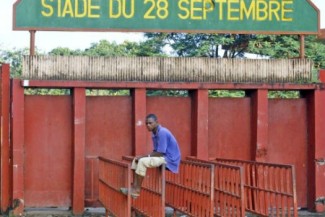
To mark 15 years of ICTJ, we asked staff past and present for memories that stand out to them - moments that throw the stakes of our work into sharp relief and resonate with them years later. Olivier Kambala wa Kambala, an ICTJ Program Associate from 2005 to 2010, talks about the thirst for justice he saw on a visit to Guinea, and how the political situation rendered quenching it impossible.

Six years into the carnage in Syria, atrocious crimes run rampant, with savage abuses committed against all groups in the devastated country, and the murderous regime, abetted by powerful allies, is still in power. The UN Security Council remains deadlocked and unable to take any steps towards...

ICTJ is pleased to announce that Anil Soni, Head of Global Infectious Diseases at Mylan, has joined its Advisory Board. "We are honored to welcome Anil Soni as the newest member of ICTJ’s leadership. As a respected figure in the global health community with ample experience at international NGOs, he...

At 3 pm, Eastern Time, Tunisia's Truth and Dignity Commission is scheduled to resume its public hearings with a session focusing on violations against women. Watch the livesteam below and follow us on twitter at @theICTJ for live coverage.

Tunisia's Truth and Dignity Commission continues its public hearings, focusing on violations of digital freedom.

As ICTJ looks back on its 15 years of work, join us in celebrating our allies across the globe who struggle for human rights, against impunity. To honor their efforts in the trenches of this struggle, we will bring you their stories in the weeks and months to come. This is the story of Mark Thompson, CEO of Relatives for Justice, a group struggling for truth and justice in Northern Ireland.

This paper explores the power of a transitional justice approach to education reconstruction in post-conflict settings. Its central question is how the aims of transitional justice can guide educational reform processes after conflict or periods of massive human rights violations, wit...

Education, as a critically important institution that is widely considered to be both formative and transformative, is something that transitional justice cannot afford to overlook. Transitional justice in its early years did not directly engage with education, but today this has chan...

The right to the truth carries special resonance in Kenya, and so on March 24th Kenyan state agencies, survivors, civil society organizations, and international partners will join together in Nairobi to observe the International Day for the Right to the Truth. It provides an opportunity not just for remembrance, but also for greater dialogue between the government and victims about the implementation of reparations programs and of the findings presented in the Truth, Justice and Reconciliation Commission's final report.